


Impact of COVID-19 pandemic on mobility in ten countries and associated perceived risk for all transport modes
- PMID: 33524042
- PMCID: PMC7850470
- DOI: 10.1371/journal.pone.0245886
Impact of COVID-19 pandemic on mobility in ten countries and associated perceived risk for all transport modes
Abstract
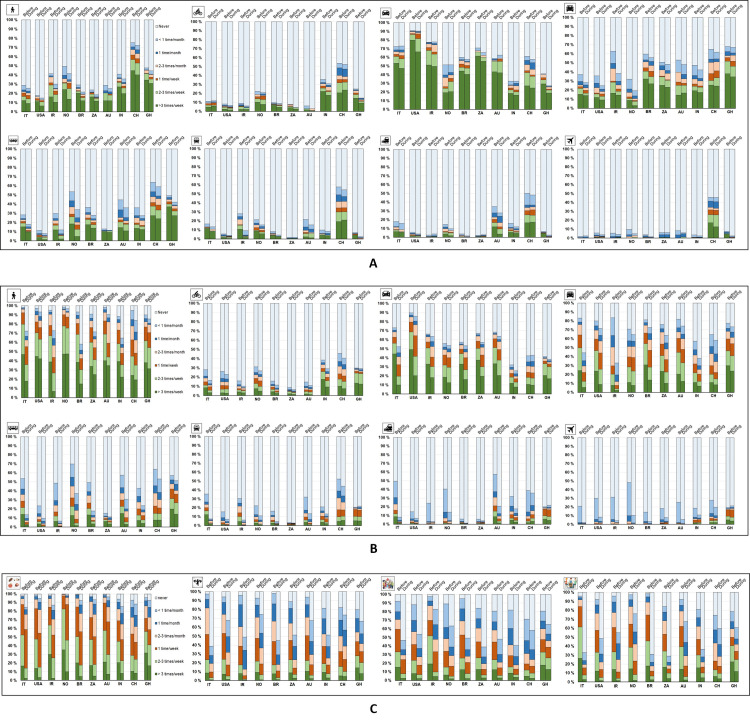
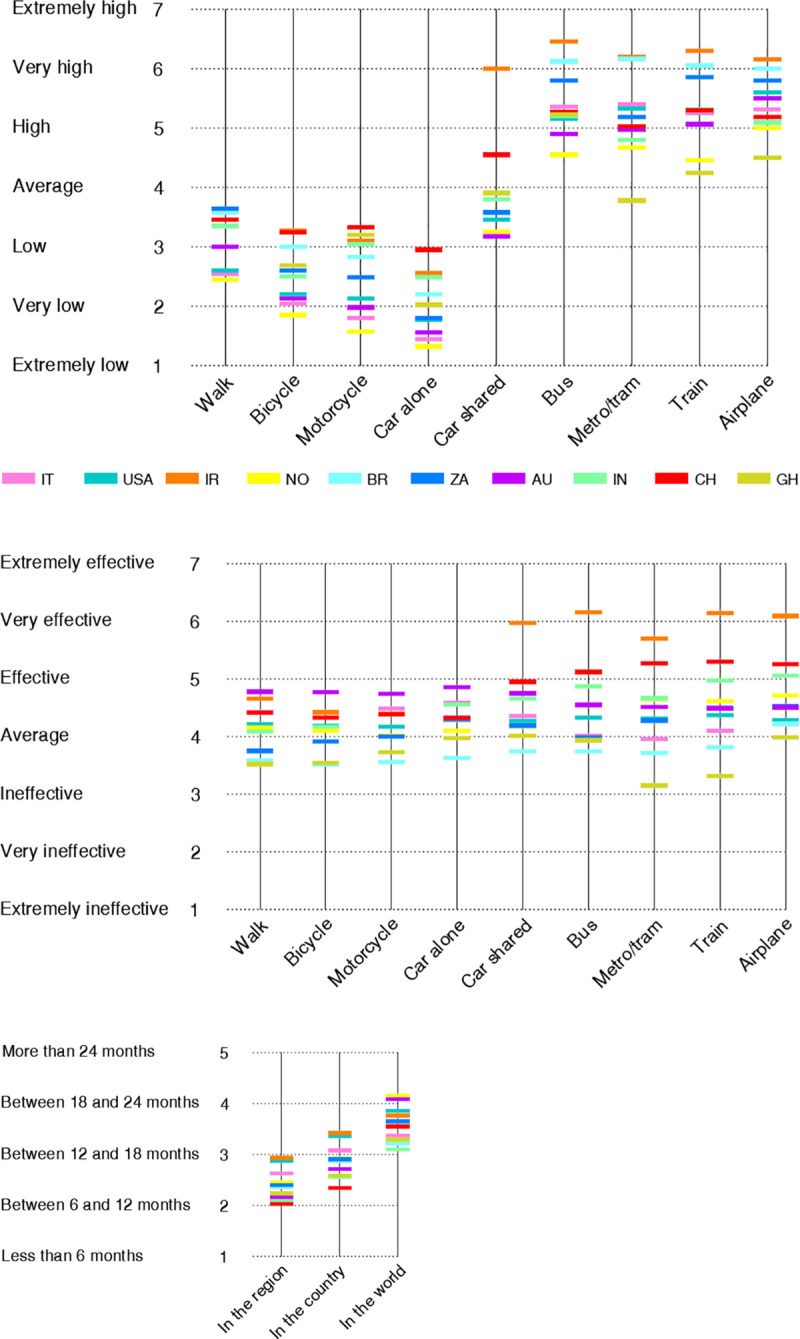
The restrictive measures implemented in response to the COVID-19 pandemic have triggered sudden massive changes to travel behaviors of people all around the world. This study examines the individual mobility patterns for all transport modes (walk, bicycle, motorcycle, car driven alone, car driven in company, bus, subway, tram, train, airplane) before and during the restrictions adopted in ten countries on six continents: Australia, Brazil, China, Ghana, India, Iran, Italy, Norway, South Africa and the United States. This cross-country study also aims at understanding the predictors of protective behaviors related to the transport sector and COVID-19. Findings hinge upon an online survey conducted in May 2020 (N = 9,394). The empirical results quantify tremendous disruptions for both commuting and non-commuting travels, highlighting substantial reductions in the frequency of all types of trips and use of all modes. In terms of potential virus spread, airplanes and buses are perceived to be the riskiest transport modes, while avoidance of public transport is consistently found across the countries. According to the Protection Motivation Theory, the study sheds new light on the fact that two indicators, namely income inequality, expressed as Gini index, and the reported number of deaths due to COVID-19 per 100,000 inhabitants, aggravate respondents' perceptions. This research indicates that socio-economic inequality and morbidity are not only related to actual health risks, as well documented in the relevant literature, but also to the perceived risks. These findings document the global impact of the COVID-19 crisis as well as provide guidance for transportation practitioners in developing future strategies.
Conflict of interest statement
The authors have declared that no competing interests exist.
Figures

References
-
- WHO. Coronavirus disease (COVID-19) pandemic [Internet]. 2020 [cited 2020 Aug 1]. Available from: https://www.who.int/emergencies/diseases/novel-coronavirus-2019
MeSH terms
LinkOut - more resources
Full Text Sources
Other Literature Sources
Medical
