


Current Knowledge and Future Challenges in Takotsubo Syndrome: Part 1-Pathophysiology and Diagnosis
- PMID: 33525539
- PMCID: PMC7865728
- DOI: 10.3390/jcm10030479
Current Knowledge and Future Challenges in Takotsubo Syndrome: Part 1-Pathophysiology and Diagnosis
Abstract
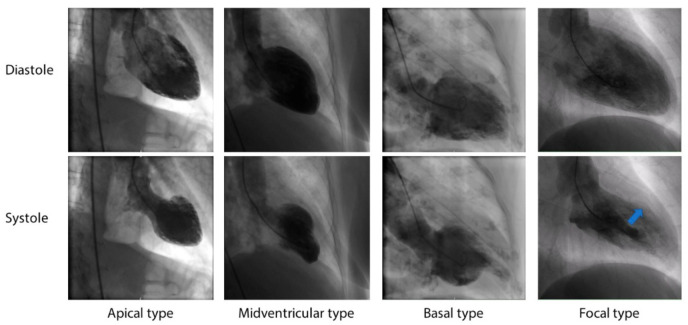
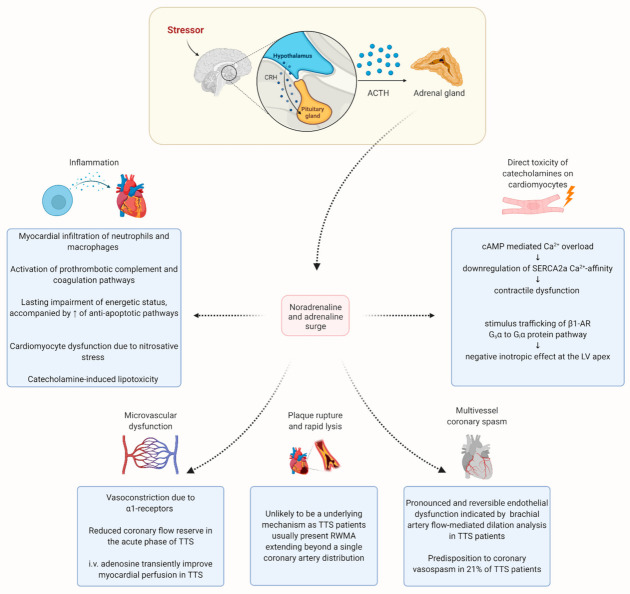
First recognized in 1990, takotsubo syndrome (TTS) constitutes an acute cardiac condition that mimics acute myocardial infarction commonly in the absence of obstructive coronary artery disease; it is characterized by temporary left ventricular dysfunction, regularly in a circumferential apical, midventricular, or basal distribution. Considering its acute clinical presentation, coronary angiography with left ventriculography constitutes the gold standard diagnostic tool to exclude or confirm TTS. Frequently, TTS is related to severe emotional or physical stress and a subsequent increased adrenergic stimulation affecting cardiac function. Beyond clinical presentation, epidemiology, and novel diagnostic biomarkers, this review draws attention to potential pathophysiological mechanisms for the observed reversible myocardial dysfunction such as sympathetic overdrive-mediated multi-vessel epicardial spasms, microvascular dysfunction, the direct toxicity of catecholamines, lipotoxicity, and inflammation. Considering the long-term prognosis, further experimental and clinical research is indispensable to elucidate further pathophysiological mechanisms underlying TTS before randomized control trials with evidence-based therapeutic management can be performed.
Keywords: acute heart failure; biomarker; broken heart syndrome; inflammation; lipotoxicity; takotsubo syndrome.
Conflict of interest statement
The authors declare no conflict of interest.
Figures
References
-
- Sato H., Tateishi H., Uchida T., Dote K., Ishihara M., Kodama K., Haze K., Hori M. Clinical Aspect of Myocardial Injury: From Ischemia to Heart Failure. Kagaku Hyoronsha; Tokyo, Japan: 1990. pp. 55–64.
-
- Ghadri J.R., Cammann V.L., Napp L.C., Jurisic S., Diekmann J., Bataiosu D.R., Seifert B., Jaguszewski M., Sarcon A., Neumann C.A., et al. Differences in the Clinical Profile and Outcomes of Typical and Atypical Takotsubo Syndrome. JAMA Cardiol. 2016;1:335–340. doi: 10.1001/jamacardio.2016.0225. - DOI - PubMed
Publication types
LinkOut - more resources
Full Text Sources
Other Literature Sources
