


Brief mindfulness-based training and mindfulness trait attenuate psychological stress in university students: a randomized controlled trial
- PMID: 33526085
- PMCID: PMC7852130
- DOI: 10.1186/s40359-021-00520-x
Brief mindfulness-based training and mindfulness trait attenuate psychological stress in university students: a randomized controlled trial
Abstract
Background: Psychological distress in University settings has grown and became a public health concern. In this context, contemplative practices such as mindfulness have been proposed as a strategy to help students on stress management.
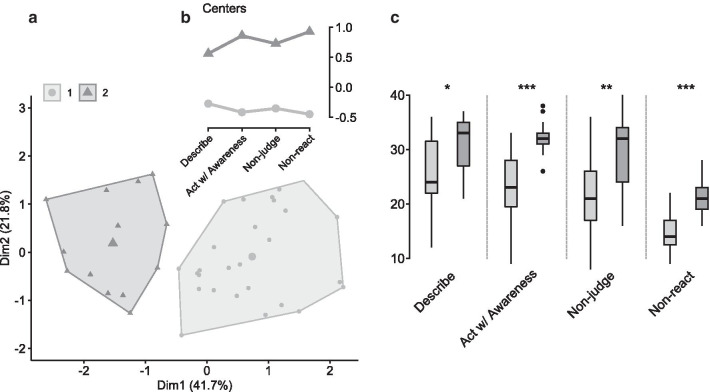
Methods: Forty university students (20 female), aged between 18 to 30 years (mean = 24.15; SD = 3.56), with no previous experience with meditation or yoga were recruited at the Federal University of Rio Grande do Norte and randomized to a mindfulness training (MT) or active control (AC) groups. We analyzed measures of anxiety, affect, stress, as well as state and trait mindfulness in order to evaluate the effects of trait mindfulness and a brief mindfulness intervention in forty healthy young students. Participants were classified as Low (n = 27, females = 13) or High (n = 13, females = 7) Trait Mindfulness by k-means clustering and compared between them using Wilcoxon sum rank test. Furthermore, the sample was randomly allocated to an AC (n = 20, females = 10) or a MT (n = 20, females = 10) group, and mixed analysis of variance was performed to analyze the effect of interventions. The mechanisms and role of trait mindfulness in the intervention was assessed by a moderated mediation analysis.
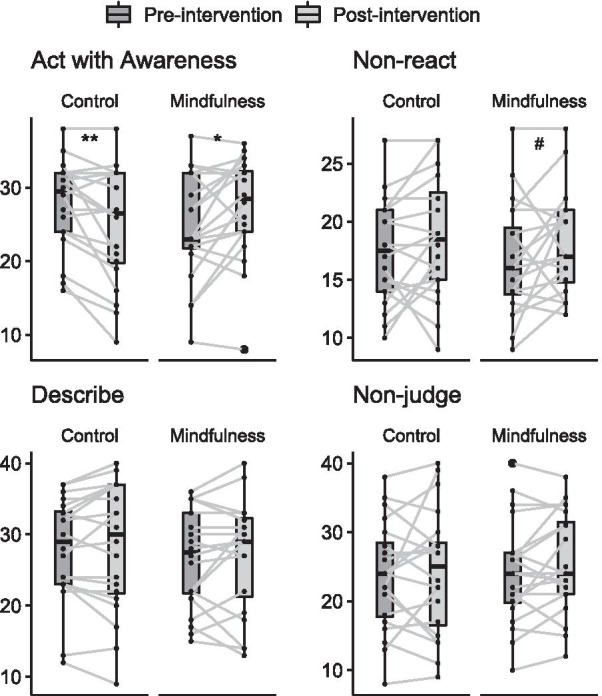
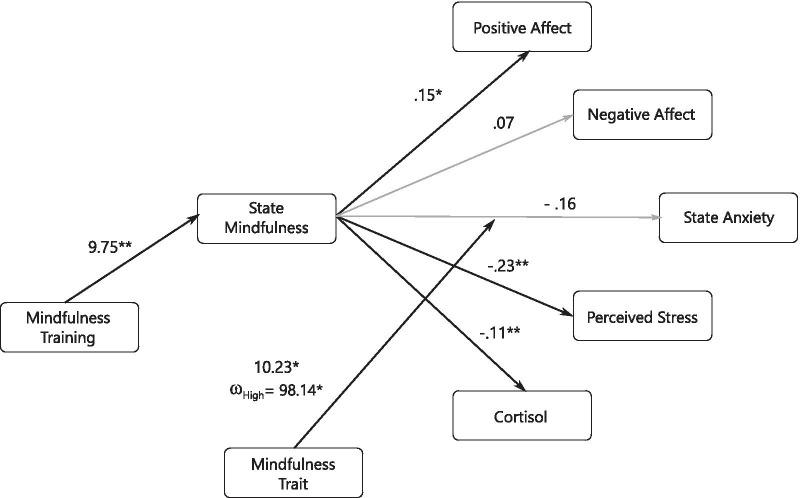
Results: We found that High Trait individuals have lower anxiety trait, anxiety state and perceived stress levels. Only the MT group reduced their anxiety state and perceived stress after the intervention and increased their state mindfulness. Both groups reduced negative affect and cortisol, and no change was found in positive affect. Moderated mediation analysis showed that the training-induced change in state mindfulness mediated the increase in positive affect and the decrease in perceived stress and cortisol, regardless of trait mindfulness. For anxiety state the decrease only occurred in individuals with High Trait Mindfulness.
Conclusions: Together, these results suggest that higher trait mindfulness is associated with low levels of psychological distress and that a brief mindfulness-based intervention seems to be useful to reduce distress measures in university students.
Trial registration: ReBEC, U1111-1194-8661. Registered 28 March 2017-Retrospectively registered, http://www.ensaiosclinicos.gov.br/rg/RBR-7b8yh8.
Keywords: Cortisol; Mindfulness training; Psychological distress; Psychological well-being; Trait mindfulness.
Conflict of interest statement
The authors declare that they have no competing interests.
Figures



References
-
- Woolston C. A love-hurt relationship. Nature. 2017.
-
- Woolston C. PhDs: the tortuous truth. Nature. 2019. - PubMed
-
- Beiter R, Nash R, McCrady M, Rhoades D, Linscomb M, Clarahan M, et al. The prevalence and correlates of depression, anxiety, and stress in a sample of college students. J Affect Disord. 2015. - PubMed
-
- Sverdlik A, Hall NC, McAlpine L, Hubbard K. The PhD experience: a review of the factors influencing doctoral students’ completion, achievement, and well-being. Int J Doctor Stud. 2018.
-
- Auerbach RP, Mortier P, Bruffaerts R, Alonso J, Benjet C, Cuijpers P, et al. The WHO World Mental Health Surveys International College Student Project: Prevalence and Distribution of Mental Disorders on behalf of the WHO WMH-ICS Collaborators HHS Public Access. J Abnorm Psychol. 2018. - PMC - PubMed
Publication types
MeSH terms
Grants and funding
LinkOut - more resources
Full Text Sources
Other Literature Sources
Medical
