


To stress or not to stress: Brain-behavior-immune interaction may weaken or promote the immune response to SARS-CoV-2
- PMID: 33527083
- PMCID: PMC7839386
- DOI: 10.1016/j.ynstr.2021.100296
To stress or not to stress: Brain-behavior-immune interaction may weaken or promote the immune response to SARS-CoV-2
Abstract
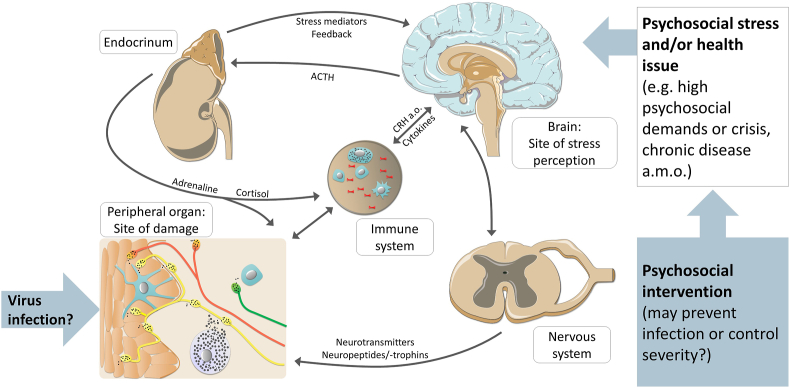
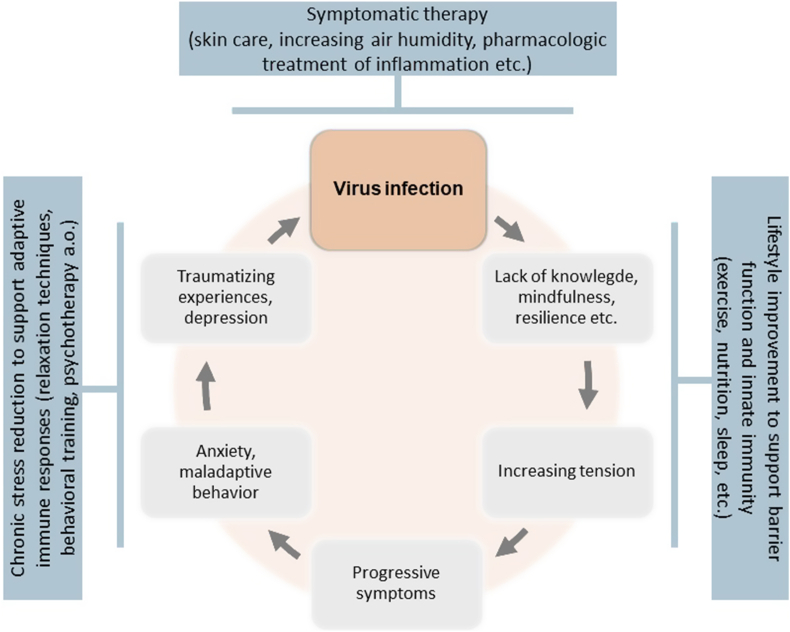
The COVID-19 pandemic continues to strongly affect people with health disadvantages, creating a heavy burden on medical systems and societies worldwide. Research is growing rapidly and recently revealed that stress-related factors such as socio-economic status, may also play a pivotal role. However, stress research investigating the underlying psychoneuroimmune interactions is missing. Here we address the question whether stress-associated neuroendocrine-immune mechanisms can possibly contribute to an increase in SARS-CoV-2 infections and influence the course of COVID-19 disease. Additionally, we discuss that not all forms of stress (e.g. acute versus chronic) are detrimental and that some types of stress could attenuate infection-risk and -progression. The overall aim of this review is to motivate future research efforts to clarify whether psychosocial interventions have the potential to optimize neuroendocrine-immune responses against respiratory viral infections during and beyond the COVID-19 pandemic. The current state of research on different types of stress is summarized in a comprehensive narrative review to promote a psychoneuroimmune understanding of how stress and its mediators cortisol, (nor)adrenaline, neuropeptides and neurotrophins can shape the immune defense against viral diseases. Based on this understanding, we describe how people with high psychosocial stress can be identified, which behaviors and psychosocial interventions may contribute to optimal stress management, and how psychoneuroimmune knowledge can be used to improve adequate care for COVID-19 and other patients with viral infections.
Keywords: (Nor)adrenaline; COVID-19; Hypothalamic-pituitary-adrenal axis; Immune activation; Immune suppression; Neuropeptide; Prevention; Stress; Stress reduction.
© 2021 The Authors.
Conflict of interest statement
The authors declare no conflict of interest.
Figures

References
-
- Adan R.A.H. Nutritional psychiatry: towards improving mental health by what you eat. Eur. Neuropsychopharmacol. 2019;29:1321–1332. - PubMed
-
- Altemus M. Stress-induced changes in skin barrier function in healthy women. J. Invest. Dermatol. 2001;117:309–317. - PubMed
-
- Antonelli M. Effects of forest bathing (shinrin-yoku) on levels of cortisol as a stress biomarker: a systematic review and meta-analysis. Int. J. Biometeorol. 2019;63:1117–1134. - PubMed
LinkOut - more resources
Full Text Sources
Other Literature Sources
Miscellaneous
