Review
. 2021 Apr;160(5):1502-1520.e1.
doi: 10.1053/j.gastro.2020.09.065. Epub 2021 Jan 30.

Fibrosis Regression After Eradication of Hepatitis C Virus: From Bench to Bedside

Affiliations
Review

Fibrosis Regression After Eradication of Hepatitis C Virus: From Bench to Bedside

Don C Rockey et al. Gastroenterology. 2021 Apr.

Abstract

Hepatitis C virus (HCV) infection and its complications have been the major cause of cirrhosis and its complications for several decades in the Western world. Until recently, treatment for HCV with interferon-based regimens was associated with moderate success but was difficult to tolerate. More recently, however, an arsenal of novel and highly effective direct-acting antiviral (DAA) drugs has transformed the landscape by curing HCV in a broad range of patients, including those with established advanced fibrosis, cirrhosis, comorbidities, and even those with complications of cirrhosis. Fibrosis is a dynamic process comprising both extracellular matrix deposition, as well as its degradation. With almost universal sustained virologic response (SVR) (ie, elimination of HCV), it is timely to explore whether HCV eradication can reverse fibrosis and cirrhosis. Indeed, fibrosis in several types of liver disease is reversible, including HCV. However, we do not know with certainty in whom fibrosis regression can be expected after HCV elimination, how quickly it occurs, and whether antifibrotic therapies will be indicated in those with persistent cirrhosis. This review summarizes the evidence for reversibility of fibrosis and cirrhosis after HCV eradication, its impact on clinical outcomes, and therapeutic prospects for directly promoting fibrosis regression in patients whose fibrosis persists after SVR.

Keywords: Direct-Acting Antiviral; Fibrosis Regression; Hepatitis C Virus; Sustained Virologic Response.


Figures

Figure 1.
Figure 1.. HSC activation.
A key pathogenic feature underlying liver fibrosis and cirrhosis is activation of effector cells in the liver know as hepatic HSCs (note that activation of other effector cells is likely to parallel that of HSCs). The activation process is complex, both in terms of the events that induce activation and the effects of activation. Multiple and varied stimuli participate in the induction and maintenance of activation, including, but not limited to signals from other cells (including especially endothelial cells and Kupffer cells, but also hepatocytes, lymphocytes, and even others). cytokines, chemokines, peptides and proteases, and the extracellular matrix itself. Key phenotypic features of activation are highlighted (including the production of extracellular matrix proteins, loss of retinoids, cellular proliferation, upregulation of smooth muscle proteins with associated enhanced contractility, secretion of metalloproteases which disrupt the normal extracellular matrix, secretion of peptides and cytokines (which have autocrine effects on HSCs and paracrine effects on other cells such as leukocytes and malignant cells), and upregulation of various cytokine and peptide receptors).
Figure 2.
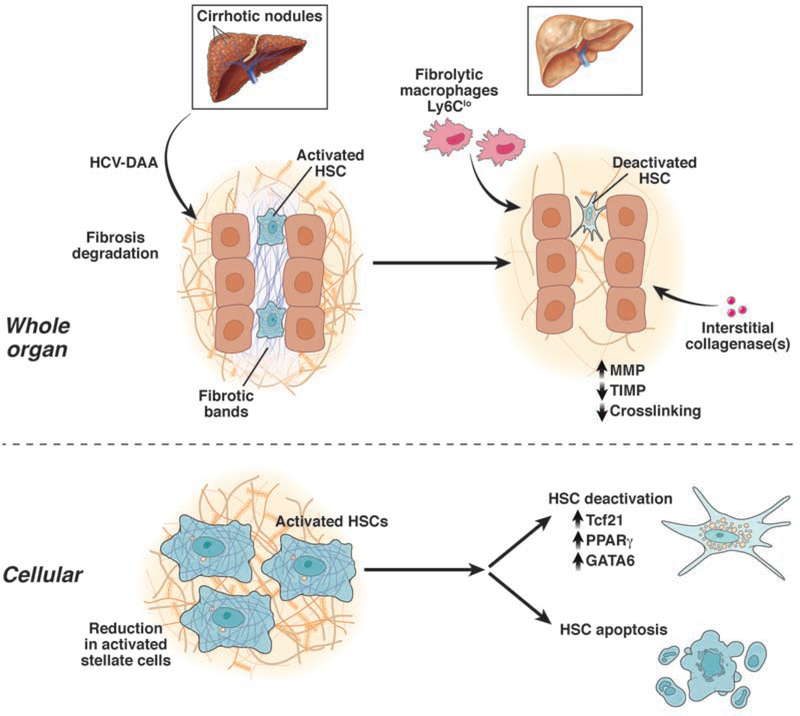
Figure 2.. Mechanism of fibrosis regression.
The figure emphasizes that HSCs, found in abundance in the injured/fibrotic liver (predominantly in fibrotic bands and areas of fibrosis, may revert to a quiescent phenotype, or may be eliminated through apoptosis – for example after DAA treatment of HCV. A variety of the molecular pathways, and contributing cellular elements are highlighted. These latter cell fates are likely to play a critical role in fibrosis regression.
Figure 3.
Figure 3.. Conceptual framework of fibrosis regression.
Fibrosis progression typically progresses from F0 to F4 (in HCV, Metavir); It is likely that fibrosis regression varies widely in different individuals. For example, it is possible that fibrosis regression may be complete or nearly complete in some patients, yet may be minimal or absent in others. Further, it is likely that the less severe fibrosis is to begin with, the better the chance that the liver returns to normal or near normal (i.e. from F1 to F0 or F2 to F1/F0). In contrast, the more severe the fibrosis is to begin with, the less likely the liver is to revert to a normal architecture. It is however, possible that some patients may exhibit substantial fibrosis reversion (i.e. from F3/4 to F0/1). It should be emphasized that despite regression of fibrosis, some degree of architectural abnormality and elements of disturbed blood flow may persist.

References

    1. Lozano R, Naghavi M, Foreman K, et al. Global and regional mortality from 235 causes of death for 20 age groups in 1990 and 2010: a systematic analysis for the Global Burden of Disease Study 2010. Lancet 2012;380:2095–128. - PMC - PubMed
    1. Murray CJ, Lopez AD. Measuring the global burden of disease. N Engl J Med 2013;369:448–57. - PubMed
    1. Rockey DC, Bell PD, Hill JA. Fibrosis--a common pathway to organ injury and failure. N Engl J Med 2015;372:1138–49. - PubMed
    1. Rockey DC. Translating an understanding of the pathogenesis of hepatic fibrosis to novel therapies. Clinical gastroenterology and hepatology : the official clinical practice journal of the American Gastroenterological Association 2013;11:224–31 e1–5. - PMC - PubMed
    1. Iredale JP, Benyon RC, Pickering J, et al. Mechanisms of spontaneous resolution of rat liver fibrosis. Hepatic stellate cell apoptosis and reduced hepatic expression of metalloproteinase inhibitors. J Clin Invest 1998;102:538–49. - PMC - PubMed

Publication types

MeSH terms

Substances