


Effects of Whole Grain Intake, Compared with Refined Grain, on Appetite and Energy Intake: A Systematic Review and Meta-Analysis
- PMID: 33530093
- PMCID: PMC8321865
- DOI: 10.1093/advances/nmaa178
Effects of Whole Grain Intake, Compared with Refined Grain, on Appetite and Energy Intake: A Systematic Review and Meta-Analysis
Abstract
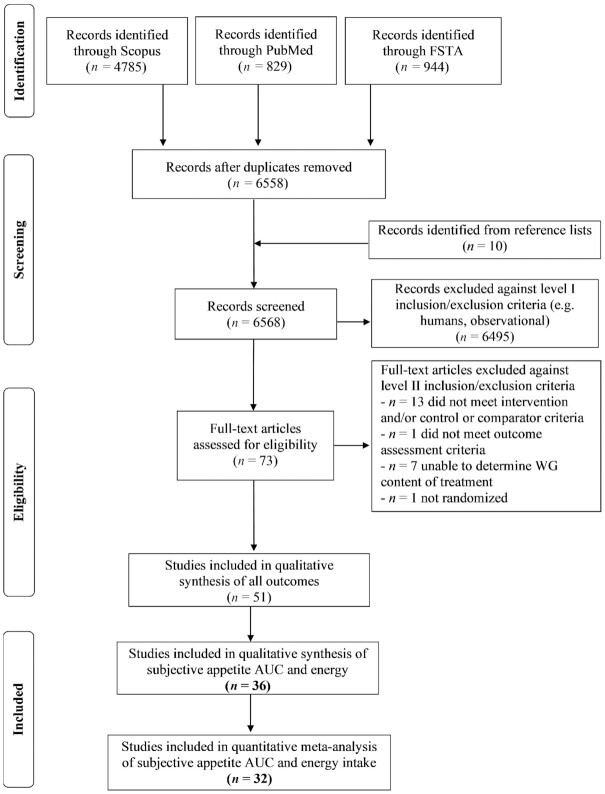
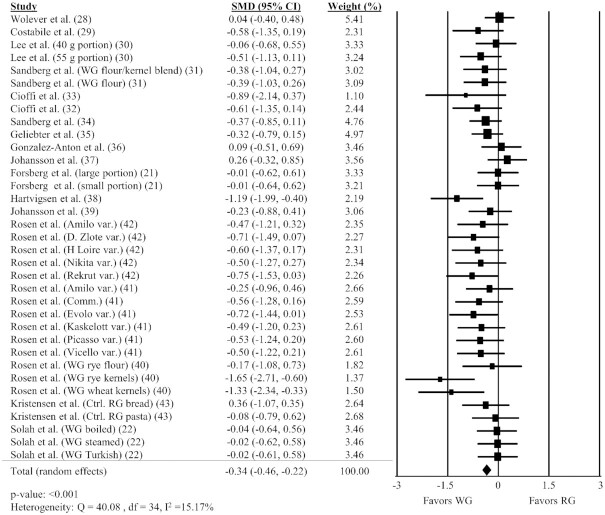
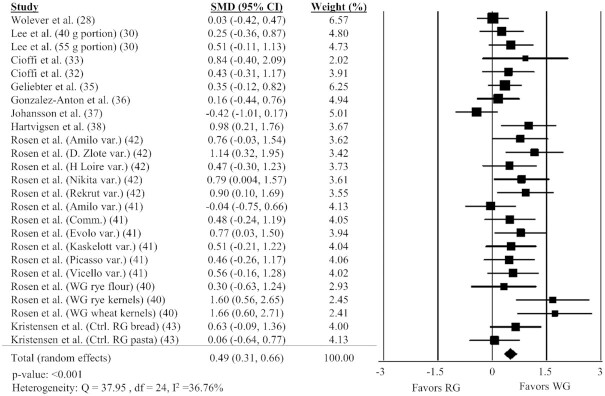
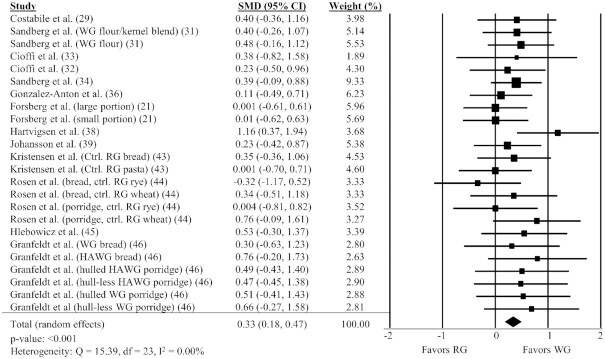
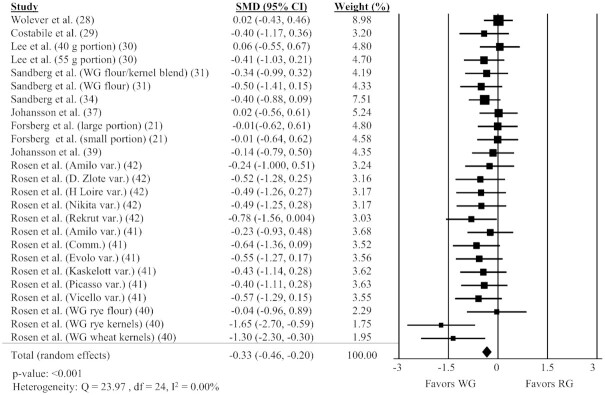
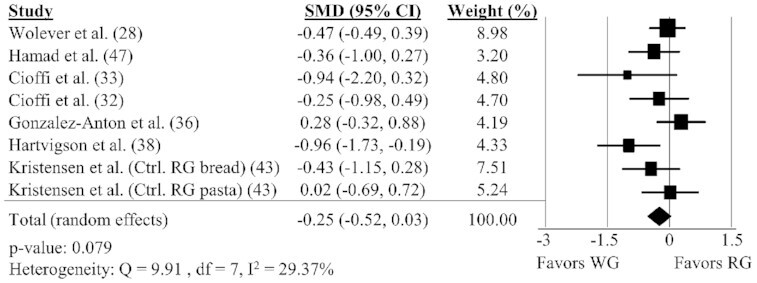
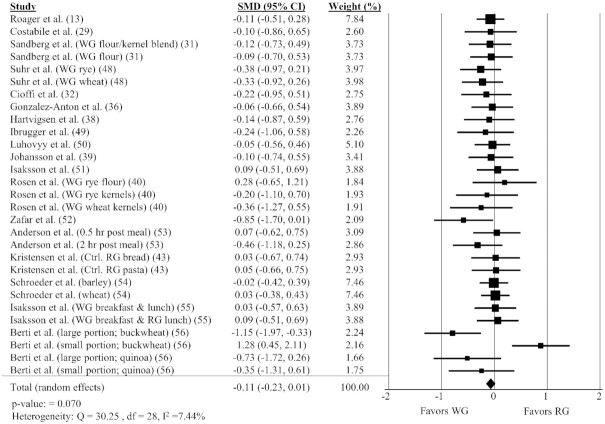
Results from observational studies indicate that whole grain (WG) intake is inversely associated with BMI and risk of weight gain. WG intake may influence energy balance and body composition through effects on appetite and energy intake. To evaluate the impact of WG food consumption on appetite and energy intake, a systematic review and meta-analysis was performed of results from randomized controlled trials (RCTs) assessing WG food consumption, appetite, and energy intake in adults. A search of PubMed, Scopus, and Food Science and Technology Abstracts yielded 36 RCTs measuring subjective appetite ratings after consuming WG foods compared with refined grain (RG) controls. Thirty-two of these studies reported AUCs for subjective appetite (hunger, fullness, satiety, desire to eat, or prospective consumption) and/or energy intake and were included in the meta-analysis. Pooled estimates from meta-analyses are expressed as standardized mean differences (SMDs). Compared with RG foods, intake of WG foods resulted in significant differences in AUCs for subjective hunger (SMD: -0.34; 95% CI: -0.46, -0.22; P < 0.001), fullness (SMD: 0.49; 95% CI: 0.31, 0.66; P < 0.001), satiety (SMD: 0.33; 95% CI: 0.18, 0.47; P < 0.001), and desire to eat (SMD: -0.33; 95% CI: -0.46, -0.20; P < 0.001). There were small, nonsignificant reductions in prospective consumption ratings (P = 0.08) and energy intake (P = 0.07) with WG intake compared with RG. These results support the view that consumption of WG foods, compared with RG foods, significantly impacts subjective appetite, and might partly explain the inverse associations between WG food intake and risk of overweight, obesity, and weight gain over time. PROSPERO registration: CRD42020148217.
Keywords: appetite; desire to eat; energy intake; fullness; hunger; meta-analysis; prospective food consumption; randomized controlled trials; satiety; whole grain.
© The Author(s) 2021. Published by Oxford University Press on behalf of the American Society for Nutrition.
Figures
References
-
- American Association of Cereal Chemists International . Whole grain definition. Cereal Foods World; 1999;45:79.
-
- US Department of Health and Human Services and US Department of Agriculture. 2015–2020 Dietary Guidelines for Americans. 8th ed. USDA; 2015.
Publication types
MeSH terms
LinkOut - more resources
Full Text Sources
Other Literature Sources
