


Colonisation and Transmission Dynamics of Candida auris among Chronic Respiratory Diseases Patients Hospitalised in a Chest Hospital, Delhi, India: A Comparative Analysis of Whole Genome Sequencing and Microsatellite Typing
- PMID: 33530297
- PMCID: PMC7910912
- DOI: 10.3390/jof7020081
Colonisation and Transmission Dynamics of Candida auris among Chronic Respiratory Diseases Patients Hospitalised in a Chest Hospital, Delhi, India: A Comparative Analysis of Whole Genome Sequencing and Microsatellite Typing
Abstract
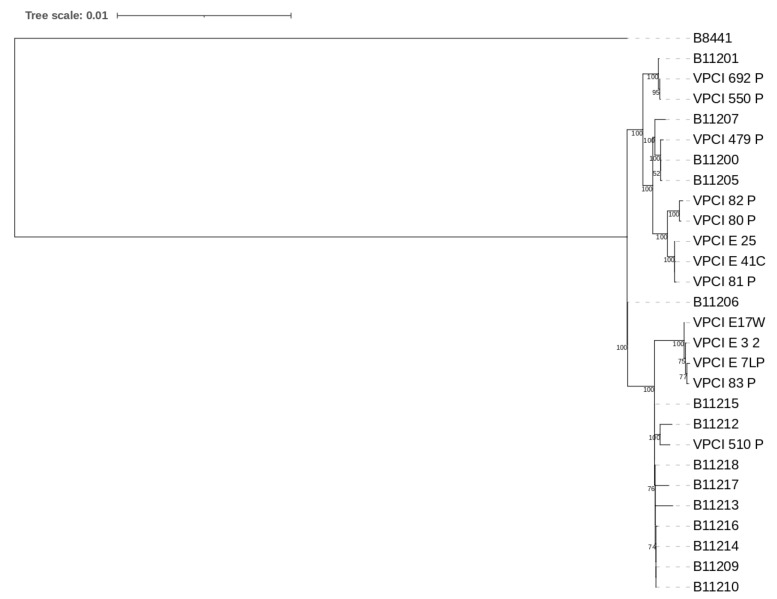
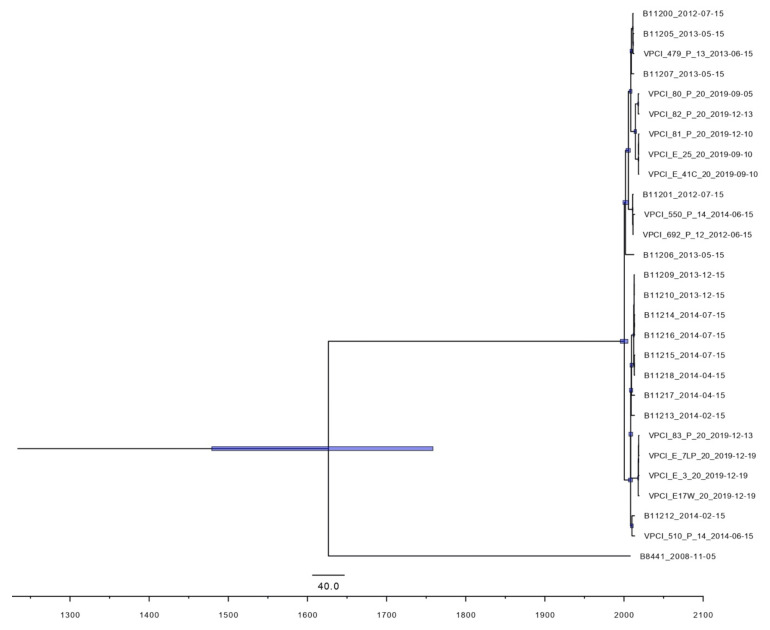
Candida auris is a nosocomial pathogen responsible for an expanding global public health threat. This ascomycete yeast has been frequently isolated from hospital environments, representing a significant reservoir for transmission in healthcare settings. Here, we investigated the relationships among C. auris isolates from patients with chronic respiratory diseases admitted in a chest hospital and from their fomites, using whole-genome sequencing (WGS) and multilocus microsatellite genotyping. Overall, 37.5% (n = 12/32) patients developed colonisation by C. auris including 9.3% of the screened patients that were colonised at the time of admission and 75% remained colonised till discharge. Furthermore, 10% of fomite samples contained C. auris in rooms about 8.5 days after C. auris colonised patients were admitted. WGS and microsatellite typing revealed that multiple strains contaminated the fomites and colonised different body sites of patients. Notably, 37% of C. auris isolates were resistant to amphotericin B and a novel amino acid substitution, G145D in ERG2 gene, was detected in all amphotericin B resistant isolates. In addition, 55% of C. auris isolates had two copies of the MDR1 gene. Our results suggest significant genetic and ecological diversities of C. auris in healthcare setting. The WGS and microsatellite genotyping methods provided complementary results in genotype identification.
Keywords: Candida auris; ERG11; ERG2; India; TAC1B; amphotericin B resistance in C. auris; colonisation; microsatellite typing; whole genome sequencing.
Conflict of interest statement
All other authors declare no potential conflict of interest. We alone are responsible for the content and writing of the paper.
Figures
References
-
- Parra-Giraldo C.M., Valderrama S.L., Cortes-Fraile G., Garzón J.R., Ariza B.E., Morio F., Linares-Linares M.Y., Ceballos-Garzón A., de la Hoz A., Hernandez C., et al. First report of sporadic cases of Candida auris in Colombia. Int. J. Infect. Dis. 2018;69:63–67. doi: 10.1016/j.ijid.2018.01.034. - DOI - PubMed
-
- Chowdhary A., Sharma C., Duggal S., Agarwal K., Prakash A., Singh P.K., Jain S., Kathuria S., Randhawa H.S., Hagen F., et al. New clonal strain of Candida auris, Delhi, India: New clonal strain of Candida auris, Delhi, India. Emerg. Infect. Dis. 2013;19:1670–1673. doi: 10.3201/eid1910.130393. - DOI - PMC - PubMed
LinkOut - more resources
Full Text Sources
Other Literature Sources
