


Human iPSC-Based Modeling of Central Nerve System Disorders for Drug Discovery
- PMID: 33530458
- PMCID: PMC7865494
- DOI: 10.3390/ijms22031203
Human iPSC-Based Modeling of Central Nerve System Disorders for Drug Discovery
Abstract
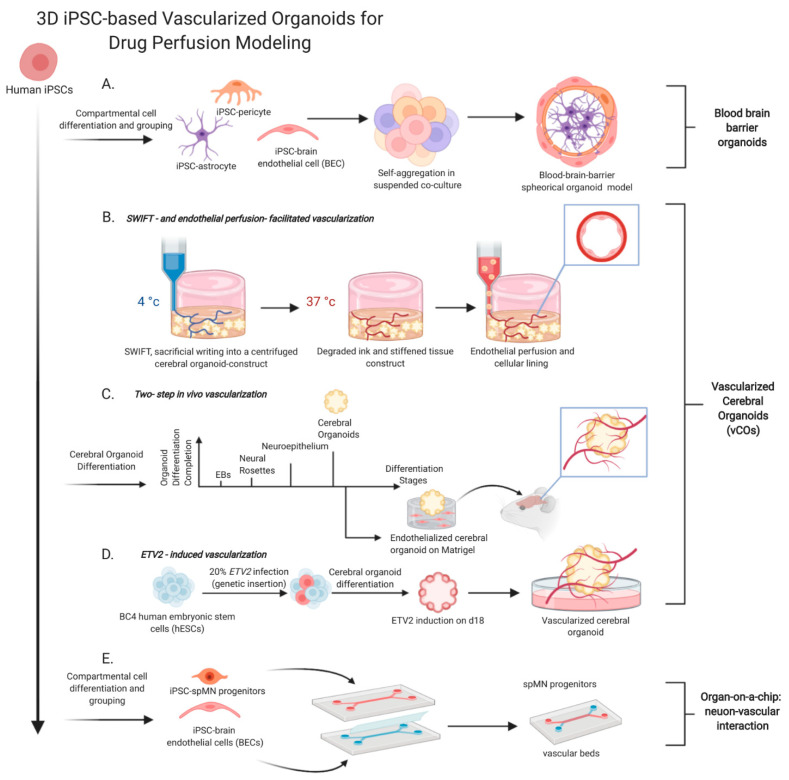
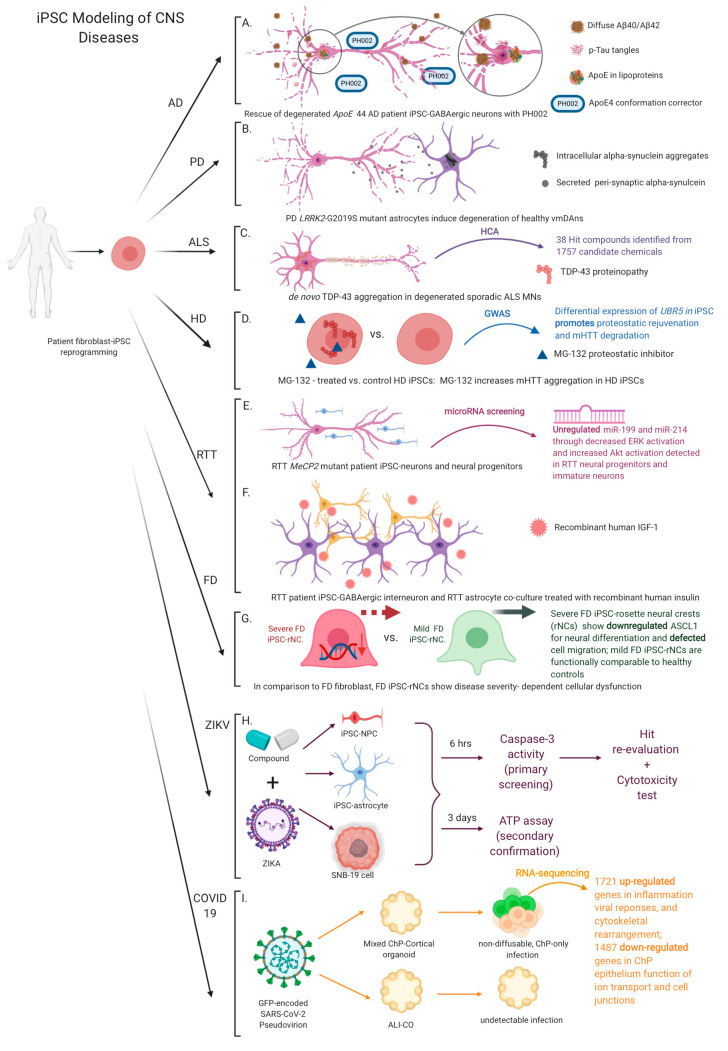
A high-throughput drug screen identifies potentially promising therapeutics for clinical trials. However, limitations that persist in current disease modeling with limited physiological relevancy of human patients skew drug responses, hamper translation of clinical efficacy, and contribute to high clinical attritions. The emergence of induced pluripotent stem cell (iPSC) technology revolutionizes the paradigm of drug discovery. In particular, iPSC-based three-dimensional (3D) tissue engineering that appears as a promising vehicle of in vitro disease modeling provides more sophisticated tissue architectures and micro-environmental cues than a traditional two-dimensional (2D) culture. Here we discuss 3D based organoids/spheroids that construct the advanced modeling with evolved structural complexity, which propels drug discovery by exhibiting more human specific and diverse pathologies that are not perceived in 2D or animal models. We will then focus on various central nerve system (CNS) disease modeling using human iPSCs, leading to uncovering disease pathogenesis that guides the development of therapeutic strategies. Finally, we will address new opportunities of iPSC-assisted drug discovery with multi-disciplinary approaches from bioengineering to Omics technology. Despite technological challenges, iPSC-derived cytoarchitectures through interactions of diverse cell types mimic patients' CNS and serve as a platform for therapeutic development and personalized precision medicine.
Keywords: Alzheimer’s disease; CNS disease modeling; COVID-19; astrocytes; drug discovery; induced pluripotent stem cells (iPSC); neurons; three-dimensional cerebral organoids; toxicity screening.
Conflict of interest statement
The authors declare no conflict of interest.
Figures
References
-
- Riordan H., Cutler N. The death of CNS drug development: Overstatement or omen. J. Clin. Stud. 2011;3:12–15.
Publication types
MeSH terms
Grants and funding
LinkOut - more resources
Full Text Sources
Other Literature Sources
