


Additive Manufacturing of Material Scaffolds for Bone Regeneration: Toward Application in the Clinics
- PMID: 33531885
- PMCID: PMC7116655
- DOI: 10.1002/adfm.202006967
Additive Manufacturing of Material Scaffolds for Bone Regeneration: Toward Application in the Clinics
Abstract
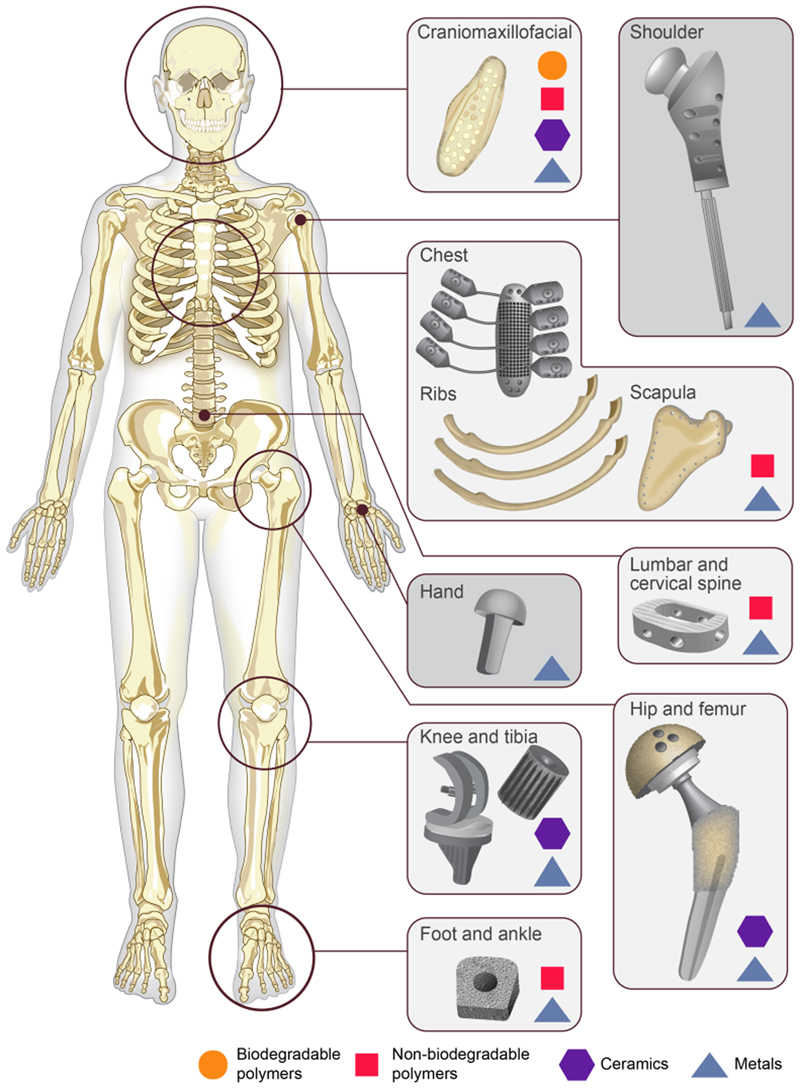
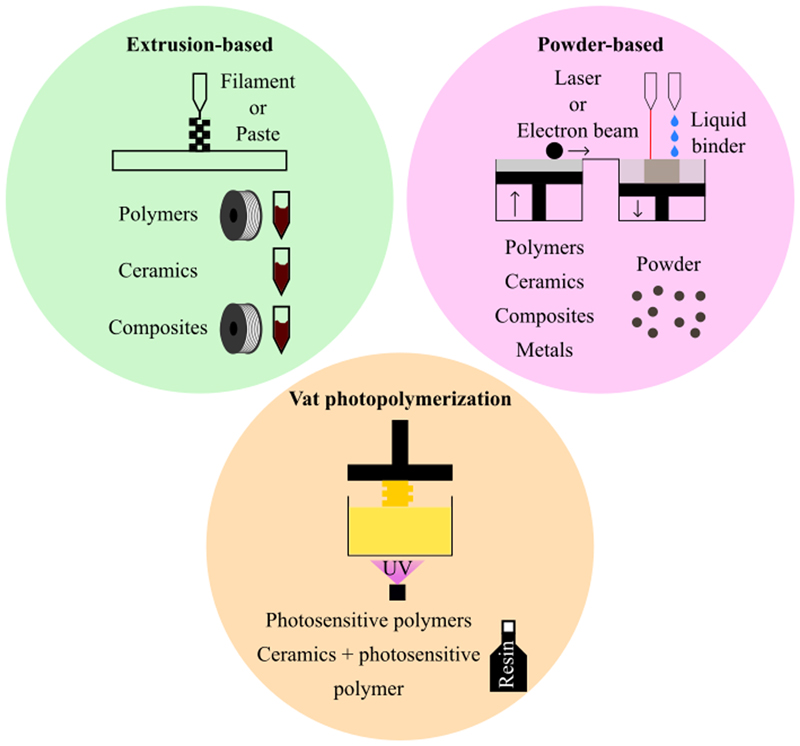
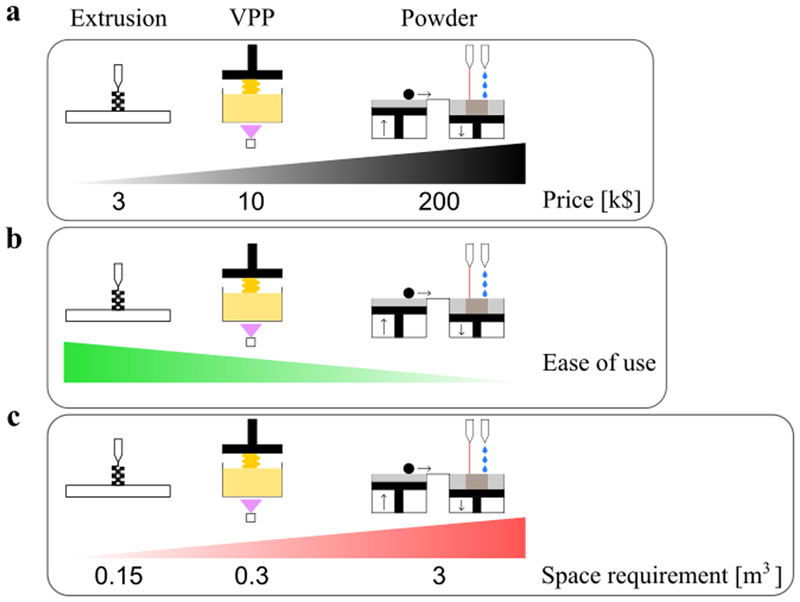
Additive manufacturing (AM) allows the fabrication of customized bone scaffolds in terms of shape, pore size, material type and mechanical properties. Combined with the possibility to obtain a precise 3D image of the bone defects using computed tomography or magnetic resonance imaging, it is now possible to manufacture implants for patient-specific bone regeneration. This paper reviews the state-of-the-art of the different materials and AM techniques used for the fabrication of 3D-printed scaffolds in the field of bone tissue engineering. Their advantages and drawbacks are highlighted. For materials, specific criteria, were extracted from a literature study: biomimetism to native bone, mechanical properties, biodegradability, ability to be imaged (implantation and follow-up period), histological performances and sterilization process. AM techniques can be classified in three major categories: extrusion-based, powder-based and liquid-base. Their price, ease of use and space requirement are analyzed. Different combinations of materials/AM techniques appear to be the most relevant depending on the targeted clinical applications (implantation site, presence of mechanical constraints, temporary or permanent implant). Finally, some barriers impeding the translation to human clinics are identified, notably the sterilization process.
Keywords: 3D printing; additive manufacturing; bone regeneration; scaffolds; tissue engineering.
Conflict of interest statement
Conflict of Interest The authors declare no conflict of interest.
Figures
References
Grants and funding
LinkOut - more resources
Full Text Sources