


Metabolic Healthy Obesity, Vitamin D Status, and Risk of COVID-19
- PMID: 33532128
- PMCID: PMC7801267
- DOI: 10.14336/AD.2020.1108
Metabolic Healthy Obesity, Vitamin D Status, and Risk of COVID-19
Abstract
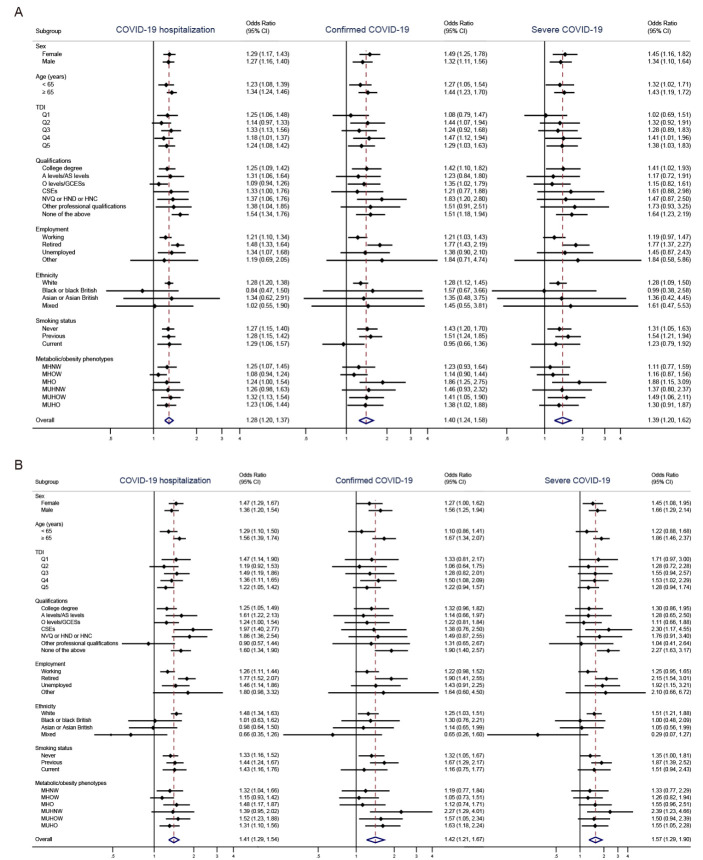
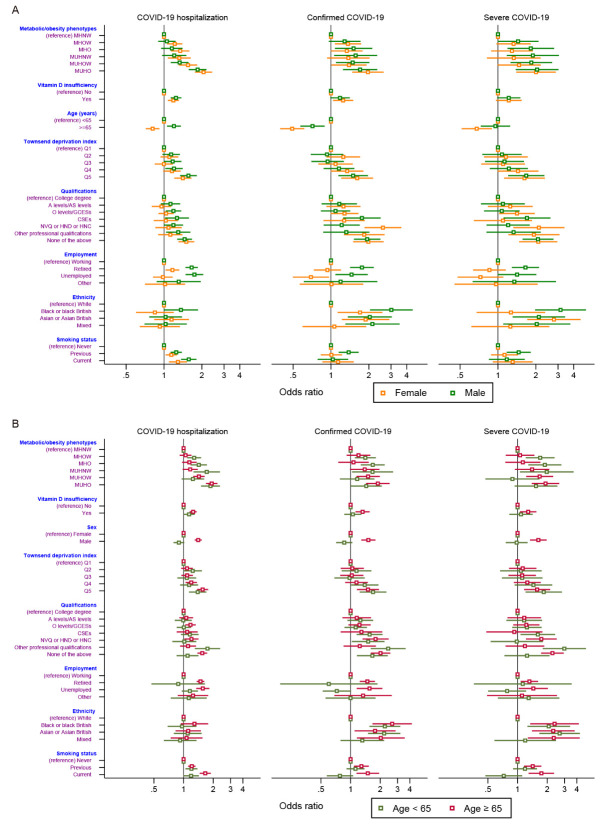
Aging and obesity-related conditions seem to worsen the effect of Coronavirus Disease 2019 (COVID-19). This study assessed the possible roles of metabolic/obesity phenotypes and vitamin D status in increasing the greater severity of COVID-19. We studied 353,299 UK Biobank participants from England with a mean age of 67.7 years. Metabolic/obesity phenotypes were defined as a combination of metabolic components (hypertension, high cholesterol, and diabetes) and obesity. Multivariate logistic regression analysis was performed to test whether the addition of metabolic disorders and vitamin D insufficiency increased obesity associations with COVID-19 hospitalization, confirmed COVID-19, and severe COVID-19. Metabolically unhealthy obesity (MUHO) represented 12.3% of the total analytic samples, and 21.5%, 18.5%, and 19.8% of the included subpopulations with COVID-19 hospitalization, confirmed COVID-19, and severe COVID-19, respectively. Vitamin D insufficiency phenotypes represented 53.5% of the total analytic samples, and 59.5%, 61.7%, and 61.5% of the included subpopulations with COVID-19 hospitalization, confirmed COVID-19, and severe COVID-19, respectively. In multivariate logistic regression, MUHO and vitamin D insufficiency and their combination were significantly associated with COVID-19 illness severity (odds ratio [OR] for COVID-19 hospitalization = 2.33, 95% confidence interval [CI], 2.02-2.70; OR for confirmed COVID-19 = 2.06, 95% CI, 1.58-2.70; OR for severe COVID-19 = 2.06, 95% CI, 1.47-2.87). Elderly men were prone to have a higher risk of COVID-19 than women. Our findings showed that MUHO and vitamin D insufficiency are associated with a significantly increased risk of COVID-19 severity, especially for adults 65 years and older. Susceptible individuals should be aware of their conditions and avoid contact with new coronavirus.
Keywords: COVID-19; Obesity; metabolic health; vitamin D.
copyright: © 2021 Li et al.
Conflict of interest statement
Conflicts of interest The authors declare that they have no competing interests.
Figures
References
LinkOut - more resources
Full Text Sources
Other Literature Sources