Control and prevention of infectious diseases from a One Health perspective
- PMID: 33533395
- PMCID: PMC7856630
- DOI: 10.1590/1678-4685-GMB-2020-0256
Control and prevention of infectious diseases from a One Health perspective
Abstract
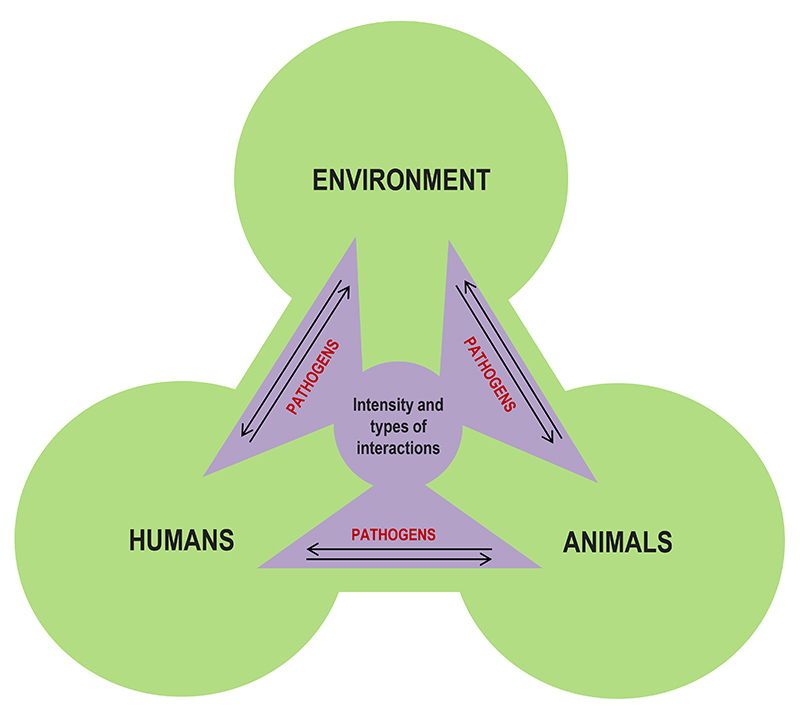
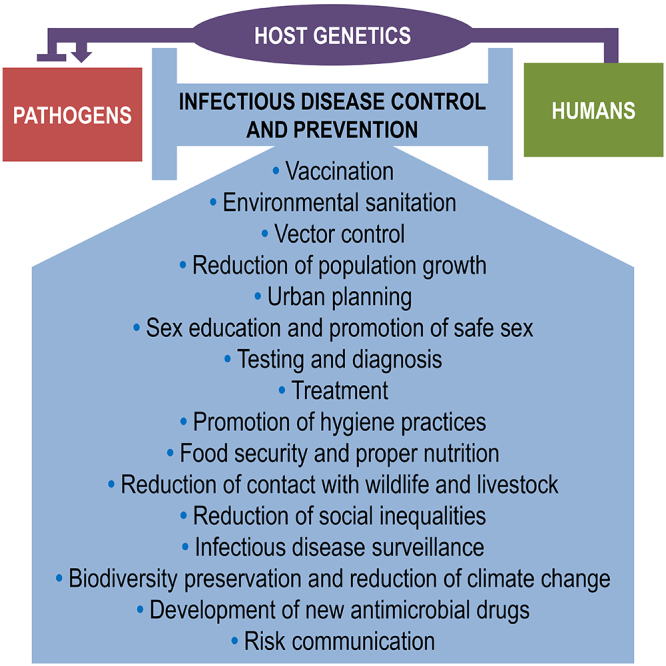
The ongoing COVID-19 pandemic has caught the attention of the global community and rekindled the debate about our ability to prevent and manage outbreaks, epidemics, and pandemics. Many alternatives are suggested to address these urgent issues. Some of them are quite interesting, but with little practical application in the short or medium term. To realistically control infectious diseases, human, animal, and environmental factors need to be considered together, based on the One Health perspective. In this article, we highlight the most effective initiatives for the control and prevention of infectious diseases: vaccination; environmental sanitation; vector control; social programs that encourage a reduction in the population growth; control of urbanization; safe sex stimulation; testing; treatment of sexually and vertically transmitted infections; promotion of personal hygiene practices; food safety and proper nutrition; reduction of the human contact with wildlife and livestock; reduction of social inequalities; infectious disease surveillance; and biodiversity preservation. Subsequently, this article highlights the impacts of human genetics on susceptibility to infections and disease progression, using the SARS-CoV-2 infection as a study model. Finally, actions focused on mitigation of outbreaks and epidemics and the importance of conservation of ecosystems and translational ecology as public health strategies are also discussed.
Conflict of interest statement
Figures
References
-
- Abou Tayoun AN, Burchard PR, Malik I, Scherer A, Tsongalis GJ. Democratizing molecular diagnostics for the developing world. Am J Clin Pathol. 2014;141:17–24. - PubMed
-
- Aiello AE, Larson EL. What is the evidence for a causal link between hygiene and infections? Lancet Infect Dis. 2002;2:103–110. - PubMed
-
- Akhtar F, Lodhi SA, Khan SS, Sarwar F. Incorporating permaculture and strategic management for sustainable ecological resource management. J Environ Manage. 2016;179:31–37. - PubMed
Internet Resources
-
- Brasil - Ministério da Saúde, Departamento de Doenças de Condições Crônicas e Infecções Sexualmente Transmissíveis Testagem. 2020. [23 April 2020]. Brasil - Ministério da Saúde, Departamento de Doenças de Condições Crônicas e Infecções Sexualmente Transmissíveis (2020) Testagem, http://www.aids.gov.br/pt-br/publico-geral/prevencao-combinada/testagem.
-
- CDC - Center for Disease Control and Prevention, National Center for Emerging and Zoonotic Infectious Diseases (NCEZID), Division of Foodborne, Waterborne, and Environmental Diseases (DFWED) Cholera in Haiti. 2014. [21 April 2020]. CDC - Center for Disease Control and Prevention, National Center for Emerging and Zoonotic Infectious Diseases (NCEZID), Division of Foodborne, Waterborne, and Environmental Diseases (DFWED) (2014) Cholera in Haiti, https://www.cdc.gov/cholera/haiti/index.html.
-
- CDC - Centers for Disease Control and Prevention, National Center for Emerging and Zoonotic Infectious Diseases (NCEZID), Division of Foodborne, Waterborne, and Environmental Diseases at CDC Global Diarrhea Burden - Diarrhea: Common Illness, Global Killer. 2017. [20 April 2020]. CDC - Centers for Disease Control and Prevention, National Center for Emerging and Zoonotic Infectious Diseases (NCEZID), Division of Foodborne, Waterborne, and Environmental Diseases at CDC (2017) Global Diarrhea Burden - Diarrhea: Common Illness, Global Killer, https://www.cdc.gov/healthywater/global/diarrhea-burden.html#pathways.
-
- CDC - Center for Disease Control and Prevention, Division of HIV/AIDS Prevention, National Center for HIV/AIDS, Viral Hepatitis, STD, and TB Prevention PrEP. 2019. [20 April 2020]. CDC - Center for Disease Control and Prevention, Division of HIV/AIDS Prevention, National Center for HIV/AIDS, Viral Hepatitis, STD, and TB Prevention (2019) PrEP, https://www.cdc.gov/hiv/basics/prep.html.
-
- ILOAIDS - ILO Programme on HIV/AIDS and the World of Work HIV/AIDS and poverty: the critical connection. 2005. [13 March 2020]. ILOAIDS - ILO Programme on HIV/AIDS and the World of Work (2005) HIV/AIDS and poverty: the critical connection, https://www.ilo.org/wcmsp5/groups/public/---ed_protect/---protrav/---ilo....
LinkOut - more resources
Full Text Sources
Other Literature Sources
Miscellaneous