


Reliability of the Clinical Frailty Scale in very elderly ICU patients: a prospective European study
- PMID: 33534010
- PMCID: PMC7856616
- DOI: 10.1186/s13613-021-00815-7
Reliability of the Clinical Frailty Scale in very elderly ICU patients: a prospective European study
Abstract
Purpose: Frailty is a valuable predictor for outcome in elderly ICU patients, and has been suggested to be used in various decision-making processes prior to and during an ICU admission. There are many instruments developed to assess frailty, but few of them can be used in emergency situations. In this setting the clinical frailty scale (CFS) is frequently used. The present study is a sub-study within a larger outcome study of elderly ICU patients in Europe (the VIP-2 study) in order to document the reliability of the CFS.
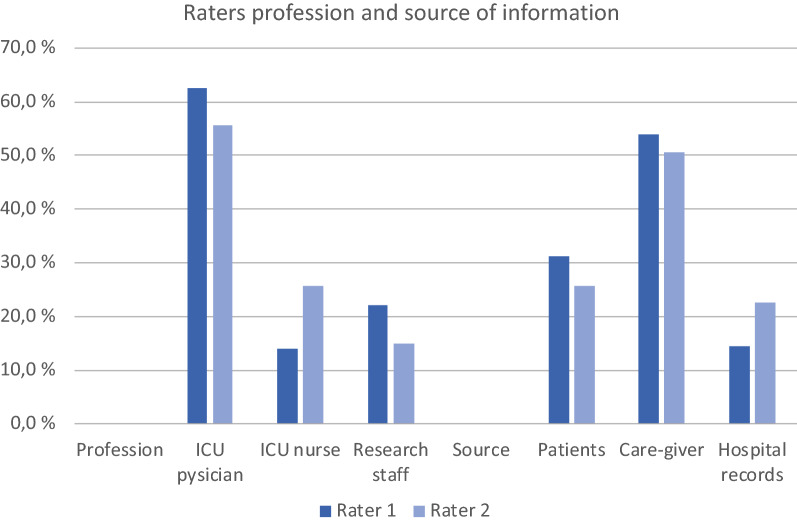
Materials and methods: From the VIP-2 study, 129 ICUs in 20 countries participated in this sub-study. The patients were acute admissions ≥ 80 years of age and frailty was assessed at admission by two independent observers using the CFS. Information was obtained from the patient, if not feasible, from the family/caregivers or from hospital files. The profession of the rater and source of data were recorded along with the score. Interrater variability was calculated using linear weighted kappa analysis.
Results: 1923 pairs of assessors were included and background data of patients were similar to the whole cohort (n = 3920). We found a very high inter-rater agreement (weighted kappa 0.86), also in subgroup analyses. The agreement when comparing information from family or hospital records was better than using only direct patient information, and pairs of raters from same profession performed better than from different professions.
Conclusions: Overall, we documented a high reliability using CFS in this setting. This frailty score could be used more frequently in elderly ICU patients in order to create a more holistic and realistic impression of the patient´s condition prior to ICU admission.
Keywords: Clinical frailty scale; Intensive care; Inter-rater variability; Octogenarians.
Conflict of interest statement
JCS declares that the Dept. of Intensive Care Medicine Bern has/had research and/or development/consulting contracts with (full disclosure): Orion Corporation, Abbott Nutrition International, B. Braun Medical AG, CSEM SA, Edwards Lifesciences Services GmbH/SA, Kenta Biotech Ltd, Maquet Critical Care AB, Omnicare Clinical Research AG, and Nestlé. Educational grants were received from Fresenius Kabi; GSK; MSD; Lilly; Baxter; Astellas; AstraZeneca; B. Braun Medical AG, CSL Behring, Maquet, Novartis, Covidien, Nycomed, Pierre Fabre Pharma (Roba Pharma); Pfizer, Orion Pharma. The money went into departmental funds. No personal financial gain applies. All other authors do not have any conflict of interest to declare related to this manuscript.
Figures
References
LinkOut - more resources
Full Text Sources
Other Literature Sources
