


A Test for the Rapid Detection of the Cefazolin Inoculum Effect in Methicillin-Susceptible Staphylococcus aureus
- PMID: 33536292
- PMCID: PMC8092731
- DOI: 10.1128/JCM.01938-20
A Test for the Rapid Detection of the Cefazolin Inoculum Effect in Methicillin-Susceptible Staphylococcus aureus
Abstract
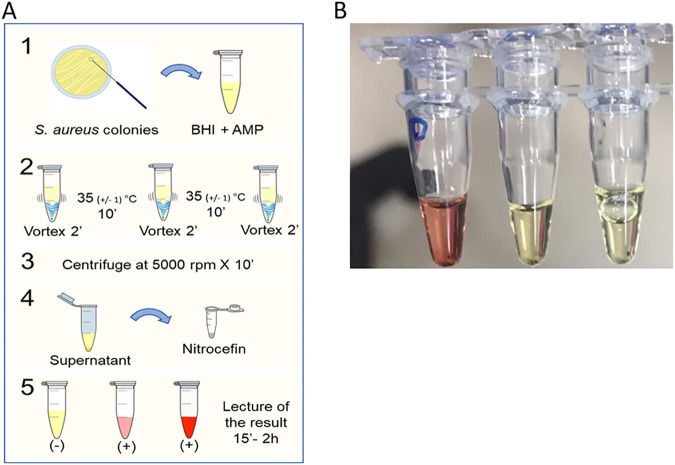
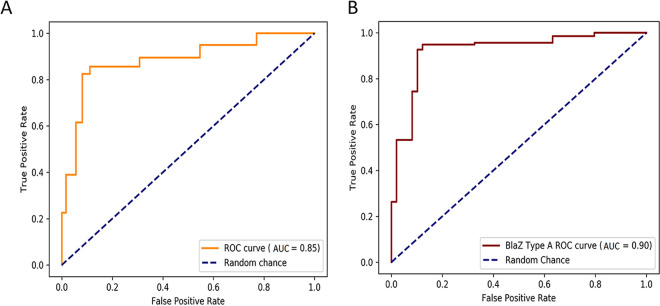
The cefazolin inoculum effect (CzIE) has been associated with therapeutic failures and mortality in invasive methicillin-susceptible Staphylococcus aureus (MSSA) infections. A diagnostic test to detect the CzIE is not currently available. We developed a rapid (∼3 h) CzIE colorimetric test to detect staphylococcal-β-lactamase (BlaZ) activity in supernatants after ampicillin induction. The test was validated using 689 bloodstream MSSA isolates recovered from Latin America and the United States. The cefazolin MIC determination at a high inoculum (107 CFU/ml) was used as a reference standard (cutoff ≥16 μg/ml). All isolates underwent genome sequencing. A total of 257 (37.3%) of MSSA isolates exhibited the CzIE by the reference standard method. The overall sensitivity and specificity of the colorimetric test was 82.5% and 88.9%, respectively. Sensitivity in MSSA isolates harboring type A BlaZ (the most efficient enzyme against cefazolin) was 92.7% with a specificity of 87.8%. The performance of the test was lower against type B and C enzymes (sensitivities of 53.3% and 72.3%, respectively). When the reference value was set to ≥32 μg/ml, the sensitivity for isolates carrying type A enzymes was 98.2%. Specificity was 100% for MSSA lacking blaZ The overall negative predictive value ranged from 81.4% to 95.6% in Latin American countries using published prevalence rates of the CzIE. MSSA isolates from the United States were genetically diverse, with no distinguishing genomic differences from Latin American MSSA, distributed among 18 sequence types. A novel test can readily identify most MSSA isolates exhibiting the CzIE, particularly those carrying type A BlaZ. In contrast to the MIC determination using high inoculum, the rapid test is inexpensive, feasible, and easy to perform. After minor validation steps, it could be incorporated into the routine clinical laboratory workflow.
Keywords: BlaZ; CzIE rapid test; cefazolin inoculum effect; high inoculum.
Copyright © 2021 American Society for Microbiology.
Figures
References
-
- Arias CA, Reyes J, Carvajal LP, Rincon S, Diaz L, Panesso D, Ibarra G, Rios R, Munita JM, Salles MJ, Alvarez-Moreno C, Labarca J, Garcia C, Luna CM, Mejia-Villatoro C, Zurita J, Guzman-Blanco M, Rodriguez-Noriega E, Narechania A, Rojas LJ, Planet PJ, Weinstock GM, Gotuzzo E, Seas C. 2017. A prospective cohort multicenter study of molecular epidemiology and phylogenomics of Staphylococcus aureus bacteremia in nine Latin American countries. Antimicrob Agents Chemother 61:e00816-17. doi: 10.1128/AAC.00816-17. - DOI - PMC - PubMed
-
- Jernigan JA, Hatfield KM, Wolford H, Nelson RE, Olubajo B, Reddy SC, McCarthy N, Paul P, McDonald LC, Kallen A, Fiore A, Craig M, Baggs J. 2020. Multidrug-resistant bacterial infections in U.S. hospitalized patients, 2012–2017. N Engl J Med 382:1309–1319. doi: 10.1056/NEJMoa1914433. - DOI - PMC - PubMed
-
- Jackson KA, Gokhale RH, Nadle J, Ray SM, Dumyati G, Schaffner W, Ham DC, Magill SS, Lynfield R, See I. 2020. Public health importance of invasive Methicillin-sensitive Staphylococcus aureus infections: surveillance in 8 US counties, 2016. Clin Infect Dis 70:1021–1028. doi: 10.1093/cid/ciz323. - DOI - PMC - PubMed
-
- Loubet P, Burdet C, Vindrios W, Grall N, Wolff M, Yazdanpanah Y, Andremont A, Duval X, Lescure FX. 2018. Cefazolin versus anti-staphylococcal penicillins for treatment of methicillin-susceptible Staphylococcus aureus bacteraemia: a narrative review. Clin Microbiol Infect 24:125–132. doi: 10.1016/j.cmi.2017.07.003. - DOI - PubMed
Publication types
MeSH terms
Substances
Grants and funding
LinkOut - more resources
Full Text Sources
Other Literature Sources
Medical
