


Allergic rhinitis, asthma and laryngopharyngeal reflux disease: a cross-sectional study on their reciprocal relations
- PMID: 33536455
- PMCID: PMC7858587
- DOI: 10.1038/s41598-020-80793-1
Allergic rhinitis, asthma and laryngopharyngeal reflux disease: a cross-sectional study on their reciprocal relations
Abstract
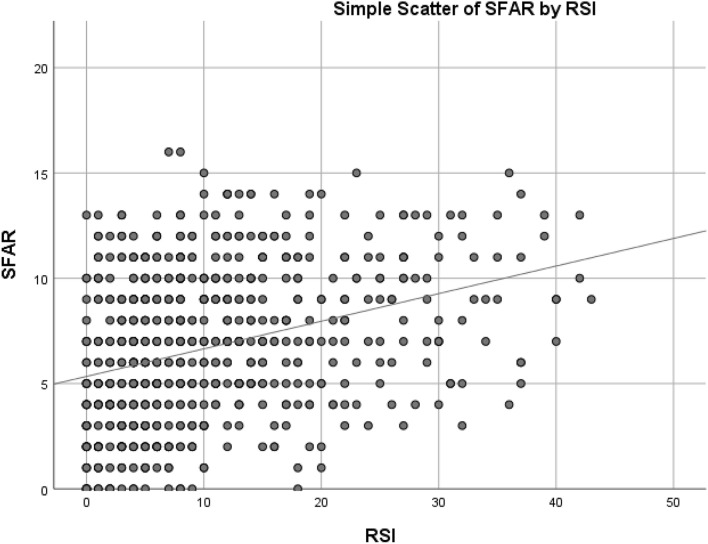
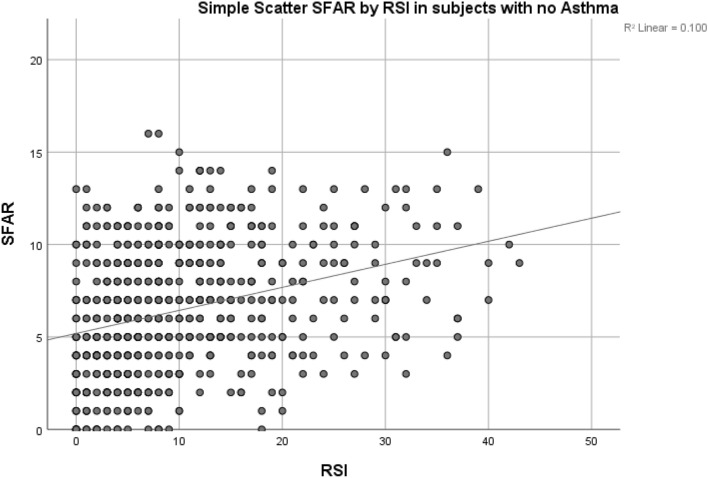
Allergic rhinitis (AR) is a common medical condition worldwide. It is an inflammation in the nasal mucosa due to allergen exposure throughout the year. Laryngopharyngeal reflux (LPR) is another medical condition that can overlap with AR. LPR can be considered an extra oesophageal manifestation of gastro-oesophageal reflux disease (GORD) or a different entity. Its diagnosis imposes a real challenge as it has a wide range of unspecific symptoms. Although AR and LPR are not life-threatening, they can severely affect the quality of life for years and cause substantial distress. Moreover, having AR is associated with having asthma which is also in turn associated with GORD. This is a cross-sectional study which used surveys distributed online on Social Media and targeted people across Syria. All participants who responded to the key questions were included. Reflux symptom index (RSI) was used for LPR, and score for allergic rhinitis (SFAR) was used for AR. Demographic questions and whether the participant had asthma were also included in the survey. We found that there was an association between the symptoms of LPR and AR p < 0.0001 (OR, 2.592; 95% CI 1.846-3.639), and their scores were significantly correlated (r = 0.334). Having asthma was associated with LPR symptoms p = 0.0002 (OR 3.096; 95% CI 1.665-5.759) and AR p < 0.0001 (OR 6.772; 95% CI 2.823-16.248). We concluded that there was a significant association between having LPR, AR, and asthma. We need more studies to distinguish between their common symptoms and aetiologies.
Conflict of interest statement
The authors declare no competing interests.
Figures
References
Publication types
MeSH terms
LinkOut - more resources
Full Text Sources
Other Literature Sources
Medical
Research Materials
