


Analysis of the Financial Impact of Using Cangrelor on the Safety and Efficacy Outcomes in Patients Undergoing Percutaneous Coronary Intervention in Whom Oral Therapy with P2Y12 Inhibitors is Not Feasible or Desirable, in Spain
- PMID: 33536769
- PMCID: PMC7850430
- DOI: 10.2147/CEOR.S290377
Analysis of the Financial Impact of Using Cangrelor on the Safety and Efficacy Outcomes in Patients Undergoing Percutaneous Coronary Intervention in Whom Oral Therapy with P2Y12 Inhibitors is Not Feasible or Desirable, in Spain
Abstract
Purpose: Cangrelor is an intravenous, direct-acting, reversible P2Y12 inhibitor indicated for the reduction of thrombotic cardiovascular events in patients with coronary artery disease (CAD) undergoing percutaneous coronary intervention (PCI) in whom oral P2Y12 inhibitors are not feasible or desirable. The objective was to assess the financial impact of introducing cangrelor into the hospital formulary in Spain.
Patients and methods: A budget impact model was developed to calculate the cost difference between two scenarios (without and with cangrelor) to treat CAD patients undergoing PCI in whom oral P2Y12 inhibitors are not feasible or desirable, over 3 years. Intravenous P2Y12 inhibitor (cangrelor), oral P2Y12 inhibitors (clopidogrel, prasugrel, and ticagrelor), and glycoprotein IIb-IIIa inhibitors (GPIs) for bail-out use were considered. Epidemiological, efficacy (thrombotic events including cardiac death), safety (bleeding events), and costs (€, 2019) data were based on Spanish registries, clinical trials, and meta-analyses. One-way sensitivity analysis established the effect of uncertainty on results.
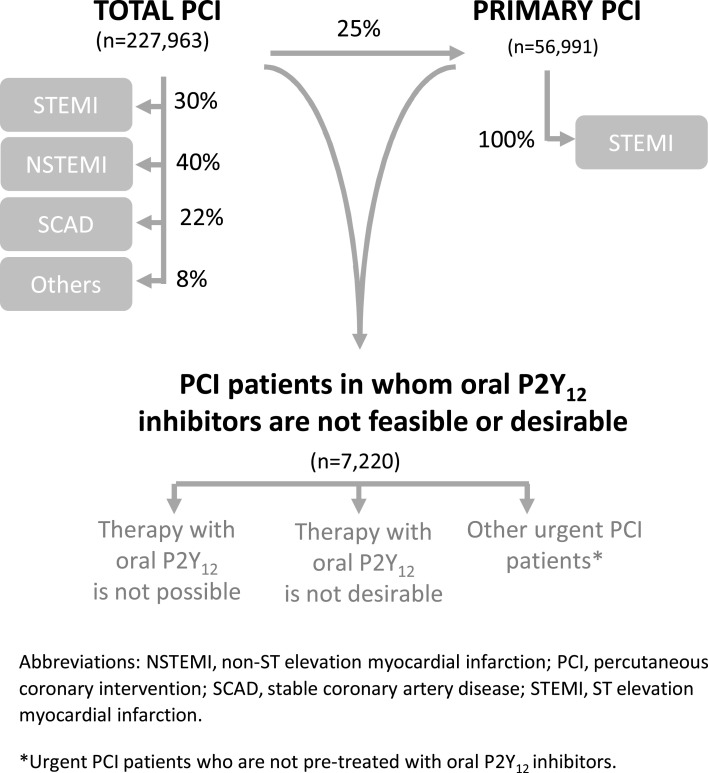
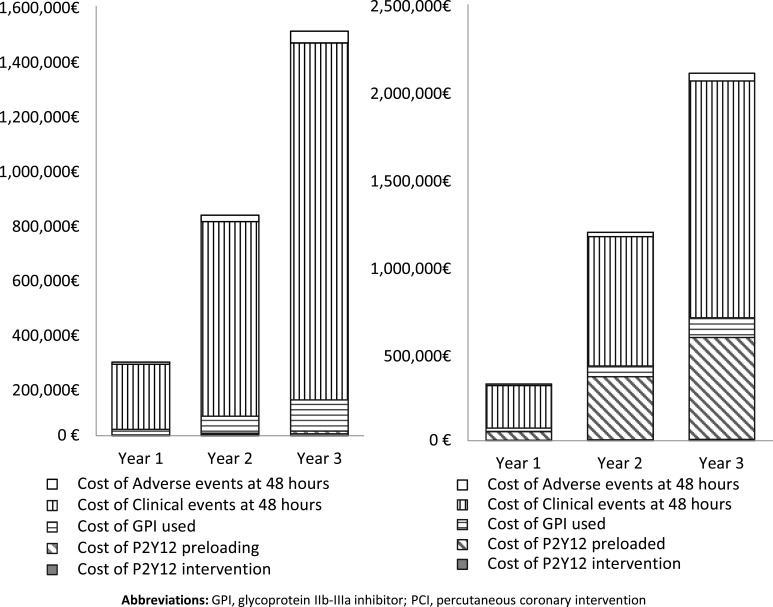
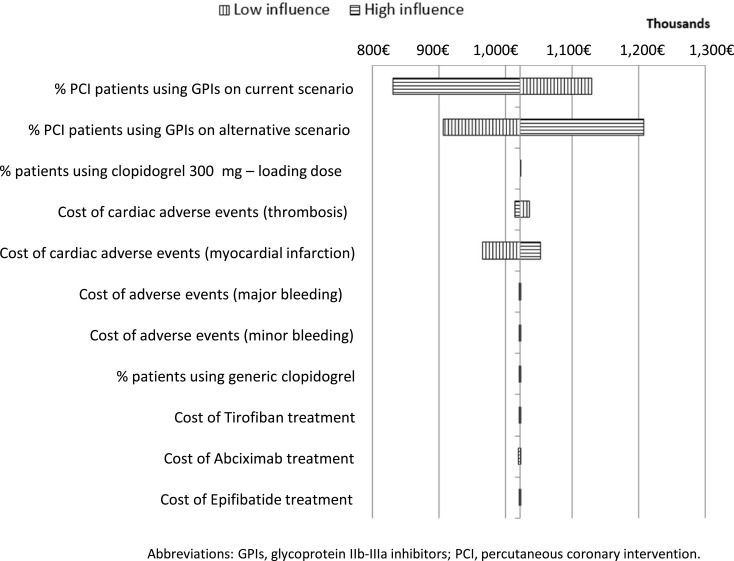
Results: For years 1, 2, and 3, the target population to receive cangrelor was 607, 1,822, and 3,340 patients, and cangrelor uptake was 23.70%, 58.30%, and 51.30%, respectively. The 3-year budget impact was 1,021,717€ varying from 50,245€ in year 1 to 599,272€ in year 3. The results were sensitive to the number of patients treated with GPIs in Spanish hospitals.
Conclusion: Based on our results, the financial effort needed to introduce the use of cangrelor in patients undergoing PCI in whom antiplatelet therapy with oral P2Y12 inhibitors is not feasible or desirable barely exceeds one million € over three years, in Spain.
Keywords: P2Y12 inhibitors; budget impact; cangrelor; percutaneous coronary intervention.
© 2021 Lizano-Díez and Paz Ruiz.
Conflict of interest statement
ILD is an employee at Ferrer. SPR reports personal fees from Ferrer, during the conduct of the study. The authors report no other conflicts of interest in this work.
Figures
References
-
- Cid Alvarez AB, Rodriguez Leor O, Moreno R, Peez de Prado A. Registro Español de Hemodinámica y Cardiología Intervencionista. XXVIII Informe Oficial de la Sección de Hemodinámica y Cardiología Intervencionista de la Sociedad Española de Cardiología (1990-2018) [Spanish Cardiac Catheterization and Coronary Intervent. Rev Esp Cardiol. 2019;72(12):1043–1053. doi: 10.1016/j.recesp.2019.07.023 - DOI - PubMed
-
- Collet J-P, Thiele H, Barbato E, et al. ESC Guidelines for the management of acute coronary syndromes in patients presenting without persistent ST-segment elevation. Eur Heart J. 2020;2020:1–79. - PubMed
LinkOut - more resources
Full Text Sources
Other Literature Sources
Miscellaneous
