


Metrics Used to Quantify Fecal Incontinence and Constipation
- PMID: 33536844
- PMCID: PMC7843947
- DOI: 10.1055/s-0040-1714245
Metrics Used to Quantify Fecal Incontinence and Constipation
Abstract
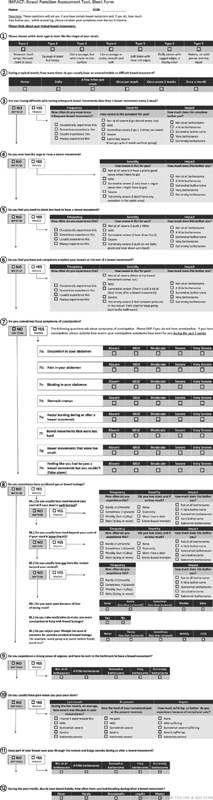
While fecal incontinence and constipation can be measured through physiological testing, the subjective experience of severity and impact on health-related quality of life lead to both being most effectively captured through patient-reported measures. Patient-reported measures of severity and impact help to determine baseline symptoms, guide clinical decision making, and compare various treatments. Here, we take pause to review the psychometric qualities that make effective instruments, and discuss some of the most commonly used instruments along with the reasons behind their use. In addition, we highlight the benefits of a standardized instrument designed to evaluate the major symptoms of patients presenting with pelvic floor disorders (including fecal incontinence and constipation). Ultimately, we aim to provide guidance in choosing appropriate instruments for clinical and research use.
Keywords: constipation metrics; fecal incontinence metrics; patient-reported outcomes; severity measures.
Thieme. All rights reserved.
Conflict of interest statement
Conflict of Interest None.
Figures
References
-
- U.S. Department of Health and Human Services FDA Center for Drug Evaluation and Research; U.S. Department of Health and Human Services FDA Center for Biologics Evaluation and Research.U.S. Department of Health and Human Services FDA Center for Devices and Radiological Health. Guidance for industry: patient-reported outcome measures: use in medical product development to support labeling claims: draft guidance Health Qual Life Outcomes 2006479. - PMC - PubMed
-
- Baxter N N, Rothenberger D A, Lowry A C. Measuring fecal incontinence. Dis Colon Rectum. 2003;46(12):1591–1605. - PubMed
-
- Karoui S, Savoye-Collet C, Koning E, Leroi A M, Denis P. Prevalence of anal sphincter defects revealed by sonography in 335 incontinent patients and 115 continent patients. AJR Am J Roentgenol. 1999;173(02):389–392. - PubMed
-
- Rasmussen O O, Sørensen M, Tetzschner T, Christiansen J. Dynamic anal manometry in the assessment of patients with obstructed defecation. Dis Colon Rectum. 1993;36(10):901–907. - PubMed
Publication types
LinkOut - more resources
Full Text Sources
Other Literature Sources
