


The Early Impact of COVID-19 on Chronic Pain: A Cross-Sectional Investigation of a Large Online Sample of Individuals with Chronic Pain in the United States, April to May, 2020
- PMID: 33537764
- PMCID: PMC7901854
- DOI: 10.1093/pm/pnaa446
The Early Impact of COVID-19 on Chronic Pain: A Cross-Sectional Investigation of a Large Online Sample of Individuals with Chronic Pain in the United States, April to May, 2020
Abstract
Objective: Individuals with chronic pain are uniquely challenged by the COVID-19 pandemic, as increased stress may exacerbate chronic pain, and there are new barriers to receiving chronic pain treatment. In light of this, using a large online sample in the United States, we examined 1) the early impact of COVID-19 on pain severity, pain interference, and chronic pain management; and 2) variables associated with perceived changes in pain severity and pain interference.
Design: A cross-sectional study.
Methods: Online survey data for 1,453 adults with chronic pain were collected via Amazon's Mechanical Turk platform.
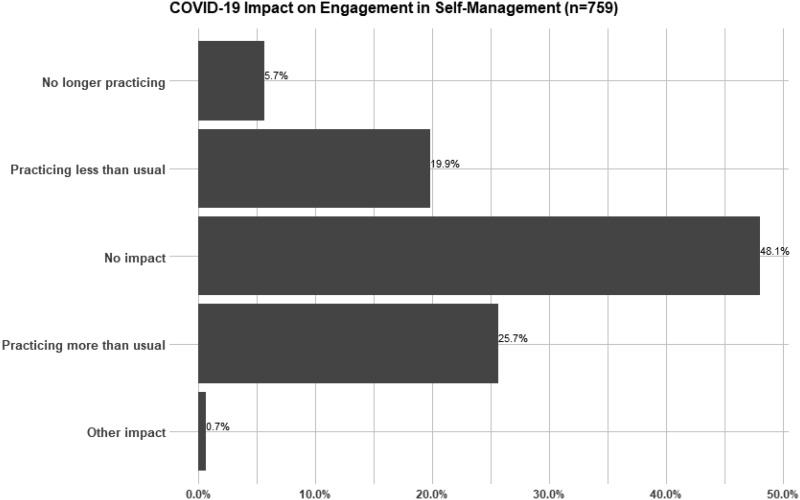
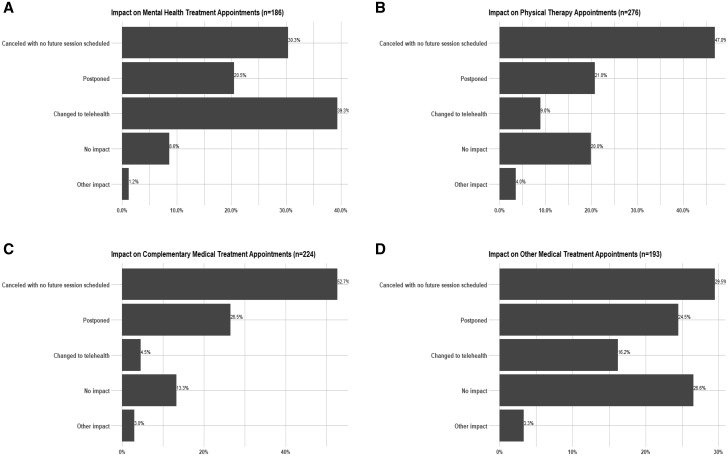
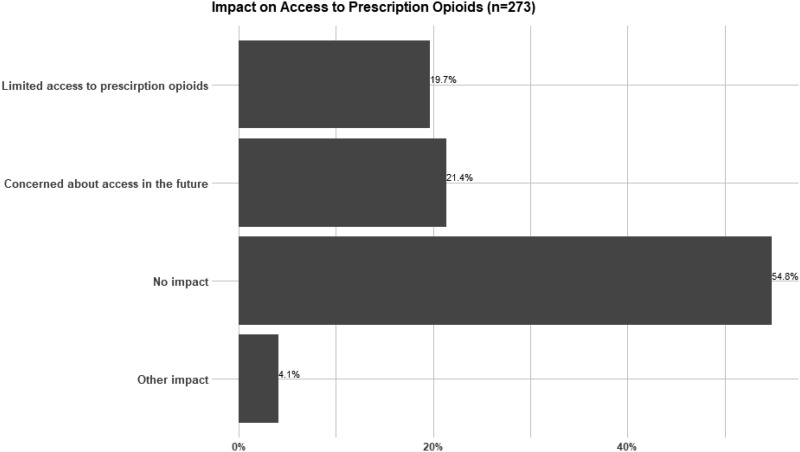
Results: Although a large proportion of participants reported no perceived changes in their pain severity and pain interference since the outbreak, approximately 25-30% of individuals reported exacerbation in these domains. Individuals identifying as Black and of non-Hispanic origin, who experienced greater disruptions in their mood and sleep quality, were more likely to report worsened pain interference. The majority of participants reported engaging in self-management strategies as usual. However, most appointments for chronic pain treatment were either postponed or canceled, with no future session scheduled. Furthermore, a notable proportion of participants had concerns about or difficulty accessing prescription opioids due to COVID-19.
Conclusions: We may expect to see a long-term exacerbation of chronic pain and related interference in functioning and chronic pain management among individuals most impacted by the pandemic. These individuals may benefit from remotely delivered intervention to effectively mitigate COVID-19-related exacerbations in chronic pain and interruptions in face-to-face treatment.
Keywords: COVID-19; Chronic Pain; Coronavirus; Disparities; Opioids; Pain Management.
© The Author(s) 2021. Published by Oxford University Press on behalf of the American Academy of Pain Medicine. All rights reserved. For permissions, please e-mail: journals.permissions@oup.com.
Figures
References
-
- Coronavirus Resource Center. COVID-19 Dashboard by the Center for Systems Science and Engineering (CSSE). Baltimore, MD: Johns Hopkins University (JHU; ); 2020. Available at: https://coronavirus.jhu.edu/map.html. (accessed May 5, 2020).
-
- Jennings EM, Okine BN, Roche M, Finn DP. Stress-induced hyperalgesia. Prog Neurobiol 2014;121:1–18. - PubMed
-
- Olango WM, Finn DP. Neurobiology of stress-induced hyperalgesia Curr Topics Behav Nuerosci 2014;20:251–80. - PubMed
MeSH terms
Substances
Grants and funding
LinkOut - more resources
Full Text Sources
Other Literature Sources
Medical
Miscellaneous
