


Multicenter point prevalence evaluation of the utilization and safety of drug therapies for COVID-19 at the onset of the pandemic timeline in the United States
- PMID: 33537767
- PMCID: PMC7929420
- DOI: 10.1093/ajhp/zxaa426
Multicenter point prevalence evaluation of the utilization and safety of drug therapies for COVID-19 at the onset of the pandemic timeline in the United States
Abstract
Key points: In a multicenter point-prevalence study, we found that the rate of supportive care was high; among those receiving COVID-19 drug therapies, adverse reactions occurred in 12% of patients.
Purpose: There are currently no FDA-approved medications for the treatment of coronavirus disease 2019 (COVID-19). At the onset of the pandemic, off-label medication use was supported by limited or no clinical data. We sought to characterize experimental COVID-19 therapies and identify safety signals during this period.
Methods: We conducted a noninterventional, multicenter, point prevalence study of patients hospitalized with suspected/confirmed COVID-19. Clinical and treatment characteristics within a 24-hour window were evaluated in a random sample of up to 30 patients per site. The primary objective was to describe COVID-19-targeted therapies. The secondary objective was to describe adverse drug reactions (ADRs).
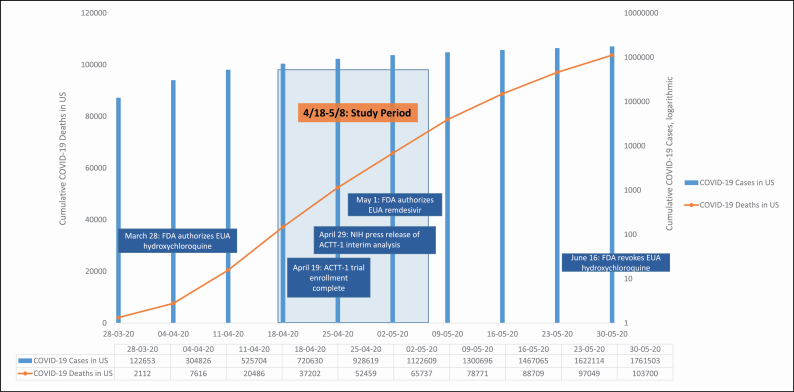
Results: A total of 352 patients treated for COVID-19 at 15 US hospitals From April 18 to May 8, 2020, were included in the study. Most patients were treated at academic medical centers (53.4%) or community hospitals (42.6%). Sixty-seven patients (19%) were receiving drug therapy in addition to supportive care. Drug therapies used included hydroxychloroquine (69%), remdesivir (10%), and interleukin-6 antagonists (9%). Five patients (7.5%) were receiving combination therapy. The rate of use of COVID-19-directed drug therapy was higher in patients with vs patients without a history of asthma (14.9% vs 7%, P = 0.037) and in patients enrolled in clinical trials (26.9% vs 3.2%, P < 0.001). Among those receiving drug therapy, 8 patients (12%) experienced an ADR, and ADRs were recognized at a higher rate in patients enrolled in clinical trials (62.5% vs 22%; odds ratio, 5.9; P = 0.028).
Conclusion: While we observed high rates of supportive care for patients with COVID-19, we also found that ADRs were common among patients receiving drug therapy, including those enrolled in clinical trials. Comprehensive systems are needed to identify and mitigate ADRs associated with experimental COVID-19 treatments.
Keywords: COVID-19; SARS-CoV-2; adverse drug reaction; medication safety; observational study; supportive care.
© American Society of Health-System Pharmacists 2021. All rights reserved. For permissions, please e-mail: journals.permissions@oup.com.
Figures
Update of
-
Multicenter point-prevalence evaluation of the utilization and safety of drug therapies for COVID-19.medRxiv [Preprint]. 2020 Jun 5:2020.06.03.20121558. doi: 10.1101/2020.06.03.20121558. medRxiv. 2020. Update in: Am J Health Syst Pharm. 2021 Mar 18;78(7):568-577. doi: 10.1093/ajhp/zxaa426. PMID: 32577687 Free PMC article. Updated. Preprint.
References
-
- Centers for Disease Control and Prevention. Coronavirus disease 2019 (COVID-19): coronavirus disease 2019 basics. Accessed May 31, 2020. https://www.cdc.gov/coronavirus/2019-ncov/faq.html#Coronavirus-Disease-2...
-
- COVID-19 Treatment Guidelines Panel, National Institutes of Health. Coronavirus disease 2019 (COVID-19) treatment guidelines. Accessed May 31, 2020. https://www.covid19treatmentguidelines.nih.gov - PubMed
-
- Food and Drug Administration. FDA drug safety communication: FDA cautions against use of hydroxychloroquine or chloroquine for COVID-19 outside of the hospital setting or a clinical trial due to risk of heart rhythm problems. Published April 24, 2020. Accessed May 31, 2020. https://www.fda.gov/drugs/drug-safety-and-availability/fda-cautions-agai...
Publication types
MeSH terms
Substances
Grants and funding
LinkOut - more resources
Full Text Sources
Other Literature Sources
Medical
Research Materials
Miscellaneous
