


Optogenetic brain-stimulation reward: A new procedure to re-evaluate the rewarding versus aversive effects of cannabinoids in dopamine transporter-Cre mice
- PMID: 33538103
- PMCID: PMC9308103
- DOI: 10.1111/adb.13005
Optogenetic brain-stimulation reward: A new procedure to re-evaluate the rewarding versus aversive effects of cannabinoids in dopamine transporter-Cre mice
Abstract
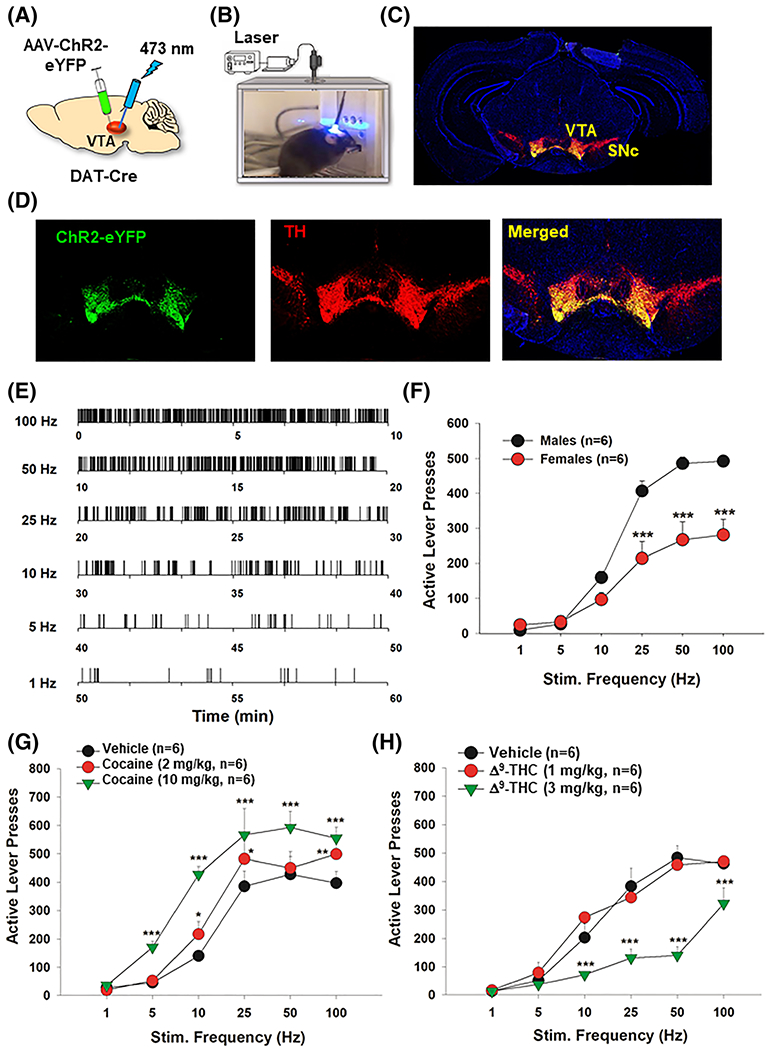
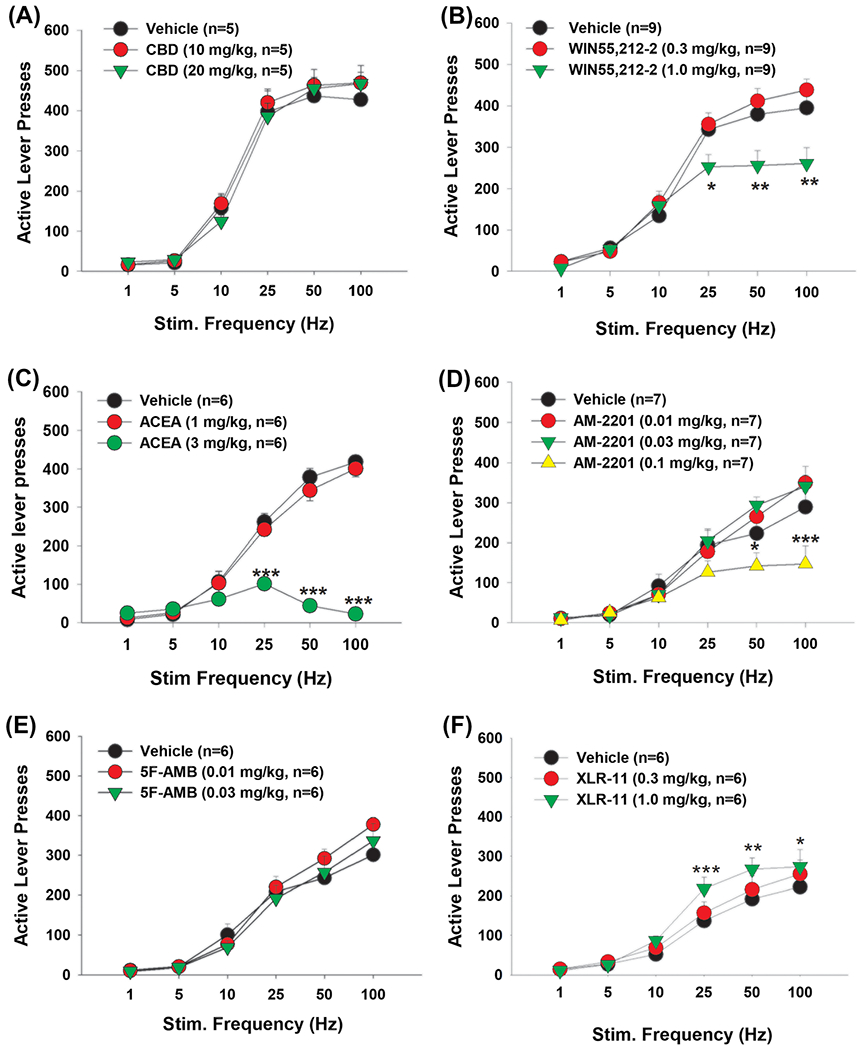
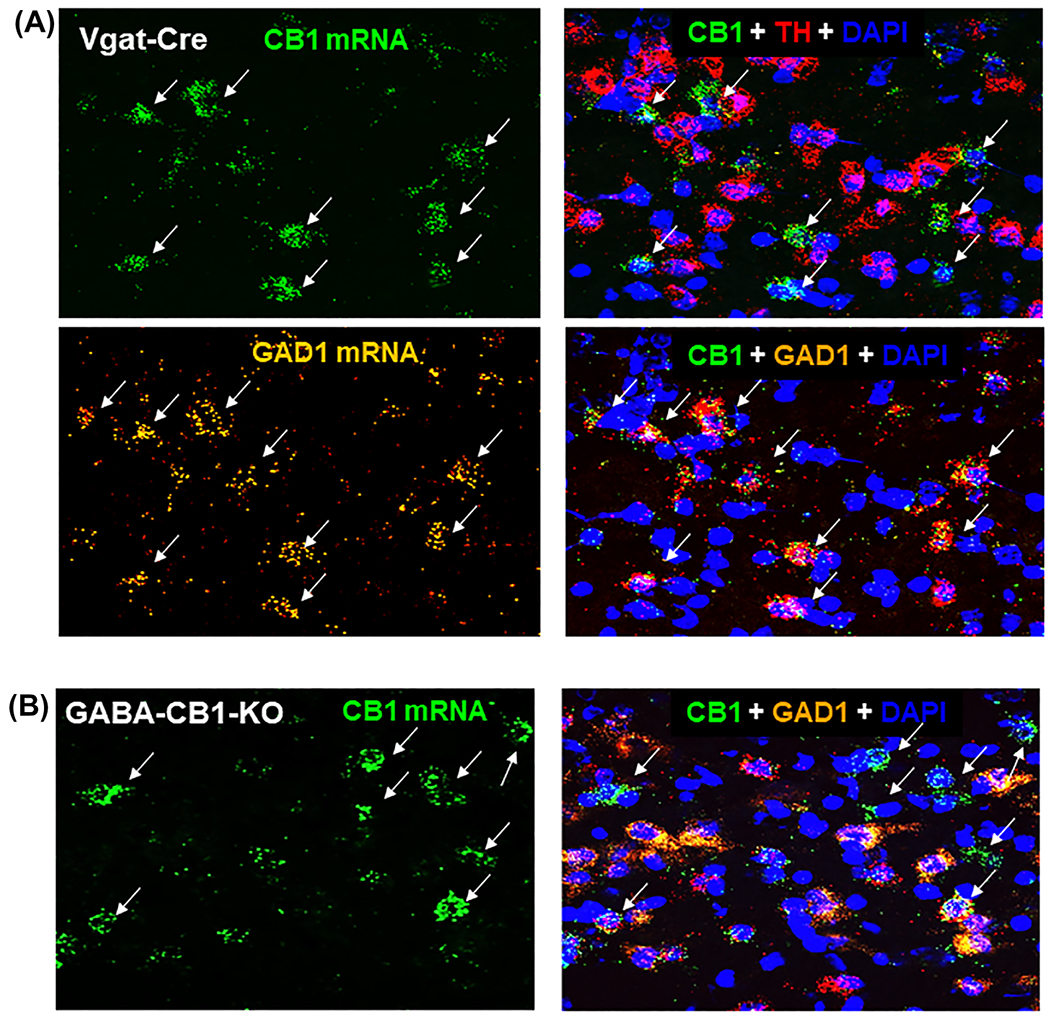
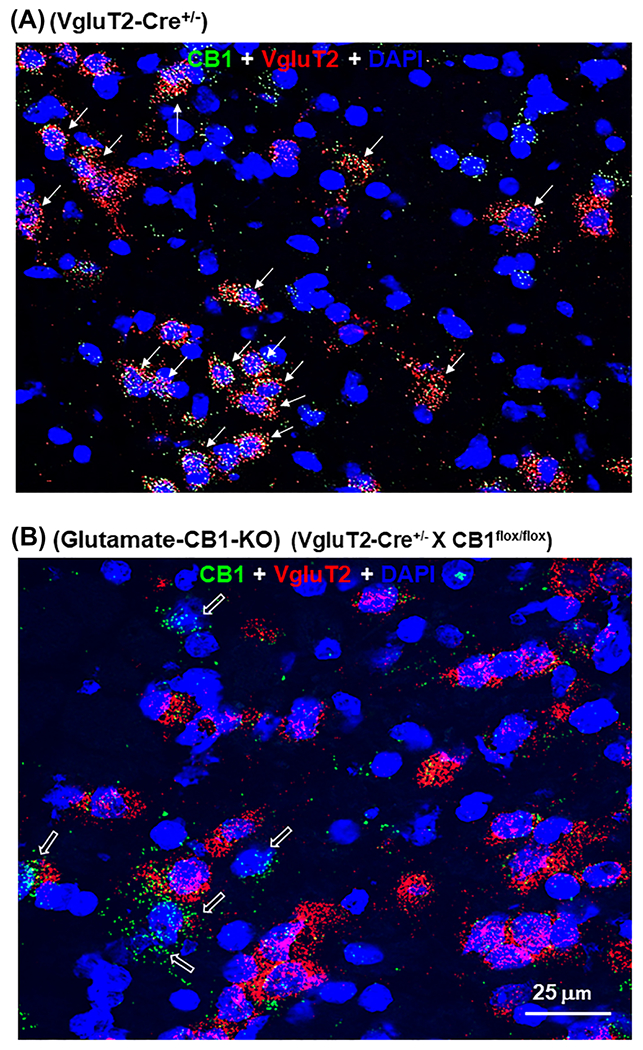
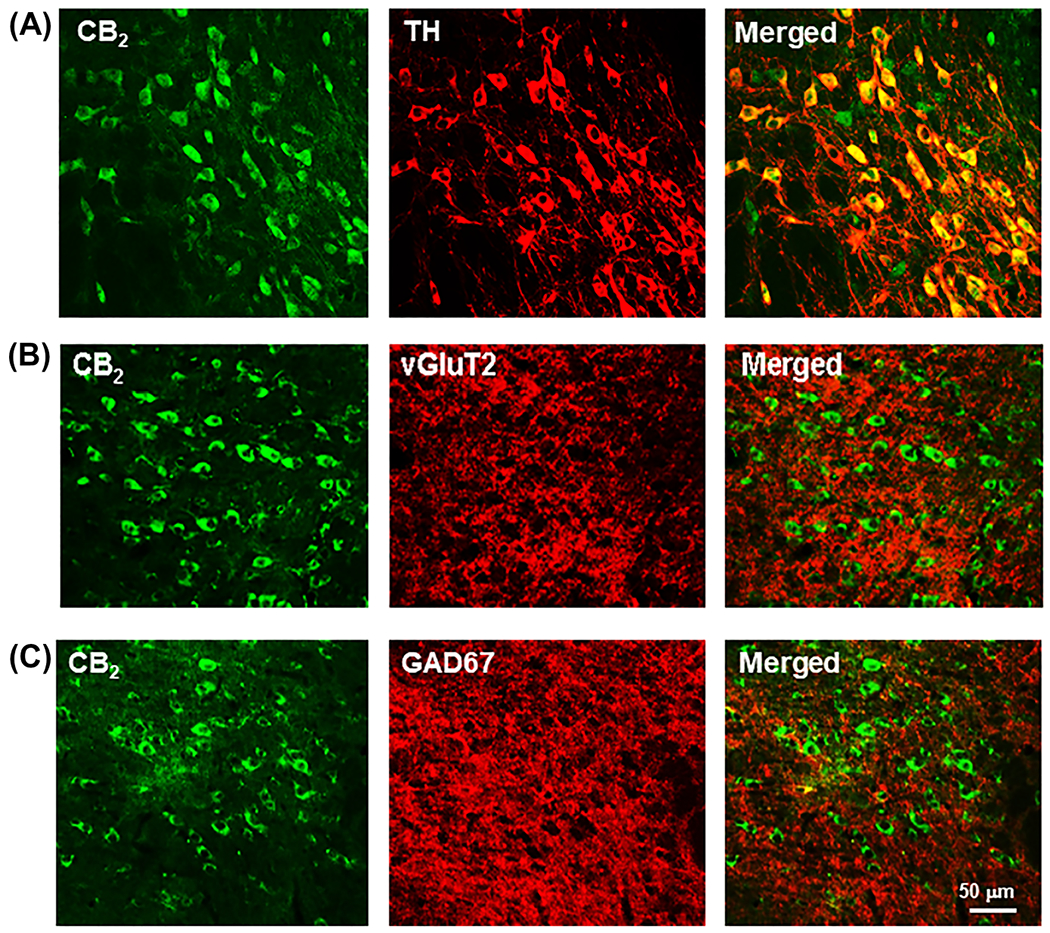
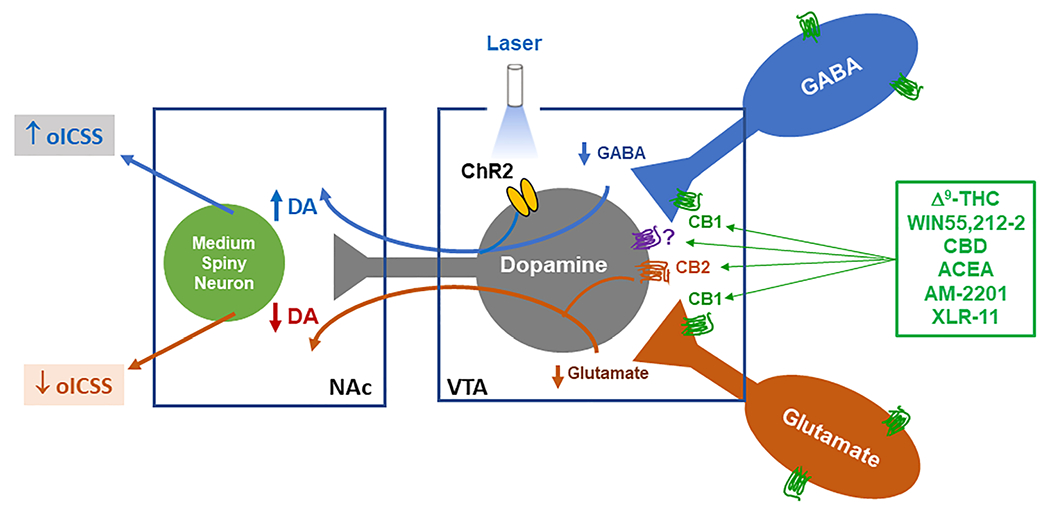
Despite extensive research, the rewarding effects of cannabinoids are still debated. Here, we used a newly established animal procedure called optogenetic intracranial self-stimulation (ICSS) (oICSS) to re-examine the abuse potential of cannabinoids in mice. A specific adeno-associated viral vector carrying a channelrhodopsin gene was microinjected into the ventral tegmental area (VTA) to express light-sensitive channelrhodopsin in dopamine (DA) neurons of transgenic dopamine transporter (DAT)-Cre mice. Optogenetic stimulation of VTA DA neurons was highly reinforcing and produced a classical "sigmoidal"-shaped stimulation-response curve dependent upon the laser pulse frequency. Systemic administration of cocaine dose-dependently enhanced oICSS and shifted stimulation-response curves upward, in a way similar to previously observed effects of cocaine on electrical ICSS. In contrast, Δ9 -tetrahydrocannabinol (Δ9 -THC), but not cannabidiol, dose-dependently decreased oICSS responding and shifted oICSS curves downward. WIN55,212-2 and ACEA, two synthetic cannabinoids often used in laboratory settings, also produced dose-dependent reductions in oICSS. We then examined several new synthetic cannabinoids, which are used recreationally. XLR-11 produced a cocaine-like increase, AM-2201 produced a Δ9 -THC-like reduction, while 5F-AMB had no effect on oICSS responding. Immunohistochemistry and RNAscope in situ hybridization assays indicated that CB1 Rs are expressed mainly in VTA GABA and glutamate neurons, while CB2 Rs are expressed mainly in VTA DA neurons. Together, these findings suggest that most cannabinoids are not reward enhancing, but rather reward attenuating or aversive in mice. Activation of CB1 R and/or CB2 R in different populations of neurons in the brain may underlie the observed actions.
Keywords: WIN55,212-2; brain-stimulation reward; cannabinoids; cocaine; dopamine; intracranial self-stimulation; optogenetics; ventral tegmental area; Δ9-THC.
Published 2021. This article is a U.S. Government work and is in the public domain in the USA.
Conflict of interest statement
CONFLICT OF INTEREST
None of the authors have any conflicts of interest.
Figures
References
-
- Grigsby TM, Hoffmann LM, Moss MJ. Marijuana use and potential implications of marijuana legalization. Pediatr Rev. 2020;41(2):61–72. - PubMed
-
- National Institute on Drug Abuse. What is the scope of marijuana use in the United States? https://www.drugabuse.gov/publications/research-reports/marijuana/what-s.... Published 2020. Accessed May 30, 2020.
-
- National Institute on Drug Abuse. Is marijuana addictive? https://www.drugabuse.gov/publications/research-reports/marijuana/mariju.... Published 2020. Accessed May 30, 2020.
-
- Fattore L, Fadda P, Spano MS, Pistis M, Fratta W. Neurobiological mechanisms of cannabinoid addiction. Mol Cell Endocrinol. 2008;286(1–2 Suppl 1):S97–S107. - PubMed
Publication types
MeSH terms
Substances
Grants and funding
LinkOut - more resources
Full Text Sources
Other Literature Sources
Molecular Biology Databases
