


Relative Contribution of Proprioceptive and Vestibular Sensory Systems to Locomotion: Opportunities for Discovery in the Age of Molecular Science
- PMID: 33540567
- PMCID: PMC7867206
- DOI: 10.3390/ijms22031467
Relative Contribution of Proprioceptive and Vestibular Sensory Systems to Locomotion: Opportunities for Discovery in the Age of Molecular Science
Abstract
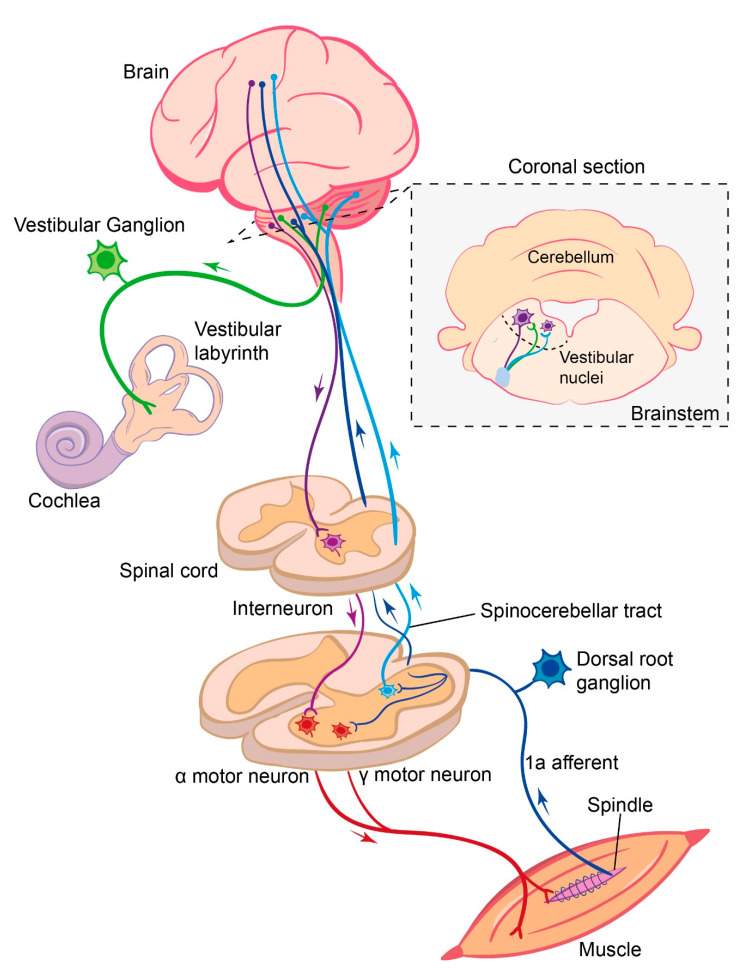
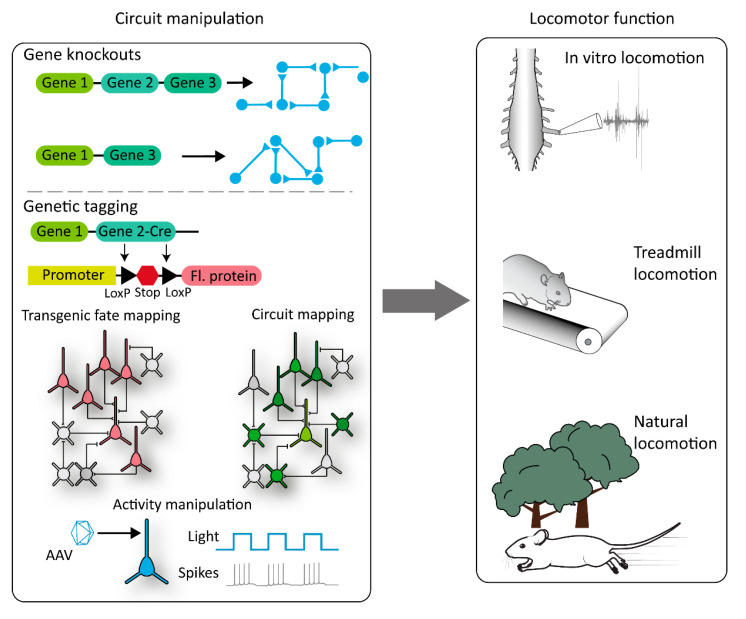
Locomotion is a fundamental animal behavior required for survival and has been the subject of neuroscience research for centuries. In terrestrial mammals, the rhythmic and coordinated leg movements during locomotion are controlled by a combination of interconnected neurons in the spinal cord, referred as to the central pattern generator, and sensory feedback from the segmental somatosensory system and supraspinal centers such as the vestibular system. How segmental somatosensory and the vestibular systems work in parallel to enable terrestrial mammals to locomote in a natural environment is still relatively obscure. In this review, we first briefly describe what is known about how the two sensory systems control locomotion and use this information to formulate a hypothesis that the weight of the role of segmental feedback is less important at slower speeds but increases at higher speeds, whereas the weight of the role of vestibular system has the opposite relation. The new avenues presented by the latest developments in molecular sciences using the mouse as the model system allow the direct testing of the hypothesis.
Keywords: locomotion; molecular sciences; somatosensory feedback; speed; vestibular feedback.
Conflict of interest statement
The authors declare no conflict of interest.
Figures
References
-
- Grillner S. Control of locomotion in bipeds, tetrapods, and fish. In: Brooks V., editor. Handbook of Physiology: The Nervous System, 2, Motor Control. Wiley; New York, NY, USA: 1981. pp. 1176–1236.
Publication types
MeSH terms
Grants and funding
LinkOut - more resources
Full Text Sources
Other Literature Sources
