


Progress towards the 2020 fast track HIV/AIDS reduction targets across ages in Ethiopia as compared to neighboring countries using global burden of diseases 2017 data
- PMID: 33541303
- PMCID: PMC7863245
- DOI: 10.1186/s12889-021-10269-y
Progress towards the 2020 fast track HIV/AIDS reduction targets across ages in Ethiopia as compared to neighboring countries using global burden of diseases 2017 data
Abstract
Background: Sustainable Development Goal (SDG) 3.3, targets to eliminate HIV from being a public health threat by 2030. For better tracking of this target interim Fast Track milestones for 2020 and composite complementary measures have been indicated. This study measured the Fast Track progress in the epidemiology of HIV/AIDS in Ethiopia across ages compared to neighboring countries.
Methods: The National Data Management Center for health's research team at the Ethiopian Public Health Institute has analyzed the Global Burden of Disease (GBD) 2017 secondary data for the year 2010 to 2017 for Ethiopia and its neighbors. GBD 2017 data sources were census, demographic and a health survey, prevention of mother-to-child HIV transmission, antiretroviral treatment programs, sentinel surveillance, and UNAIDS reports. Age-standardized and age-specific HIV/AIDS incidence, prevalence, mortality, Disability-Adjusted Life Years (DALYs), incidence:mortality ratio and incidence:prevalence ratio were calculated with corresponding 95% confidence intervals.
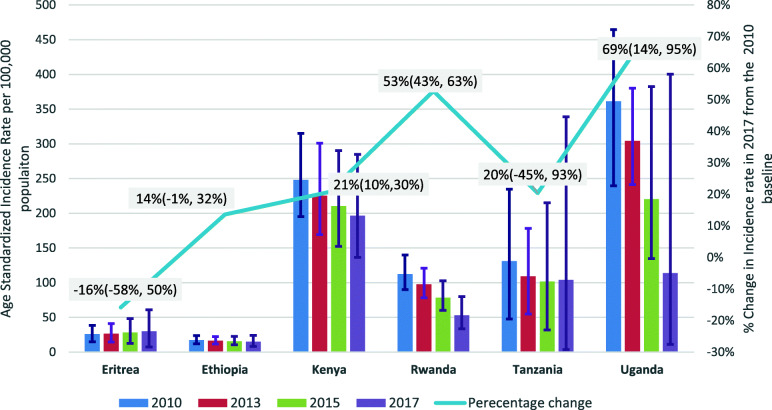
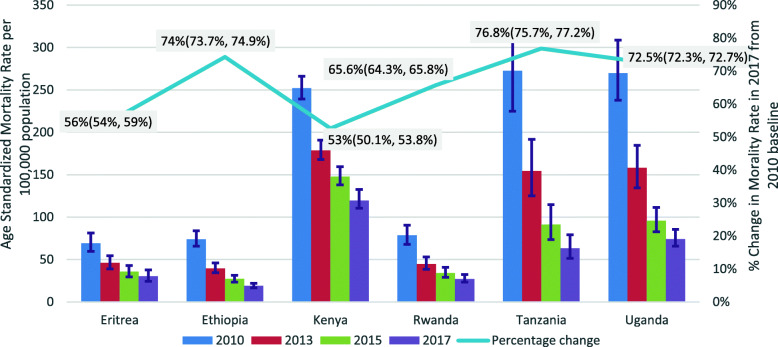
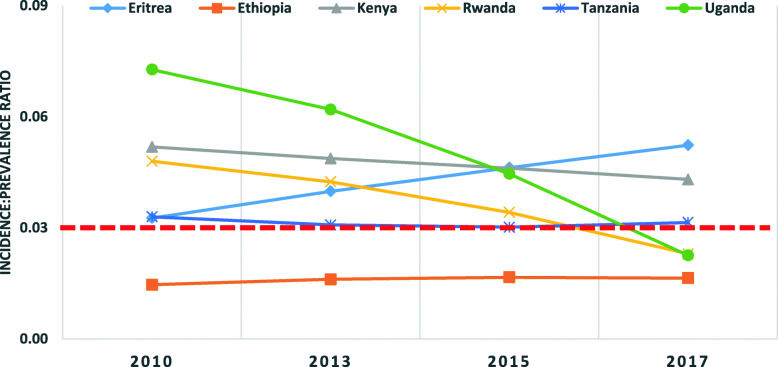
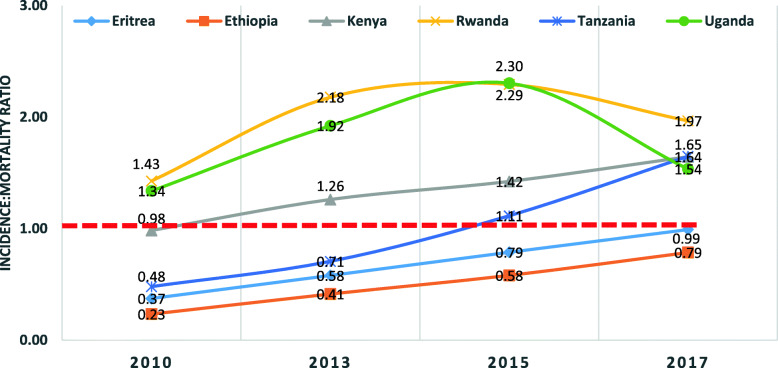
Results: Ethiopia and neighboring countries recorded slow progress in reducing new HIV infection since 2010. Only Uganda would achieve the 75% target by 2020. Ethiopia, Tanzania, and Uganda already achieved the 75% mortality reduction target set for 2020. The incidence: prevalence ratio for Ethiopia, Rwanda, and Uganda were < 0.03, indicating the countries were on track to end HIV by 2030. Ethiopia had an incidence: mortality ratio < 1 due to high mortality; while Kenya, Rwanda, Tanzania and Uganda had a ratio of > 1 due to high incidence. The HIV incidence rate in Ethiopia was dropped by 76% among under 5 children in 2017 compared to 2010 and the country would likely to attain the 2020 national target, but far behind achieving the target among the 15-49 age group.
Conclusions: Ethiopia and neighboring countries have made remarkable progress towards achieving the 75% HIV/AIDS mortality reduction target by 2020, although they progressed poorly in reducing HIV incidence. By recording an incidence:prevalence ratio benchmark of less than 0.03, Ethiopia, Rwanda, and Uganda are well heading towards epidemic control. Nonetheless, the high HIV/AIDS mortality rate in Ethiopia for its incidence requires innovative strategies to reach out undiagnosed cases and to build institutional capacity for generating strong evidence to ensure sustainable epidemic control.
Keywords: East Africa; Eritrea; Ethiopia; Fast track; HIV incidence; HIV/AIDS; HIV/AIDS prevalence; HIV/AIDS related mortality; Kenya; Rwanda; SDG; Tanzania; Targets; Tracking; Uganda.
Conflict of interest statement
The authors declare that they have no competing interests.
Figures
References
-
- UNAIDS . MILES TO GO: closing gaps breaking barriers righting injustices. Geneva: UNAIDS; 2018.
-
- FHAPCO. HIV Prevention in Ethiopia National Road Map 2018–2020. In: Office Federal HIV/AIDS Prevention and Control, editor. Addis Ababa: In; 2018.
-
- NAIDS. Global AIDS Monitoring 2019; Indicators for monitoring the 2016 political declaration on ending AIDS. Switzerland: UNAIDS; 2018.
-
- FMOH . Ethiopia's Health Sector Transformation Plan (HSTP) (2015/16–2019/20). Federal Democratic Republic of Ethiopia; Comprehensive mid-term review report. VOLUM I. Addis Ababa: Federal Ministry of Health (FMOH) 2018.
Publication types
MeSH terms
LinkOut - more resources
Full Text Sources
Other Literature Sources
Medical
