


Immune checkpoint inhibition in COVID-19: risks and benefits
- PMID: 33543652
- PMCID: PMC7898453
- DOI: 10.1080/14712598.2021.1887131
Immune checkpoint inhibition in COVID-19: risks and benefits
Abstract
Introduction: Immune checkpoint inhibition (ICI) is a novel cancer immunotherapy, which is administered in patients with metastatic, refractory, or relapsed solid cancer types. Since the initiation of the Coronavirus Disease 2019 (COVID-19) pandemic, many studies have reported a higher severity and mortality rate of COVID-19 among patients with cancer in general.
Areas covered: The immunomodulatory effects of ICI can modify the patients' immune system function in severe acute respiratory syndrome coronavirus 2 (SARS-CoV-2) infection. There is controversy over whether the severity of COVID-19 in cancer patients who previously received ICI compared to other patients with cancer has increased. There is evidence that the upregulation of immune checkpoint molecules in T cells, lymphopenia, and inflammatory cytokine secretion are associated with the severity of COVID-19 symptoms.
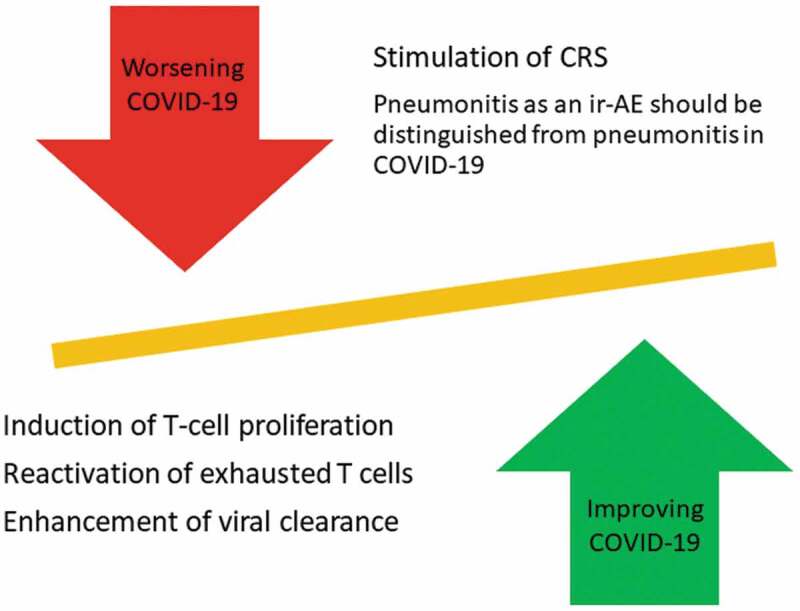
Expert opinion: ICI can interrupt the T cell exhaustion and depletion by interrupting the inhibitory signaling of checkpoint molecules in T cells, and augments the immune system response in COVID-19 patients with lymphopenia. However, ICI may also increase the risk of cytokine release syndrome. ICI can be considered not only as a cancer immunotherapy but also as immunotherapy in COVID-19. More studies are needed to assess the safety of ICI in COVID-19 patients with or without cancer.
Keywords: COVID-19; cytokine release syndrome; immune Checkpoint Inhibition; immunotherapy; lymphopenia; severe acute respiratory syndrome coronavirus 2.
Figures

References
-
- Nishimura H, Nose M, Hiai H, et al. Development of lupus-like autoimmune diseases by disruption of the PD-1 gene encoding an ITIM motif-carrying Immunoreceptor. Immunity. 1999;11(2):141–151. - PubMed
-
- Sharpe AH, Wherry EJ, Ahmed R, et al. The function of programmed cell death 1 and its ligands in regulating autoimmunity and infection. Nat Immunol. 2007;8(3): p. 239–245. - PubMed
MeSH terms
Substances
LinkOut - more resources
Full Text Sources
Other Literature Sources
Miscellaneous
