


Effect of sodium bicarbonate contribution on energy metabolism during exercise: a systematic review and meta-analysis
- PMID: 33546730
- PMCID: PMC7863495
- DOI: 10.1186/s12970-021-00410-y
Effect of sodium bicarbonate contribution on energy metabolism during exercise: a systematic review and meta-analysis
Abstract
Background: The effects of sodium bicarbonate (NaHCO3) on anaerobic and aerobic capacity are commonly acknowledged as unclear due to the contrasting evidence thus, the present study analyzes the contribution of NaHCO3 to energy metabolism during exercise.
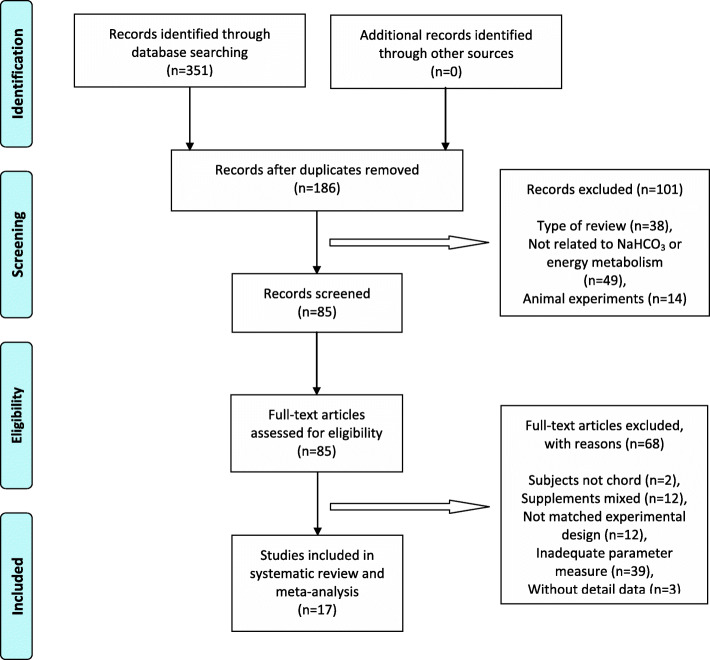
Methods: Following a search through five databases, 17 studies were found to meet the inclusion criteria. Meta-analyses of standardized mean differences (SMDs) were performed using a random-effects model to determine the effects of NaHCO3 supplementation on energy metabolism. Subgroup meta-analyses were conducted for the anaerobic-based exercise (assessed by changes in pH, bicarbonate ion [HCO3-], base excess [BE] and blood lactate [BLa]) vs. aerobic-based exercise (assessed by changes in oxygen uptake [VO2], carbon dioxide production [VCO2], partial pressure of oxygen [PO2] and partial pressure of carbon dioxide [PCO2]).
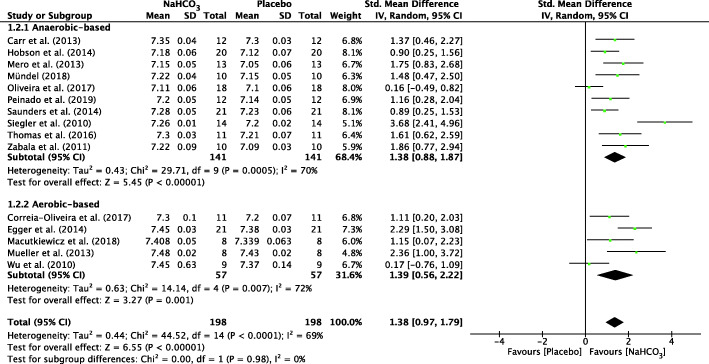
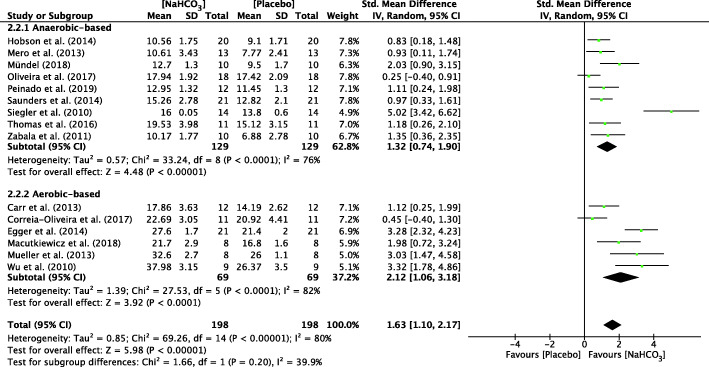
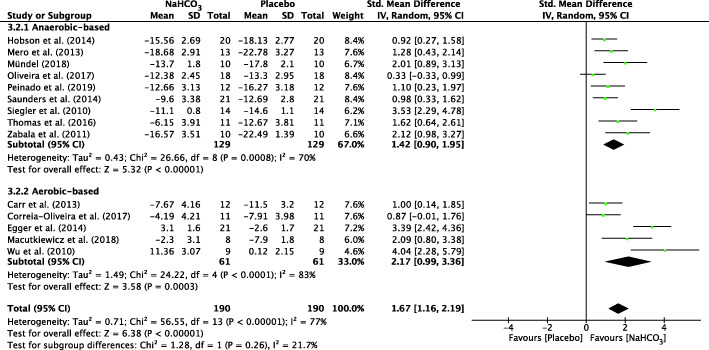
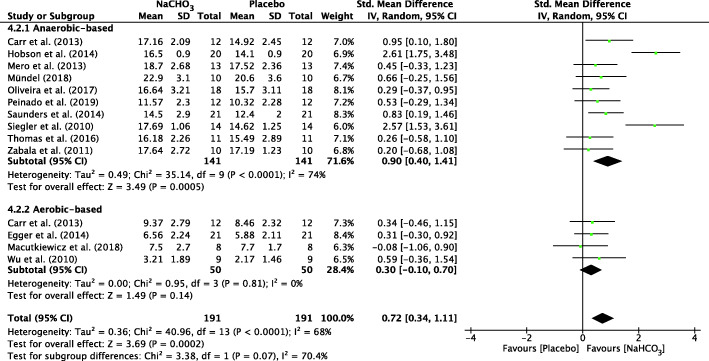
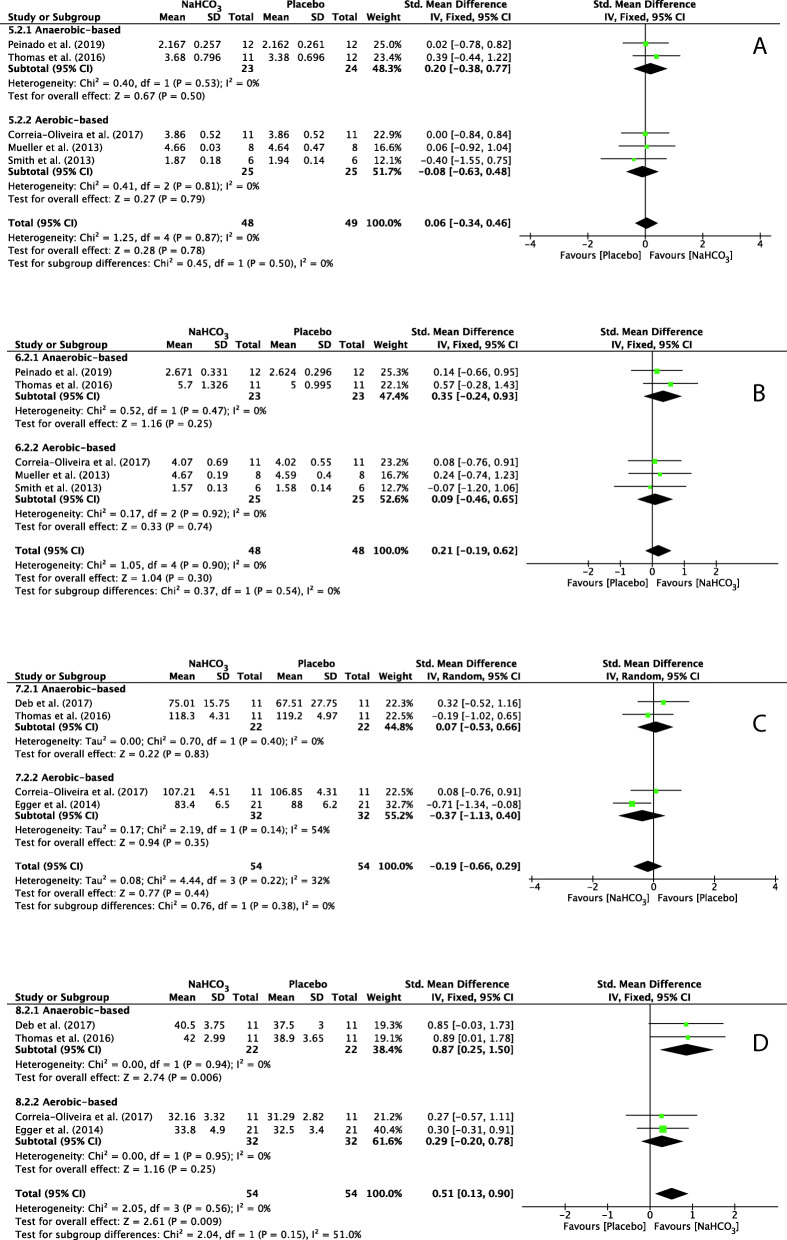
Results: The meta-analysis indicated that NaHCO3 ingestion improves pH (SMD = 1.38, 95% CI: 0.97 to 1.79, P < 0.001; I2 = 69%), HCO3- (SMD = 1.63, 95% CI: 1.10 to 2.17, P < 0.001; I2 = 80%), BE (SMD = 1.67, 95% CI: 1.16 to 2.19, P < 0.001, I2 = 77%), BLa (SMD = 0.72, 95% CI: 0.34 to 1.11, P < 0.001, I2 = 68%) and PCO2 (SMD = 0.51, 95% CI: 0.13 to 0.90, P = 0.009, I2 = 0%) but there were no differences between VO2, VCO2 and PO2 compared with the placebo condition.
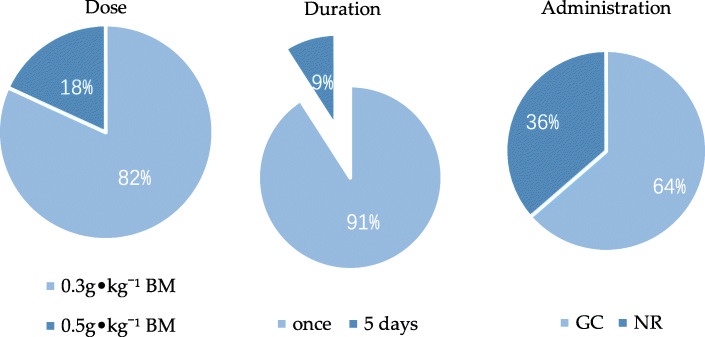
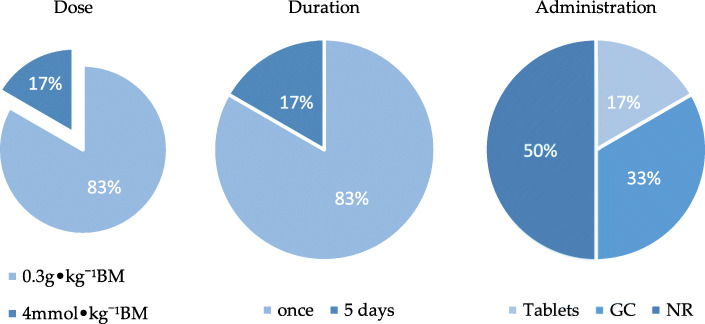
Conclusions: This meta-analysis has found that the anaerobic metabolism system (AnMS), especially the glycolytic but not the oxidative system during exercise is affected by ingestion of NaHCO3. The ideal way is to ingest it is in a gelatin capsule in the acute mode and to use a dose of 0.3 g•kg- 1 body mass of NaHCO3 90 min before the exercise in which energy is supplied by the glycolytic system.
Keywords: Aerobic-based; Anaerobic-based; Energy metabolism, exercise; Sodium bicarbonate.
Conflict of interest statement
The authors declare that they have no competing interests.
Figures
References
-
- Kenney WL, Wilmore JH, and Costill DL: Physiology of sport and exercise: Human kinetics; 2015(Series Editor).
-
- MacLaren D and Morton J: Biochemistry for sport and exercise metabolism: John Wiley & Sons; 2011(Series Editor).
Publication types
MeSH terms
Substances
LinkOut - more resources
Full Text Sources
Other Literature Sources
Medical
