


Infection dynamics and persistence of hepatitis E virus on pig farms - a review
- PMID: 33546777
- PMCID: PMC7863251
- DOI: 10.1186/s40813-021-00189-z
Infection dynamics and persistence of hepatitis E virus on pig farms - a review
Abstract
Background: Hepatitis E virus (HEV) genotype 3 and 4 is a zoonosis that causes hepatitis in humans. Humans can become infected by consumption of pork or contact with pigs. Pigs are the main reservoir of the virus worldwide and the virus is present on most pig farms.
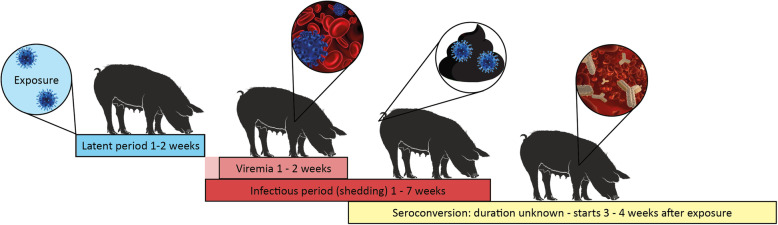
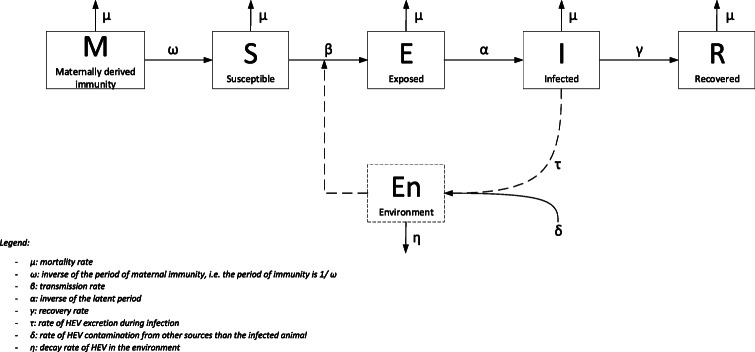
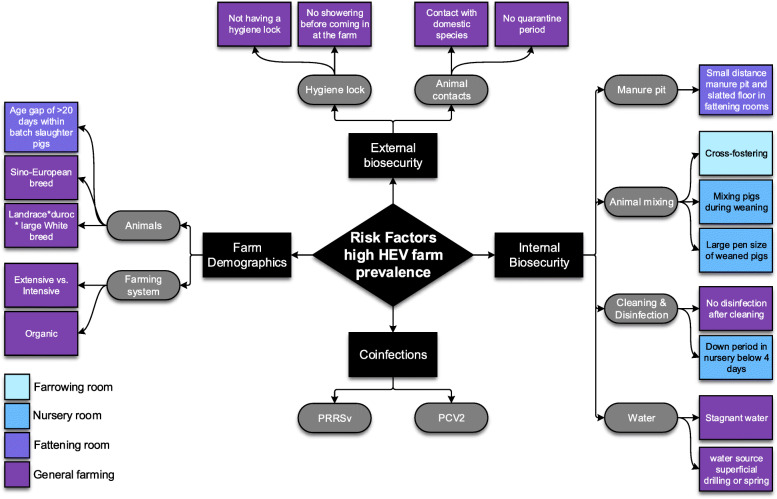
Main body: Though HEV is present on most farms, the proportion of infected pigs at slaughter and thus the level of exposure to consumers differs between farms and countries. Understanding the cause of that difference is necessary to install effective measures to lower HEV in pigs at slaughter. Here, HEV studies are reviewed that include infection dynamics of HEV in pigs and on farms, risk factors for HEV farm prevalence, and that describe mechanisms and sources that could generate persistence on farms. Most pigs become infected after maternal immunity has waned, at the end of the nursing or beginning of the fattening phase. Risk factors increasing the likelihood of a high farm prevalence or proportion of actively infected slaughter pigs comprise of factors such as farm demographics, internal and external biosecurity and immunomodulating coinfections. On-farm persistence of HEV is plausible, because of a high transmission rate and a constant influx of susceptible pigs. Environmental sources of HEV that enhance persistence are contaminated manure storages, water and fomites.
Conclusion: As HEV is persistently present on most pig farms, current risk mitigation should focus on lowering transmission within farms, especially between farm compartments. Yet, one should be aware of the paradox of increasing the proportion of actively infected pigs at slaughter by reducing transmission insufficiently. Vaccination of pigs may aid HEV control in the future.
Keywords: Compartmental model; Environmental contamination; HEV; On-farm persistence; Risk factors; Risk mitigation; Transmission; Veterinary public health; Zoonosis.
Conflict of interest statement
The authors declare that they have no competing interests.
Figures

References
-
- Harrison LC, Di Caprio E. Hepatitis E virus: an emerging foodborne pathogen. Front Sustainable Food Syst. 2018;2:14. doi: 10.3389/fsufs.2018.00014. - DOI
Publication types
Grants and funding
LinkOut - more resources
Full Text Sources
Other Literature Sources
Research Materials
