


Pandemic precarity: COVID-19 is exposing and exacerbating inequalities in the American heartland
- PMID: 33547252
- PMCID: PMC7923675
- DOI: 10.1073/pnas.2020685118
Pandemic precarity: COVID-19 is exposing and exacerbating inequalities in the American heartland
Abstract
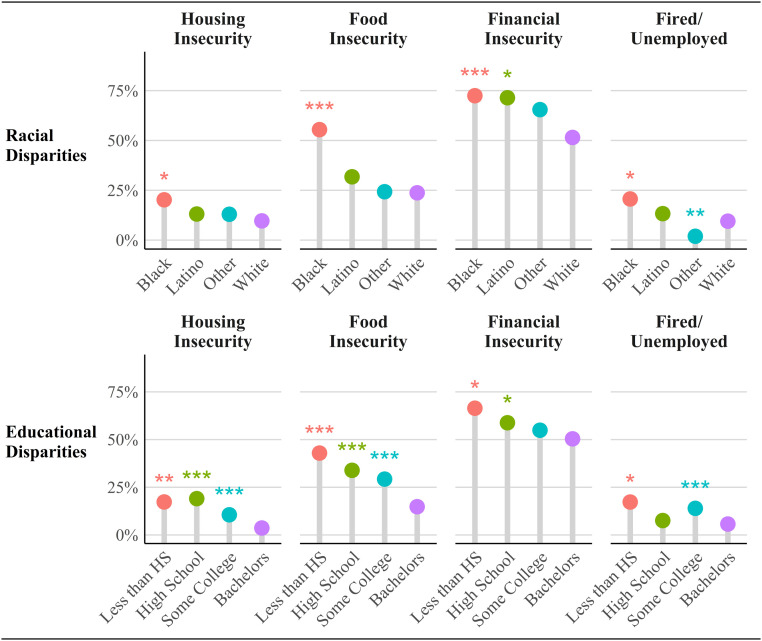
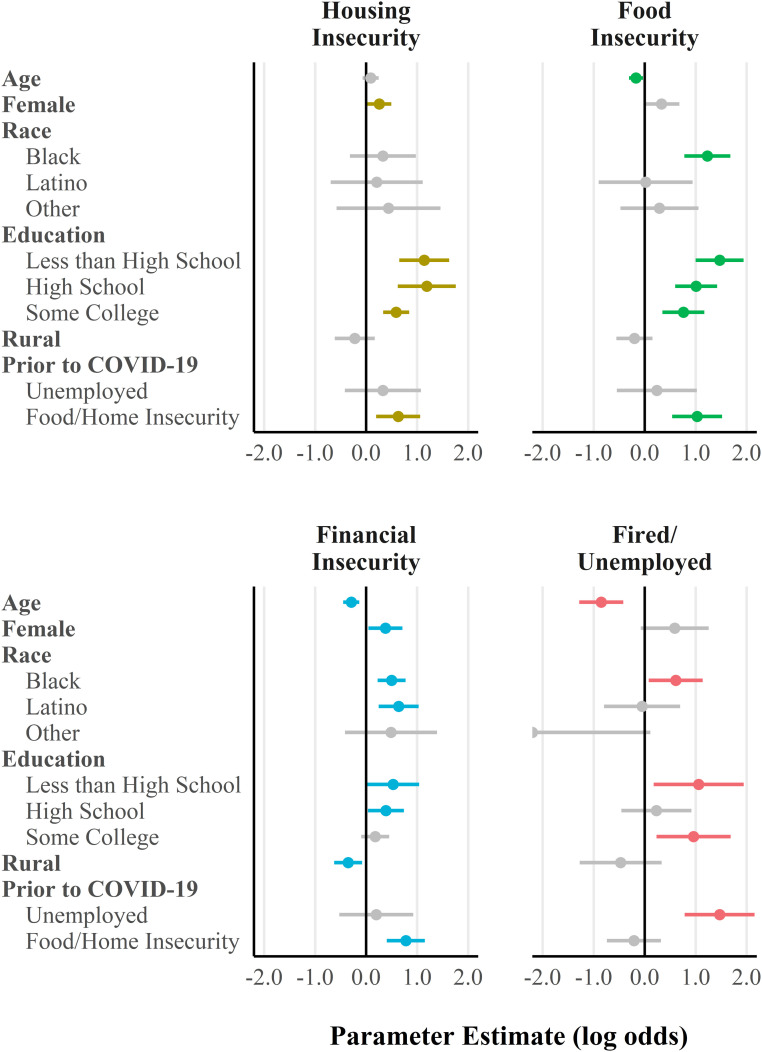
Crises lay bare the social fault lines of society. In the United States, race, gender, age, and education have affected vulnerability to COVID-19 infection. Yet, consequences likely extend far beyond morbidity and mortality. Temporarily closing the economy sent shock waves through communities, raising the possibility that social inequities, preexisting and current, have weakened economic resiliency and reinforced disadvantage, especially among groups most devastated by the Great Recession. We address pandemic precarity, or risk for material and financial insecurity, in Indiana, where manufacturing loss is high, metro areas ranked among the hardest hit by the Great Recession nationally, and health indicators stand in the bottom quintile. Using longitudinal data (n = 994) from the Person to Person Health Interview Study, fielded in 2019-2020 and again during Indiana's initial stay-at-home order, we provide a representative, probability-based assessment of adverse economic outcomes of the pandemic. Survey-weighted multivariate regressions, controlling for preexisting inequality, find Black adults over 3 times as likely as Whites to report food insecurity, being laid off, or being unemployed. Residents without a college degree are twice as likely to report food insecurity (compared to some college), while those not completing high school (compared to bachelor's degree) are 4 times as likely to do so. Younger adults and women were also more likely to report economic hardships. Together, the results support contentions of a Matthew Effect, where pandemic precarity disproportionately affects historically disadvantaged groups, widening inequality. Strategically deployed relief efforts and longer-term policy reforms are needed to challenge the perennial and unequal impact of disasters.
Keywords: COVID-19 pandemic; disparities; economic insecurity; racial and ethnic inequality; socioeconomic inequality.
Copyright © 2021 the Author(s). Published by PNAS.
Conflict of interest statement
The authors declare no competing interest.
Figures
References
-
- Berger Z. D., Evans N. G., Phelan A. L., Silverman R. D., Covid-19: Control measures must be equitable and inclusive. BMJ 368, m1141 (2020). - PubMed
-
- Poston B., Barboza T., California releases racial data on coronavirus patients. Los Angeles Times, 5 May 2020. https://www.latimes.com/california/story/2020-04-08/california-releases-.... Accessed 5 October 2020.
-
- Poston B., Barboza T., Reyes-Vilarde A., Coronavirus batters younger Latinos and blacks in California. Los Angeles Times, 4 May 2020. https://www.latimes.com/california/story/2020-04-25/coronavirus-takes-a-.... Accessed 27 September 2020.
-
- Farmer P., Infections and Inequalities: The Modern Plagues (University of California Press, 2001).
Publication types
MeSH terms
LinkOut - more resources
Full Text Sources
Other Literature Sources
Medical
