


A Critical Appraisal of the Effects of Anesthetics on Immune-system Modulation in Critically Ill Patients With COVID-19
- PMID: 33549310
- PMCID: PMC7833032
- DOI: 10.1016/j.clinthera.2021.01.004
A Critical Appraisal of the Effects of Anesthetics on Immune-system Modulation in Critically Ill Patients With COVID-19
Abstract
Purpose: The aim of the present article was to briefly summarize current knowledge about the immunomodulatory effects of general anesthetics and the possible clinical effects of this immunomodulation in patients with COVID-19.
Methods: The PubMed, Scopus, and Google Scholar databases were comprehensively searched for relevant studies.
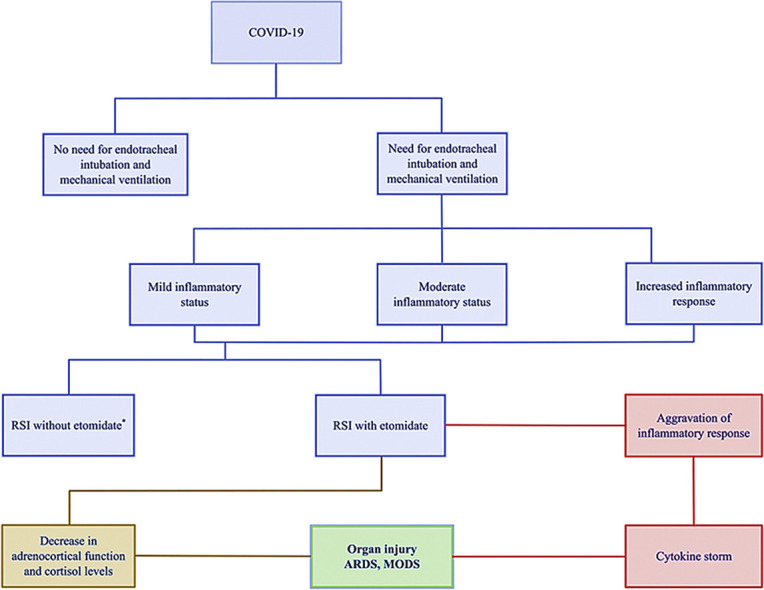
Findings: The novel coronavirus causes a wide spectrum of clinical manifestations, with a large absolute number of patients experiencing severe pneumonia and rapid progression to acute respiratory distress syndrome and multiple organ failure. In these patients, the equilibrium of the inflammatory response is a major determinant of survival. The impact of anesthetics on immune-system modulation may vary and includes both pro-inflammatory and anti-inflammatory effects.
Implications: Inhibition of the development of severe inflammation and/or the enhancement of inflammation resolution by anesthetics may limit organ damage and improve outcomes in patients with COVID-19.
Keywords: COVID-19; acute respiratory distress syndrome; anesthetics; inflammation; multiple organ dysfunction syndrome.
Copyright © 2021 Elsevier Inc. All rights reserved.
Conflict of interest statement
Disclosures The authors have indicated that they have no conflicts of interest with regard to the content of this article.
References
Publication types
MeSH terms
Substances
Grants and funding
LinkOut - more resources
Full Text Sources
Other Literature Sources
Medical
