


Cognitive behavioral therapy for insomnia in veterans with gulf war illness: Results from a randomized controlled trial
- PMID: 33549595
- PMCID: PMC8217272
- DOI: 10.1016/j.lfs.2021.119147
Cognitive behavioral therapy for insomnia in veterans with gulf war illness: Results from a randomized controlled trial
Abstract
Aims: To examine whether cognitive behavioral therapy for insomnia (CBT-I), delivered by telephone, improves sleep and non-sleep symptoms of Gulf War Illness (GWI).
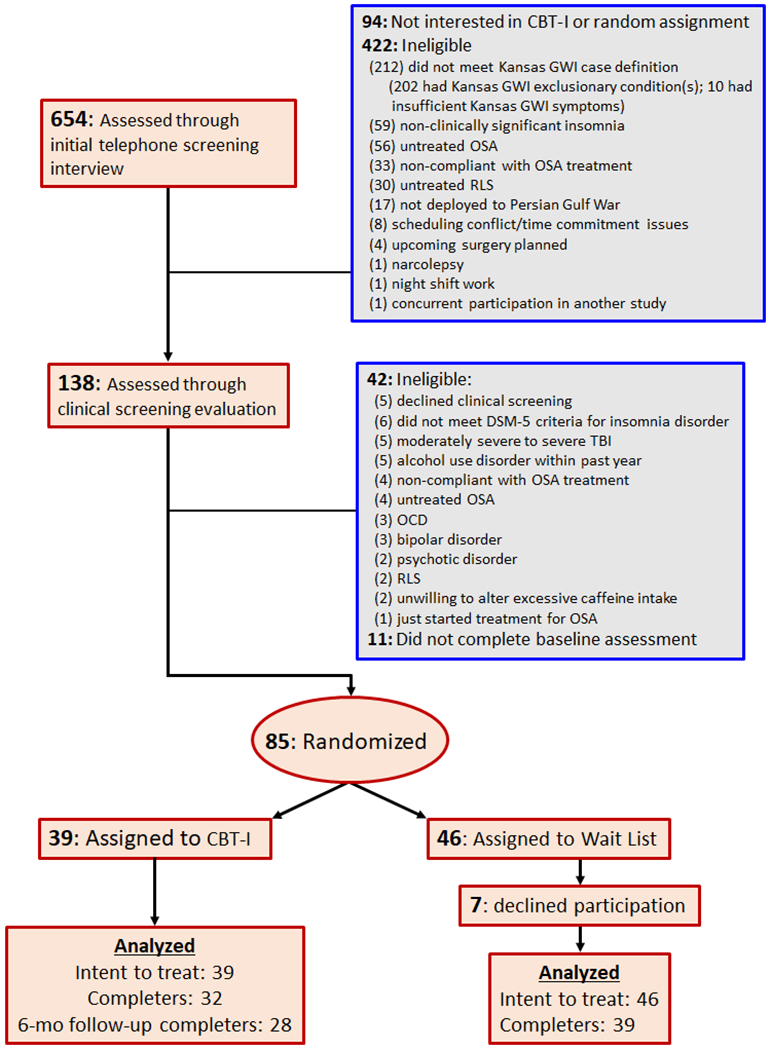
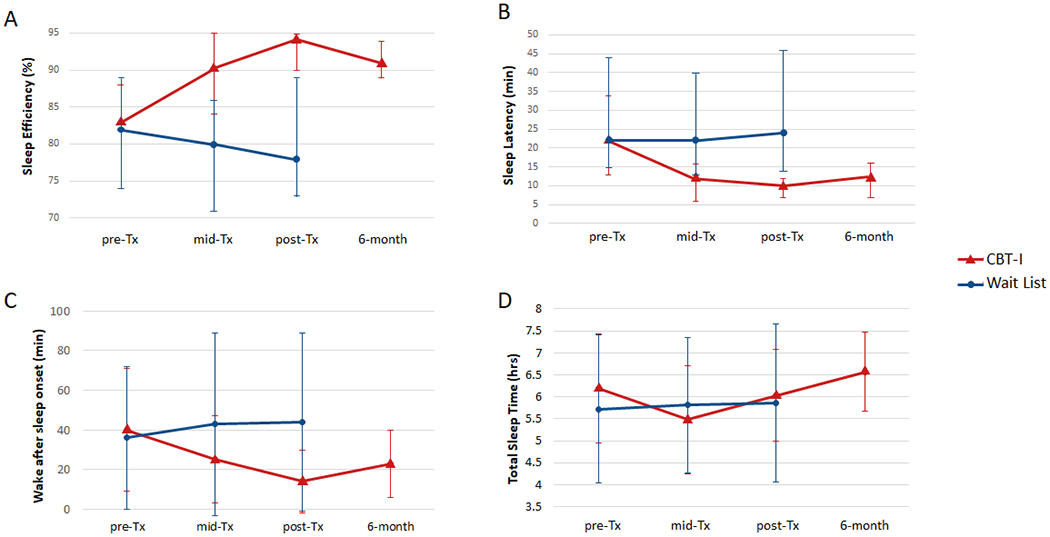
Main methods: Eighty-five Gulf War veterans (21 women, mean age: 54 years, range 46-72 years) who met the Kansas GWI case definition, the Centers for Disease Control and Prevention (CDC) case definition for Chronic Multisymptom Illness (CMI), and research diagnostic criteria for insomnia disorder were randomly assigned to CBT-I or monitor-only wait list control. Eight weekly sessions of individual CBT-I were administered via telephone by Ph.D. level psychologists to study participants. Outcome measures included pre-, mid-, and post-treatment assessments of GWI and insomnia symptoms, subjective sleep quality, and continuous sleep monitoring with diary. Outcomes were re-assessed 6-months post-treatment in participants randomized to CBT-I.
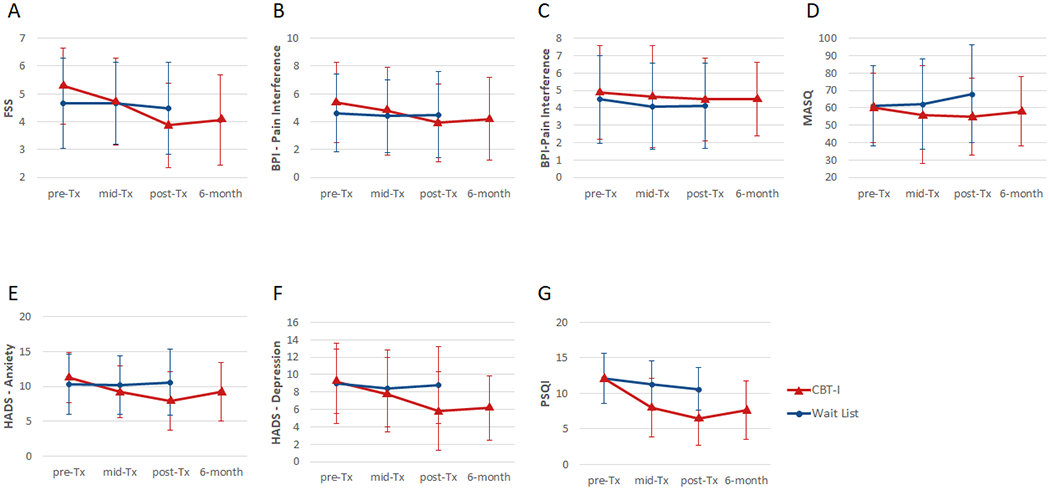
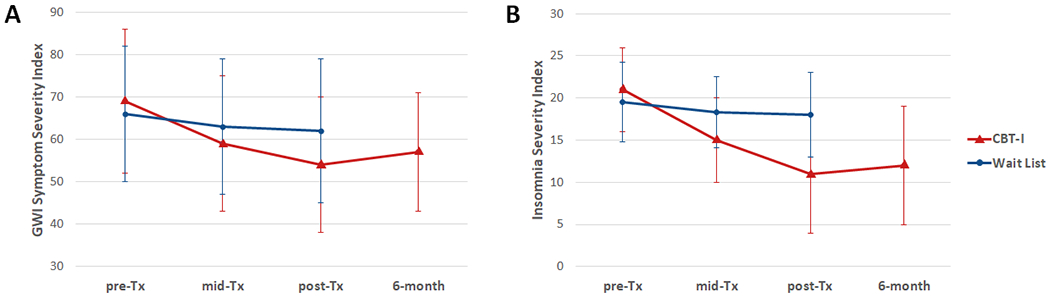
Key findings: Compared to wait list, CBT-I produced significant improvements in overall GWI symptom severity, individual measures of fatigue, cognitive dysfunction, depression and anxiety, insomnia severity, subjective sleep quality, and sleep diary outcome measures. The beneficial effects of CBT-I on overall GWI symptom severity and most individual GWI symptom measures were maintained 6-months after treatment.
Significance: GWI symptoms have historically been difficult to treat. Because CBT-I, which is associated with low stigma and is increasingly readily available to veterans, improved both sleep and non-sleep symptoms of GWI, these results suggest that a comprehensive approach to the treatment of GWI should include behavioral sleep interventions.
Keywords: Chronic multisymptom illness; Cognitive behavioral therapy; Gulf war illness; Insomnia; Telehealth; Veteran.
Published by Elsevier Inc.
Conflict of interest statement
Declaration of competing interest
The authors have no competing interests.
Figures
References
-
- Institute of Medicine, Gulf War and Health: Volume 8 - Health Effects of Serving in the Gulf War, 2010. (Washington, D.C.).
-
- Kang HK, Li B, Mahan CM, Eisen SA, Engel CC, Health of US veterans of 1991 Gulf War: a follow-up survey in 10 years, J Occup Environ Med. 51 (2009) 401–410. - PubMed
-
- Research Advisory Committee on Gulf War Veterans’ Illnesses (RAC-GWVI). Gulf War Illness and the Health of Gulf War Veterans. Washington, D.C., 2008.
-
- Fukuda K, Niesenbaum R, Stewart G, et al., Chronic multisymptom illness affecting Air Force veterans of the Gulf War, JAMA. 280 (1998) 981–988. - PubMed
-
- Goss Gilroy Inc. Health Study of Canadian Forces Personnel Involved in the 1991 Conflict in the Persian Gulf. Ottawa, Canada: Gulf War Illness Advisory Committee; 1998.
MeSH terms
Grants and funding
LinkOut - more resources
Full Text Sources
Other Literature Sources
Medical
Miscellaneous
