


Connective appendages in Huberia bradeana (Melastomataceae) affect pollen release during buzz pollination
- PMID: 33550673
- PMCID: PMC8252584
- DOI: 10.1111/plb.13244
Connective appendages in Huberia bradeana (Melastomataceae) affect pollen release during buzz pollination
Abstract
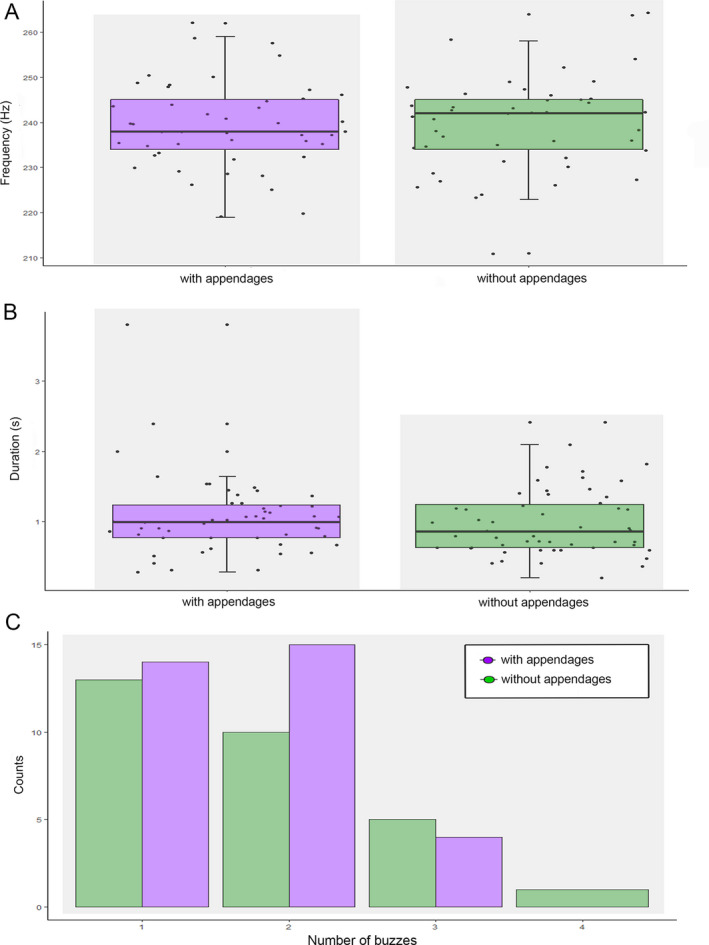
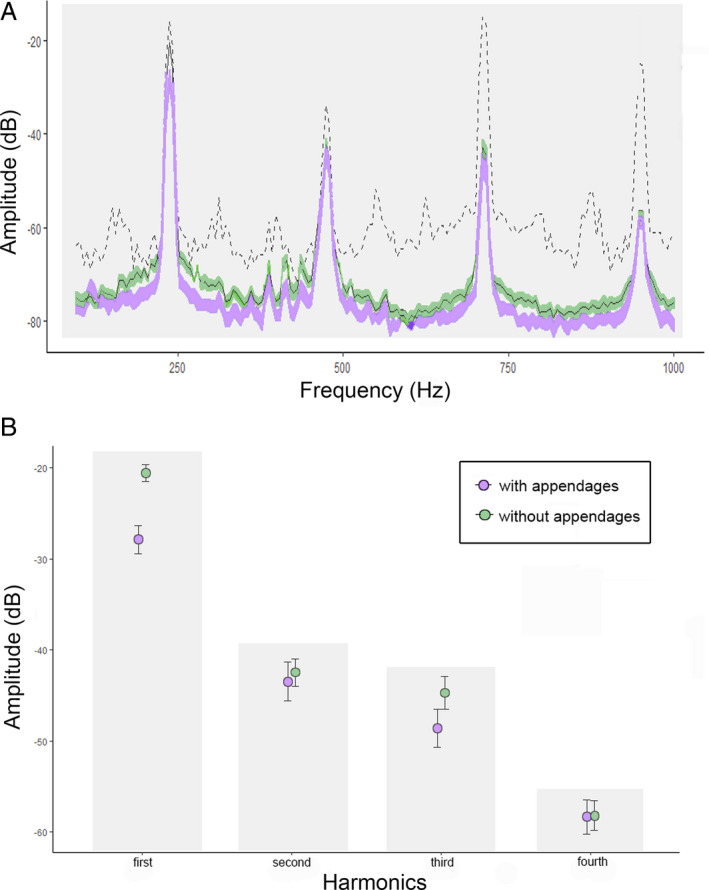
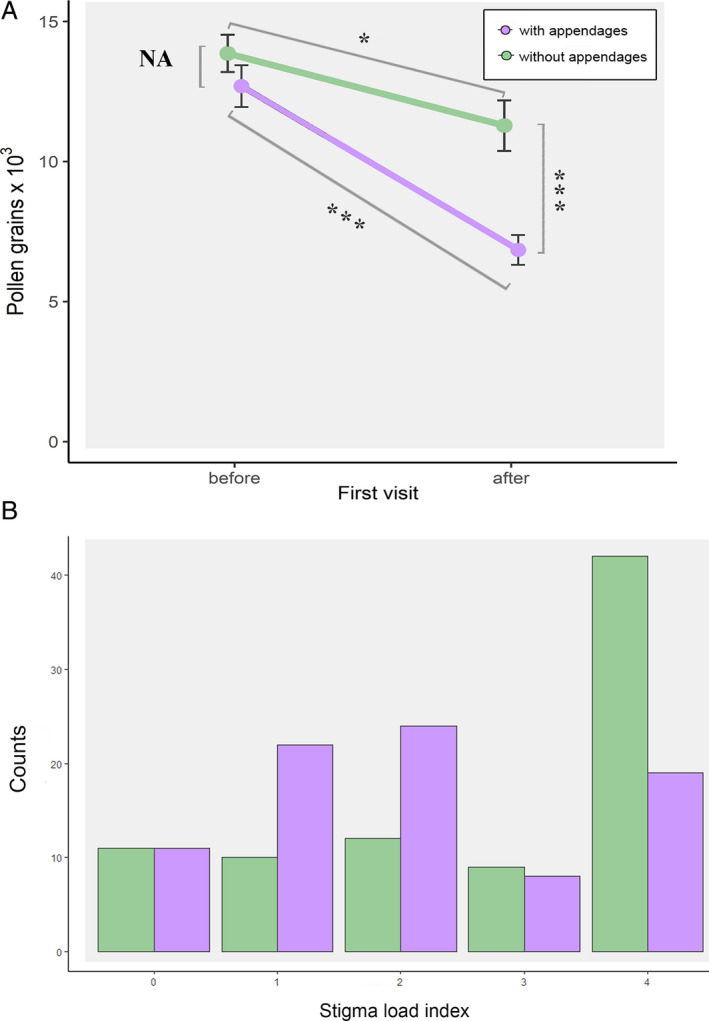
Floral structures, such as stamen appendages, play crucial roles in pollinator attraction, pollen release dynamics and, ultimately, the reproductive success of plants. The pollen-rewarding, bee buzz-pollinated flowers of Melastomataceae often bear conspicuous staminal appendages. Surprisingly, their functional role in the pollination process remains largely unclear. We use Huberia bradeana Bochorny & R. Goldenb. (Melastomataceae) with conspicuously elongated, twisted stamen appendages to investigate their functional role in the pollination process. We studied the effect of stamen appendages on pollinator behaviour and reproductive success by comparing manipulated flowers (appendages removed) with unmanipulated flowers. To assess bee pollinator behaviour, we measured three properties of buzzes (vibrations) produced by bees on Huberia flowers: frequency, duration and number of buzzes per flower visit. We measured male and female reproductive success by monitoring pollen release and deposition after single bee visits. Finally, we used artificial vibrations and laser vibrometry to assess how flower vibrational properties change with the removal of stamen appendages. Our results show that the absence of staminal appendages does not modify bee buzzing behaviour. Pollen release was higher in unmanipulated flowers, but stigmatic pollen loads differ only marginally between the two treatments. We also detected lower vibration amplitudes in intact flowers as compared to manipulated flowers in artificial vibration experiments. The presence of connective appendages are crucial in transmitting vibrations and assuring optimal pollen release. Therefore, we propose that the high diversity of colours, shapes and sizes of connective appendages in buzz-pollinated flowers may have evolved by selection through male fitness.
Keywords: buzz pollination; carpenter bees; pollen release; sonication.
© 2021 The Authors. Plant Biology published by John Wiley & Sons Ltd on behalf of German Society for Plant Sciences, Royal Botanical Society of the Netherlands.
Figures
References
-
- Augspurger C.K. (1980) Mass flowering of a tropical shrub (Hybanthus prunifolius): influence on pollinator attraction and movement. Evolution, 34, 475–488. - PubMed
-
- Bates D., Maechler M., Bolker B., Walker S. (2015) lme4: Linear mixed‐effects models using Eigen and S4. R package version 1.1‐8. Available at: http://CRAN.R‐project.org/package=lme4 (accessed 02 May 2018).
-
- Beattie A.T. (1971) Pollination mechanisms in Viola . New Phytologist, 70, 343–360.
MeSH terms
Grants and funding
LinkOut - more resources
Full Text Sources
Other Literature Sources
