


Gambling Before and During the COVID-19 Pandemic Among Online Casino Gamblers: An Empirical Study Using Behavioral Tracking Data
- PMID: 33551689
- PMCID: PMC7852466
- DOI: 10.1007/s11469-020-00462-2
Gambling Before and During the COVID-19 Pandemic Among Online Casino Gamblers: An Empirical Study Using Behavioral Tracking Data
Abstract
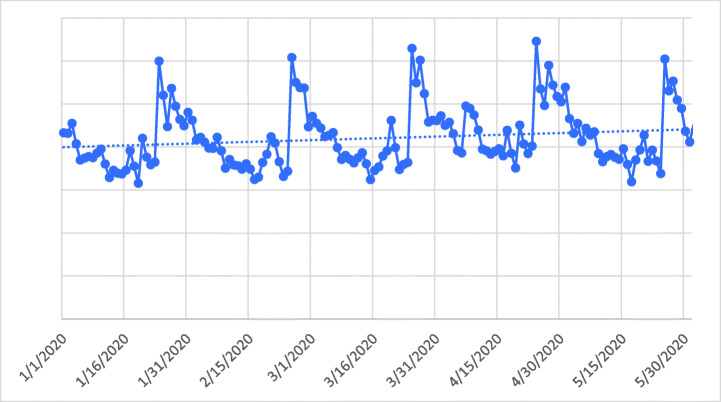
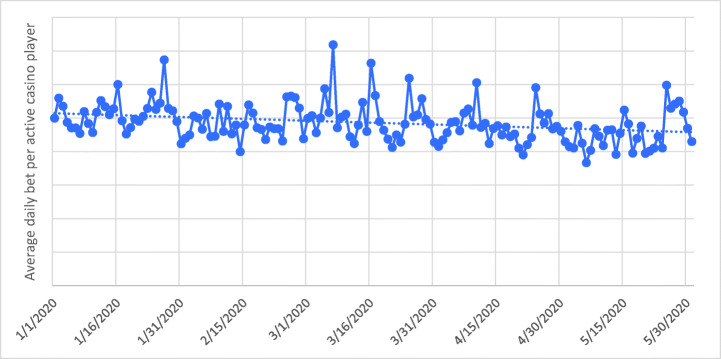
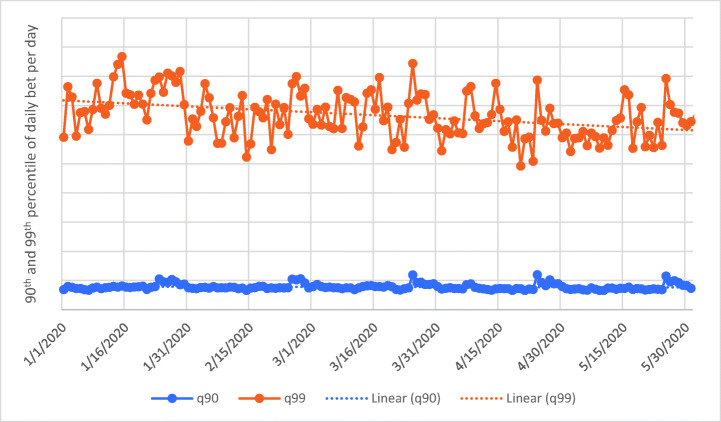
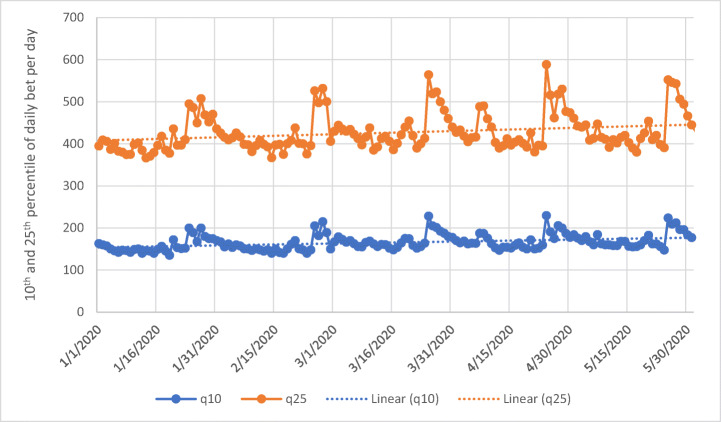
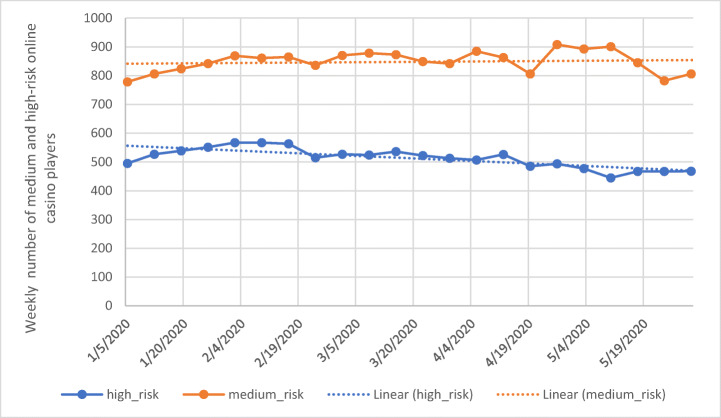
Gambling, like many other leisure activities, has been greatly affected by the novel coronavirus disease 2019 (COVID-19) pandemic. The present study investigated the behavior of a sample of online casino gamblers before and after the COVID-19 pandemic was announced in March 2020. The authors were given access to behavioral tracking data of a representative sample of 133,286 online casino gamblers by a large European online gambling operator with several online casino Swedish licenses. Online casino gambling activity utilizing daily cross-sectional data was examined over a 5-month period from January 1 to May 31 (2020). Results indicated that the (i) number of active online casino gamblers significantly increased over time, (ii) mean average amount of money bet by online casino gamblers daily significantly decreased over time, (iii) mean average daily bet by online casino gamblers at both the 90th and 99th percentiles significantly decreased over time, and (iv) mean average daily bet by online casino gamblers at the 10th and 25th percentiles significantly increased over time. The analysis also indicated that the number of high-risk players significantly decreased during the 5-month study period. While many different groups have claimed that gambling and problem gambling would increase during the pandemic due to more time being spent at home, evidence from the present study suggests that this is not the case because gambling intensity decreased, at least among Swedish gamblers.
Keywords: Behavioral tracking; COVID-19; Casino gambling; Gambling; Online gambling.
© The Author(s) 2021.
Conflict of interest statement
Conflict of InterestThe second author’s university currently receives funding from Norsk Tipping (the gambling operator owned by the Norwegian Government) for research evaluating responsible gambling tools in Norway. The second author has received funding for a number of research projects in the area of gambling education for young people, social responsibility in gambling, and gambling treatment from GambleAware (formerly the Responsibility in Gambling Trust), a charitable body which funds its research program based on donations from the gambling industry. Both authors undertake consultancy for various gaming companies in the area of social responsibility in gambling.
Figures
References
-
- Auer, M., & Griffiths, M. D. (2020). The use of personalized messages on wagering behavior of Swedish online gamblers: An empirical study. Computers in Human Behavior, 110, 106402.
LinkOut - more resources
Full Text Sources
Other Literature Sources