


Providing Care for Transgender Persons With Kidney Disease: A Narrative Review
- PMID: 33552529
- PMCID: PMC7829603
- DOI: 10.1177/2054358120985379
Providing Care for Transgender Persons With Kidney Disease: A Narrative Review
Abstract
Purpose of review: Nephrologists are increasingly providing care to transgender individuals with chronic kidney disease (CKD). However, they may lack familiarity with this patient population that faces unique challenges. The purpose of this review is to discuss the care of transgender persons and what nephrologists should be aware of when providing care to their transgender patients.
Sources of information: Original research articles were identified from MEDLINE and Google Scholar using the search terms "transgender," "gender," "sex," "chronic kidney disease," "end stage kidney disease," "dialysis," "transplant," and "nephrology."
Methods: A focused review and critical appraisal of existing literature regarding the provision of care to transgender men and women with CKD including dialysis and transplant to identify specific issues related to gender-affirming therapy and chronic disease management in transgender persons.
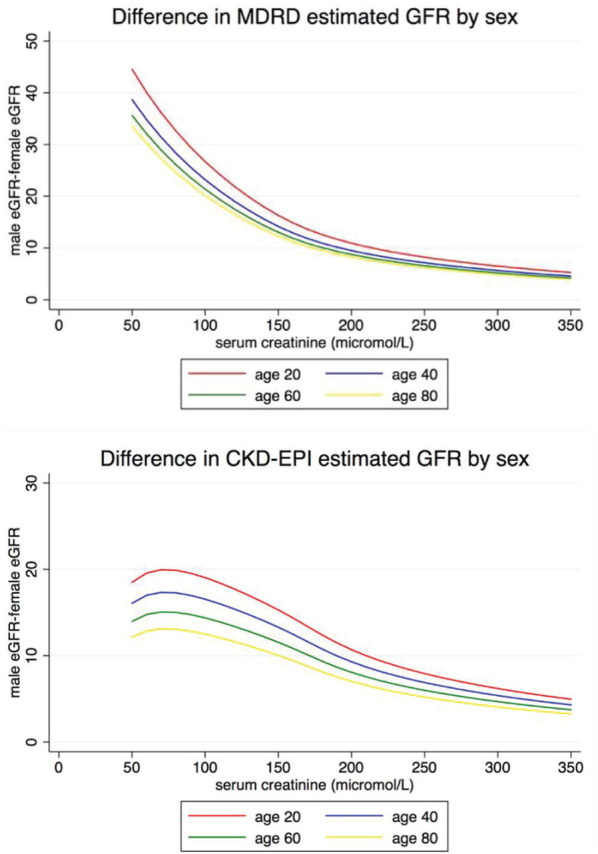
Key findings: Transgender persons are at an increased risk of adverse outcomes compared with the cisgender population including mental health, cardiovascular disease, malignancy, sexually transmitted infections, and mortality. Individuals with CKD have a degree of hypogonadotropic hypogonadism and decreased levels of endogenous sex hormones; therefore, transgender persons with CKD may require reduced exogenous sex hormone dosing. Exogenous estradiol therapy increases the risk of venous thromboembolism and cardiovascular disease which may be further increased in CKD. Exogenous testosterone therapy increases the risk of polycythemia which should be closely monitored. The impact of gender-affirming hormone therapy on glomerular filtration rate (GFR) trajectory in CKD is unclear. Gender-affirming hormone therapy with testosterone, estradiol, and anti-androgen therapies changes body composition and lean body mass which influences creatinine generation and the performance for estimated glomerular filtration rate (eGFR) equations in transgender persons. Confirmation of eGFR with measured GFR is reasonable if an accurate knowledge of GFR is needed for clinical decision-making.
Limitations: There are limited studies regarding the intersection of transgender persons and kidney disease and those that exist are mostly case reports. Randomized controlled trials and observational studies in nephrology do not routinely differentiate between cisgender and transgender participants.
Implications: This review highlights important considerations for providing care to transgender persons with kidney disease. Additional research is needed to evaluate the performance of eGFR equations in transgender persons, the effects of gender-affirming hormone therapy, and the impact of being transgender on outcomes in persons with kidney disease.
Motif de la revue: Dans leur pratique, les néphrologues sont de plus en plus appelés à traiter des personnes transgenres atteintes d’insuffisance rénale chronique (IRC). Une population de patients qui fait face à des défis particuliers et avec laquelle les spécialistes ne sont pas toujours familiers. L’objectif de cette revue est de discuter des soins prodigués aux personnes transgenres et des enjeux auxquels les néphrologues qui soignent ces patients devraient être sensibilisés.
Sources: Les articles de recherche originaux ont été répertoriés sur MEDLINE et Google Scholar à l’aide des termes transgender (transgenre), gender (genre), sex (sexe), chronic kidney disease (insuffisance rénale chronique), end stage kidney disease (insuffisance rénale terminale), dialysis (dialyse), transplant (transplantation) et nephrology (néphrologie).
Méthodologie: On a procédé à un examen ciblé et une évaluation critique de la documentation portant sur les soins aux personnes transgenres atteintes d’IRC, notamment la dialyse et la transplantation, afin de cerner les enjeux liés spécifiquement aux thérapies d’affirmation du genre et à la prise en charge de la néphropathie chronique chez les personnes transgenres.
Principaux résultats: Les personnes transgenres courent un risque accru d’événements défavorables comparativement à la population cisgenre, notamment en matière de santé mentale, de maladies cardiovasculaires, de tumeurs malignes, d’infections transmissibles sexuellement et de mortalité. Les individus atteints d’IRC présentent un certain degré d’hypogonadisme hypogonadotrope et des taux réduits d’hormones sexuelles endogènes; les personnes transgenres atteintes d’IRC pourraient ainsi nécessiter un dosage réduit d’hormones sexuelles exogènes. L’estradiol exogène augmente le risque de thrombo-embolie veineuse et de maladies cardiovasculaires, un risque pouvant être augmenté davantage en contexte d’IRC. La testostérone exogène augmente le risque de polycythémie et doit être surveillée étroitement. L’impact de l’hormonothérapie d’affirmation du genre sur la trajectoire du débit de filtration glomérulaire (DFG) en IRC est encore mal connu. L’hormonothérapie d’affirmation du genre avec testostérone, estradiol et anti-androgène altère la composition corporelle et la masse maigre, ce qui influe sur la production de créatinine et la performance des équations calculant le DFG estimé (DFGe) chez les personnes transgenres. La confirmation du DFGe à l’aide du DFG mesuré est raisonnable si connaître la valeur précise du DFG est nécessaire pour la prise de décision clinique.
Limites: Peu d’études se sont penchées sur l’intersection des personnes transgenres et de la néphropathie, et les études existantes consistent principalement en des rapports de cas. Les essais contrôlés randomisés et les études observationnelles en néphrologie ne font pas systématiquement de distinction entre les participants cisgenres et transgenres.
Conclusion: Cette revue met en lumière des considérations importantes pour la prise en charge des personnes transgenres atteintes de néphropathies. D’autres recherches sont nécessaires pour évaluer la performance des équations calculant le DFGe, les effets de l’hormonothérapie d’affirmation du genre et l’incidence d’être transgenre sur les résultats des personnes atteintes de néphropathies.
Keywords: gender-affirming therapy; kidney disease; transgender; transmen; transwomen.
© The Author(s) 2021.
Conflict of interest statement
Declaration of Conflicting Interests: The author(s) declared no potential conflicts of interest with respect to the research, authorship, and/or publication of this article.
Figures
References
-
- Deutsch MB. Guidelines for the primary and gender-affirming care of transgender and gender nonbinary people. https://transcare.ucsf.edu/guidelines. Accessed December 21, 2020.
Publication types
LinkOut - more resources
Full Text Sources
Other Literature Sources
Research Materials
Miscellaneous
