Review
. 2021 Jan 20:8:604151.
doi: 10.3389/fchem.2020.604151. eCollection 2020.

Biomedically Relevant Applications of Bolaamphiphiles and Bolaamphiphile-Containing Materials

Affiliations
Review

Biomedically Relevant Applications of Bolaamphiphiles and Bolaamphiphile-Containing Materials

Jake R Hughes et al. Front Chem. .

Abstract

Bolaamphiphiles (BAs) are structurally segmented molecules with rich assembly characteristics and diverse physical properties. Interest in BAs as standalone active agents or as constituents of more complex therapeutic formulations has increased substantially in recent years. The preorganized amphiphilicity of BAs allows for a range of biological activities including applications that rely on multivalency. This review summarizes BA-related research in biomedically relevant areas. In particular, we review BA-related literature in four areas: gene delivery, antimicrobial materials, hydrogels, and prodrugs. We also discuss several distinguishing characteristics of BAs that impact their utility as biomedically relevant compounds.

Keywords: antimicrobials; biomaterials; bolaamphiphiles; bolaform amphiphile; gene delivery; prodrugs.


Conflict of interest statement

The authors declare that the research was conducted in the absence of any commercial or financial relationships that could be construed as a potential conflict of interest.

Figures
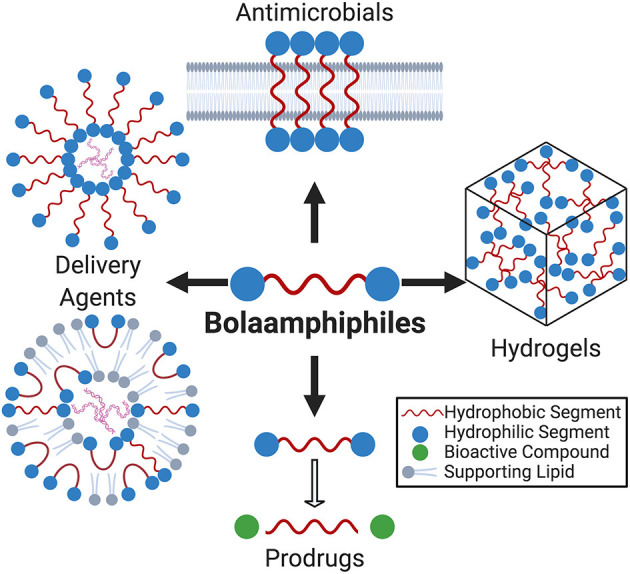
Figure 1
Figure 1
Due to their segmented amphiphilicity and rich self-assembly behavior, bolaamphiphiles (BAs) have emerged as versatile building blocks for therapeutically relevant biomaterials. This review focuses the impact of BAs in drug delivery, prodrugs, hydrogels, and antimicrobials.
Figure 2
Figure 2
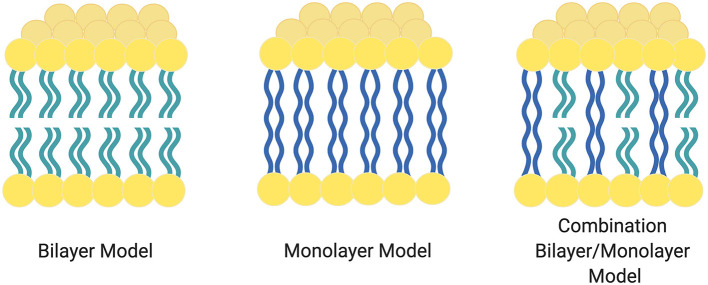
Various forms and combinations of Archaea domain membranes. The left most image shows a traditional bilayer with no bridging chains. The center image shows a monolayer membrane. The right most image represents a combination of both bridging and traditional lipids. Figure adapted from Benvegnu et al. (2008).
Figure 3
Figure 3
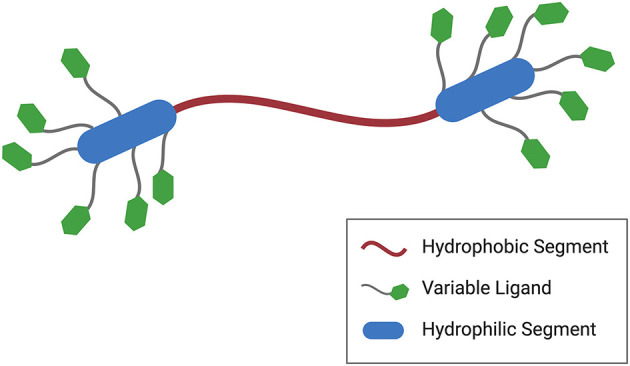
Generalized BA structure featuring not only segmented amphiphilicity but also multivalent domains. In this particular case, the hydrophilic segments carry multiple copies of a functional ligand or stimuli-responsive group potentially leading to cooperative binding interactions.
Figure 4
Figure 4
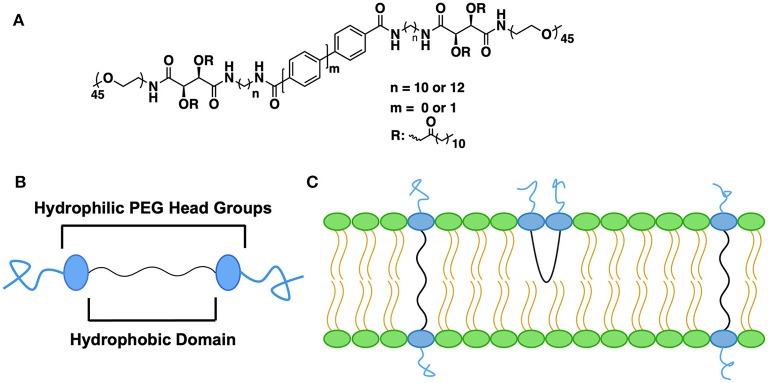
Impact of PEG-containing BAs on liposomal stability. (A) Chemical structures of amphiphilic PEG-BAs, (B) Structural cartoon highlighting the segmented as well as the terminal PEG groups, (C) Two different PEG-BA conformations in the lipid layer. The membrane-spanning orientation is preferred over U-shaped due to the presence of rigid aryl groups in the hydrophobic segment. Figure adapted from Zhang et al. (2016).
Figure 5
Figure 5
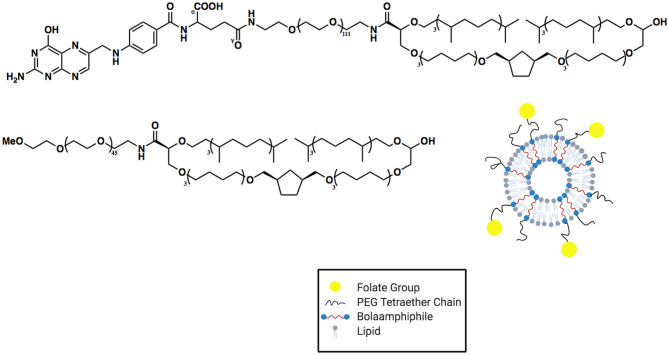
Structure and cartoon versions of archaeosomes synthesized by Jiblaoui et al. (2016). Two distinct membrane-spanning BAs were used in the assembly of these archaeosomes: a PEG functionalized BA as well as a folate-carrying BA.
Figure 6
Figure 6
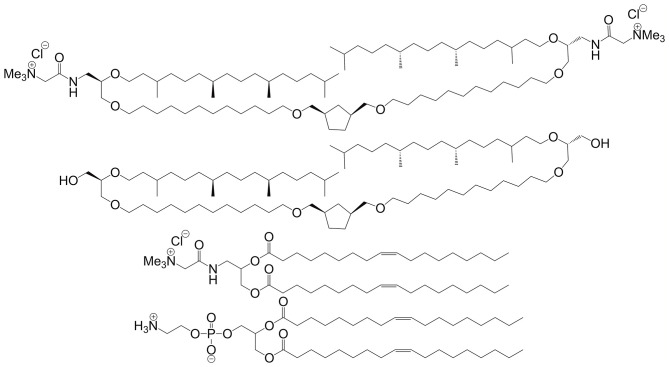
Archaeosome forming BAs (top two structures) are co-formulated with helper lipids (bottom two structures) in order to form monolayer-type micelles. Reproduced from Rethore et al. (2007), Royal Society of Chemistry.
Figure 7
Figure 7
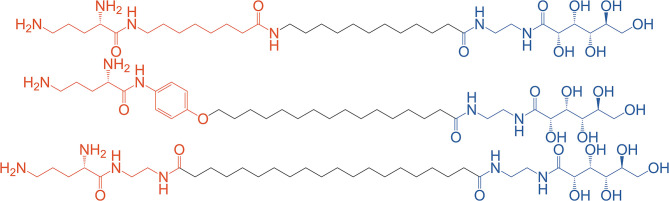
Asymmetric BA with varying chain lengths containing a uniform gluconic acid (blue) and varying ornithine containing moieties (red). Reproduced from Jain et al. (2010), American Society of Chemistry.
Figure 8
Figure 8
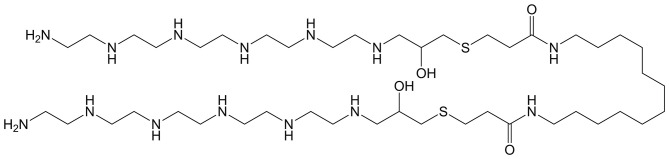
Symmetric BA featuring two hydrophilic pentaethylenehexamine head groups linked via a C12 hydrophobic tether by a thioether-based glycidyl group. Reproduced from Khan et al. (2012), Elsevier.
Figure 9
Figure 9
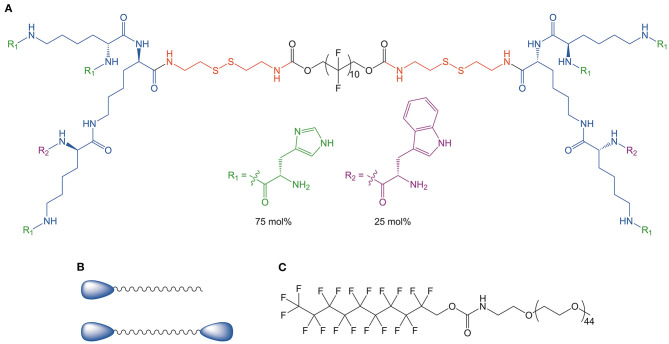
(A) Dendritic peptide structure utilizing a fluorocarbon central tether and branched hydrophilic head groups consisting of 75 mol% histidine and 25 mol% tryptophan. (B) Generic BA and monoamphiphile structure. (C) Structure of fPEG (2 K), the traditional monoamphiphile used for micelle coformulations. Reproduced from Eldredge et al. (2018), Elsevier.
Figure 10
Figure 10
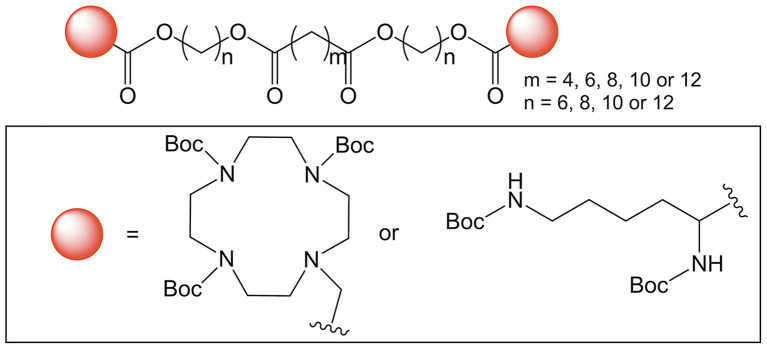
Synthetic BAs for bolasome coformulation with DOPE utilizing cyclen or lysine as hydrophilic head groups (Huang et al., 2016). Copyright 2016, Royal Society of Chemistry.
Figure 11
Figure 11
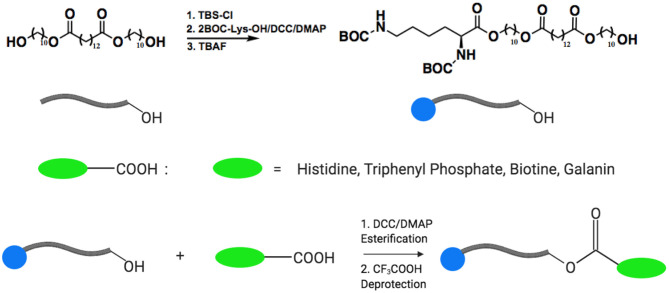
Huang et al. (2018) prepared a series of asymmetric BAs. One of the polar head groups was fixed as lysine while the second was chosen from an assortment of functional polar moieties. Copyright 2018, Multidisciplinary Digital Publishing Institute.
Figure 12
Figure 12
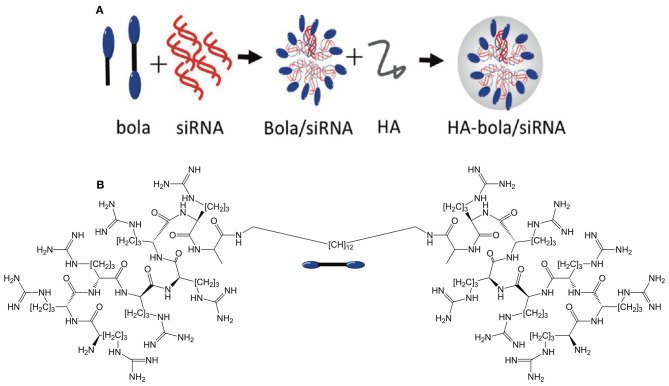
(A) Overview of bolasome formulation using the R8 BA or monoamphiphile to complex siRNA before coating with hyaluronic acid to confer a negative charge. (B) Structure of the R8 bolaamphiphile. Reproduced from Jia et al. (2020), American Chemical Society.
Figure 13
Figure 13
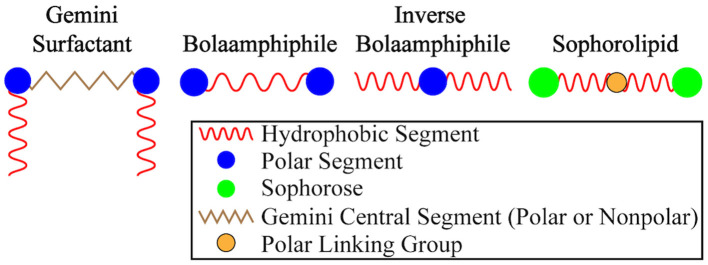
A graphical summary of BA variants. Traditional BAs have hydrophobic central units while inverse BAs feature polar/hydrophilic central segments.
Figure 14
Figure 14
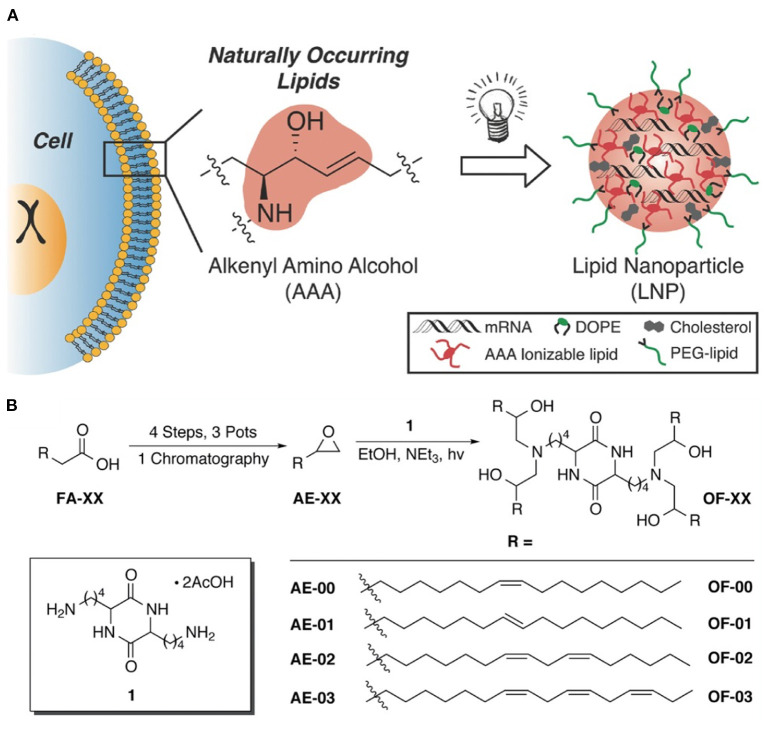
(A) Discovery of alkenyl amino alcohols (AAA) in cell membranes serve as the basis for synthesis of inverse BAs for mRNA delivery. (B) 5-step synthesis of inverse BA containing hydrophilic AAA moieties flanked by various fatty acid tails (Fenton et al., 2016). Copyright 2016, Advanced Materials.
Figure 15
Figure 15
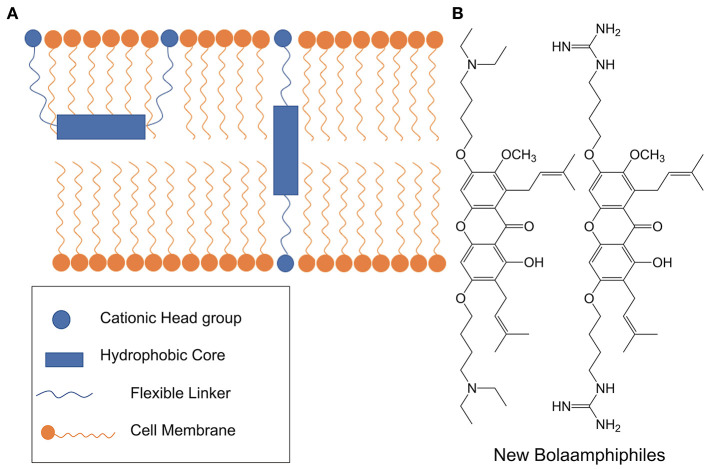
(A) Using molecular dynamics and biophysical methods, Li et al., proposed a three-step model for the interaction of BA-like antimicrobials with gram positive pathogens. Initially the xanthone-based BA is adsorbed in a U-shaped conformation but eventually adopts a highly disruptive transmembrane configuration. (B) Structures of xanthone-based BA antimicrobials. Reproduced from Li et al. (2015), Elsevier.
Figure 16
Figure 16
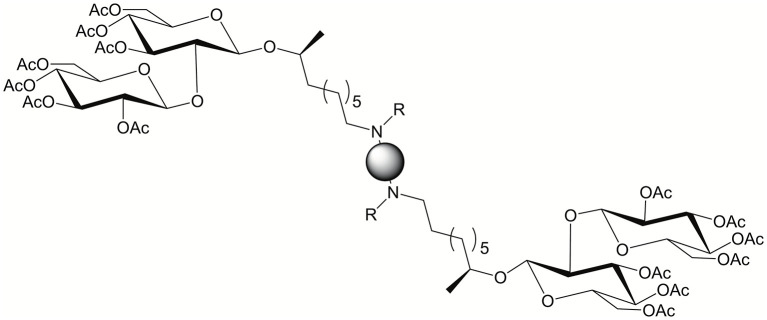
Sophorolipid BA general structure. Reproduced from Delbeke et al. (2018), American Chemical Society.
Figure 17
Figure 17
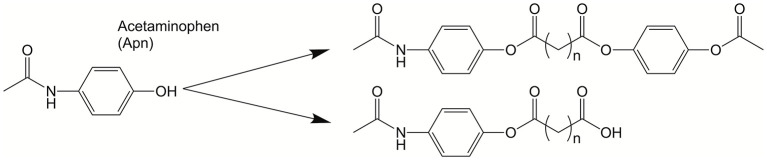
Acetaminophen was modified into a bola-like structure. These amphiphilic derivatives self-assemble into hydrogels that can act as drug delivery platforms. Reproduced from Vemula et al. (2009), Elsevier.
Figure 18
Figure 18
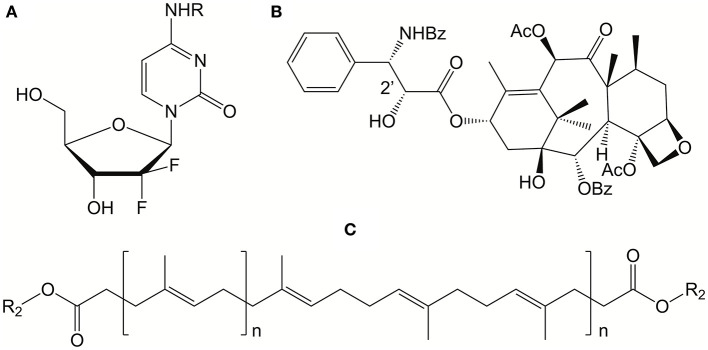
Structures of antitumor drugs, gemcitabine (A) and paclitaxel (B), where R binds to the proposed hydrophobic squalene backbone (C). These “bolaform” prodrugs were shown to form nanoassemblies with in vitro activity on human and murine cancel cell lines. Reproduced from Caron et al. (2014), Royal Society of Chemistry.
Figure 19
Figure 19
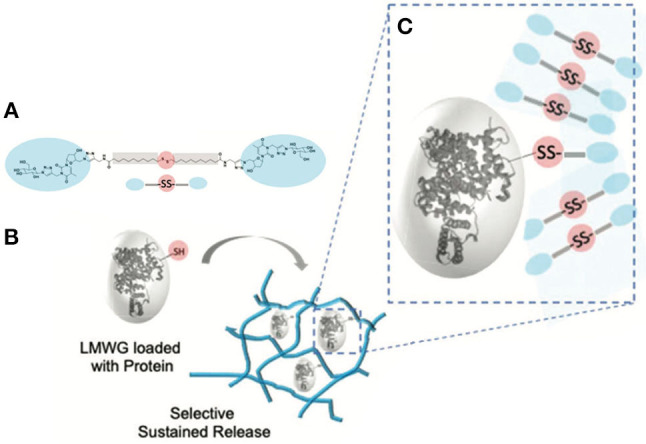
(A) Glycosylated nucleoside based bolaamphiphiles (GNBA) with a disulfide function (SS-GNBA-3) resulting in supramolecular assembly of the SS-GNBA-3 via weak interactions, stabilizes a low molecular weight gel (LMWG). (B) The LMWGs loaded with proteins obtained in the presence of biomolecules. (C) Selective sustained release from gel, protein's covalent attachment via disulfide bridges between protein and supramolecular network (Bansode et al., 2020). Copyright 2020, Royal Society of Chemistry.
Figure 20
Figure 20
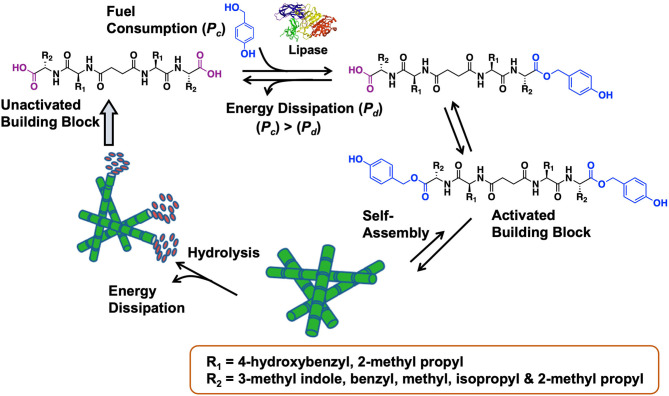
Enzymatic activation of a peptide-based BA leads to the self-assembly. After fuel consumption, peptide diesters form which then self-assemble into fibrillar network leading to stable hydrogels. The hydrogels collapse back into the inactivated parent BA dissipating the fuel through hydrolysis. The hydrogel exhibited favorable properties to support and promote the growth of human umbilical cord stem cells. Figure adapted from Das et al. (2015).

References

    1. Baccile N., Le Griel P., Prevost S., Everaert B., Van Bogaert I. N. A., Roelants S., et al. . (2017). Glucosomes: glycosylated vesicle-in-vesicle aggregates in water from pH-responsive microbial glycolipid. Chemistryopen 6, 526–533. 10.1002/open.201700101 - DOI - PMC - PubMed
    1. Baccile N., Van Renterghem L., Le Griel P., Ducouret G., Brennich M., Cristiglio V., et al. . (2018). Bio-based glyco-bolaamphiphile forms a temperature-responsive hydrogel with tunable elastic properties. Soft Matter 14, 7859–7872. 10.1039/C8SM01167B - DOI - PubMed
    1. Baillet J., Desvergnes V., Hamoud A., Latxague L., Barthelemy P. (2018). Lipid and nucleic acid chemistries: combining the best of both worlds to construct advanced biomaterials. Adv. Mater. 30:1705078. 10.1002/adma.201705078 - DOI - PubMed
    1. Baillet J., Gaubert A., Bassani D. M., Verget J., Latxague L., Barthelemy P. (2020). Supramolecular gels derived from nucleoside based bolaamphiphiles as a light-sensitive soft material. Chem. Comm. 56, 3397–3400. 10.1039/D0CC00336K - DOI - PubMed
    1. Bansode N. D., Sindhu K. R., Morel C., Remy M., Verget J., Boiziau C., et al. . (2020). A disulfide based low molecular weight gel for the selective sustained release of biomolecules. Biomater. Sci. 8, 3186–3192. 10.1039/D0BM00508H - DOI - PubMed

LinkOut - more resources