


Th17 Cells in Inflammatory Bowel Disease: Cytokines, Plasticity, and Therapies
- PMID: 33553436
- PMCID: PMC7846404
- DOI: 10.1155/2021/8816041
Th17 Cells in Inflammatory Bowel Disease: Cytokines, Plasticity, and Therapies
Abstract
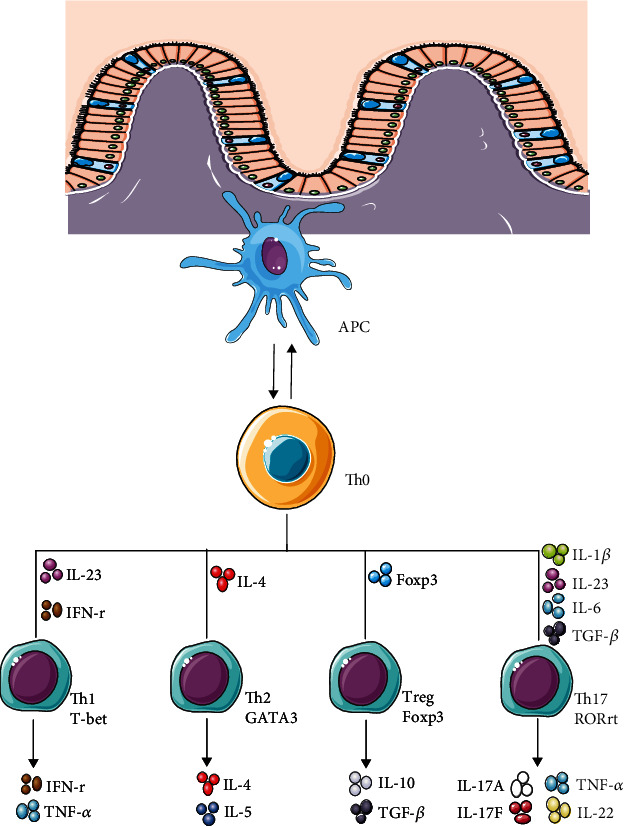
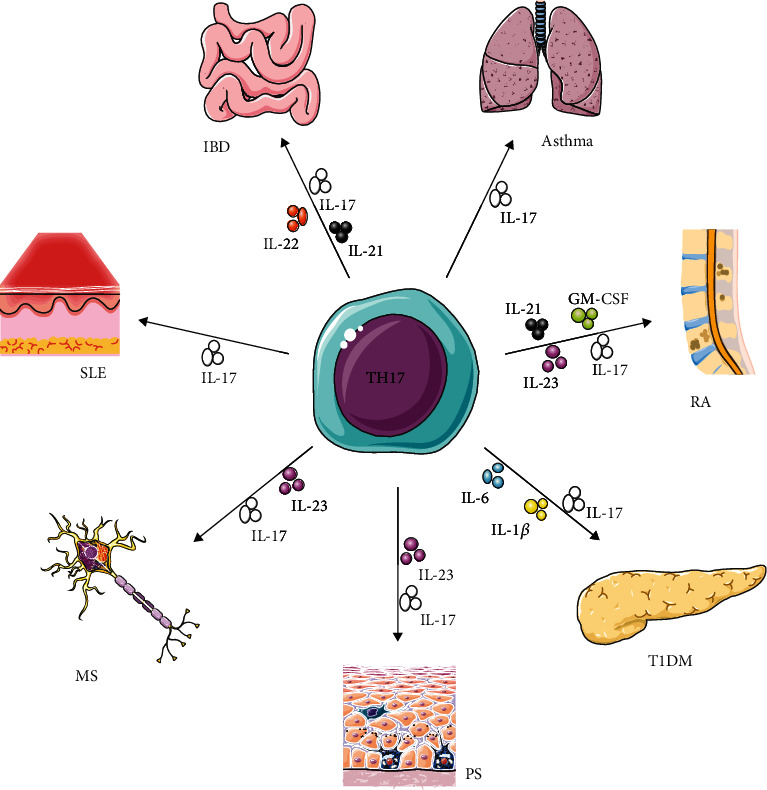
Autoimmune diseases (such as rheumatoid arthritis, asthma, autoimmune bowel disease) are a complex disease. Improper activation of the immune system or imbalance of immune cells can cause the immune system to transform into a proinflammatory state, leading to autoimmune pathological damage. Recent studies have shown that autoimmune diseases are closely related to CD4+ T helper cells (Th). The original CD4 T cells will differentiate into different T helper (Th) subgroups after activation. According to their cytokines, the types of Th cells are different to produce lineage-specific cytokines, which play a role in autoimmune homeostasis. When Th differentiation and its cytokines are not regulated, it will induce autoimmune inflammation. Autoimmune bowel disease (IBD) is an autoimmune disease of unknown cause. Current research shows that its pathogenesis is closely related to Th17 cells. This article reviews the role and plasticity of the upstream and downstream cytokines and signaling pathways of Th17 cells in the occurrence and development of autoimmune bowel disease and summarizes the new progress of IBD immunotherapy.
Copyright © 2021 Junjun Zhao et al.
Conflict of interest statement
The authors declare that there is no conflict of interest regarding the publication of this paper.
Figures
References
Publication types
MeSH terms
Substances
LinkOut - more resources
Full Text Sources
Other Literature Sources
Research Materials
