


Brain structure and neural activity related to reading in boys with isolated oral clefts
- PMID: 33557685
- PMCID: PMC8205947
- DOI: 10.1080/09297049.2021.1879765
Brain structure and neural activity related to reading in boys with isolated oral clefts
Abstract
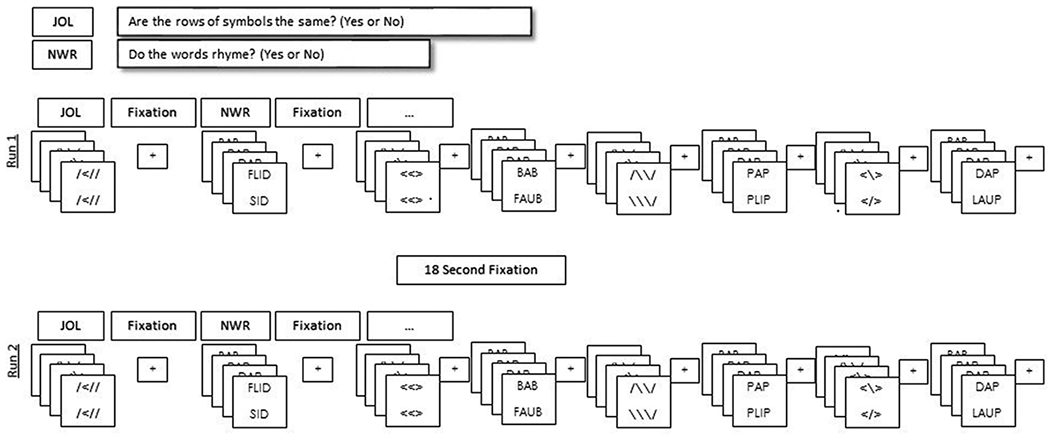
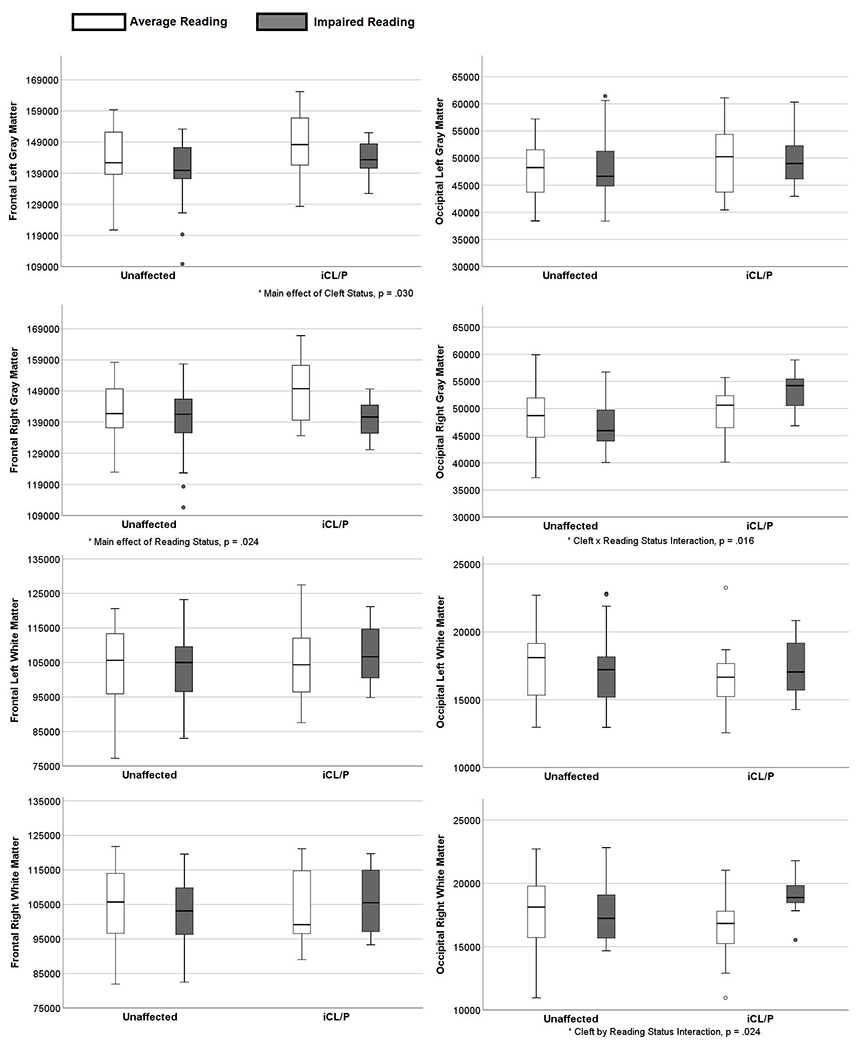
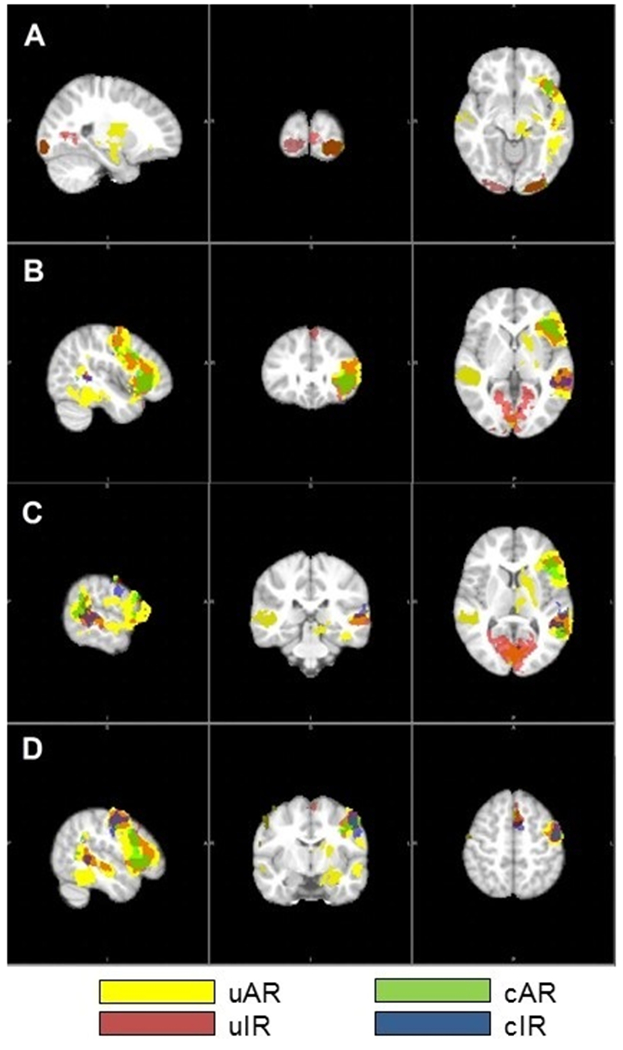
Background: The purpose of this study was to evaluate brain structure and function in participants with iCL/P and unaffected controls. Effects of cleft presence and reading status (average vs impaired) were evaluated.Methods: Males, ages 8-11 years old, including 26 with iCL/P and 57 unaffected peers were recruited and coded for reading status (average vs impaired). All participants underwent a volumetric and task-based functional MRI. Volumes and significant regions of activation during the decoding task were obtained. Main effects of cleft and reading status, and their interaction were evaluated.Results: Participants with iCL/P had significantly increased frontal gray matter volume (associated with average reading) and occipital gray and white matter volume (associated with impaired reading). Impaired readers with iCL/P had a distinctive activation pattern in visual association and motor regions relative to other groups.Conclusions: Findings suggest that increases in frontal gray matter volume may be associated with effective compensation during reading, while posterior increases in occipital volume may be associated with ineffective compensation for participants with iCL/P. These patterns were different from idiopathic dyslexia. Further work in a larger sample is needed to determine if these differences are associated with cleft type and with sex.Abbreviations: iCL/P (isolated cleft lip and/or palate); iCL (isolated cleft lip only); iCLP (isolated cleft lip and palate); iCP (isolated cleft palate only); uAR (unaffected average reader); uIR (unaffected impaired reader); cAR (average reader with iCL/P); cIR (impaired reader with iCL/P).
Keywords: Cleft; MRI; Reading; fMRI.
Conflict of interest statement
Figures
References
-
- Clausen NG, Pedersen DA, Pedersen JK, et al. Oral Clefts and Academic Performance in Adolescence: The Impact of Anesthesia-Related Neurotoxicity, Timing of Surgery, and Type of Oral Clefts. The Cleft palate-craniofacial journal : official publication of the American Cleft Palate-Craniofacial Association. 2016. - PMC - PubMed
-
- Gallagher ER, Collett BR. Neurodevelopmental and Academic Outcomes in Children With Orofacial Clefts: A Systematic Review. Pediatrics. 2019;144(1). - PubMed
Publication types
MeSH terms
Grants and funding
LinkOut - more resources
Full Text Sources
Other Literature Sources
Medical
