


Contribution of Noncanonical Antigens to Virulence and Adaptive Immunity in Human Infection with Enterotoxigenic E. coli
- PMID: 33558320
- PMCID: PMC8091098
- DOI: 10.1128/IAI.00041-21
Contribution of Noncanonical Antigens to Virulence and Adaptive Immunity in Human Infection with Enterotoxigenic E. coli
Abstract
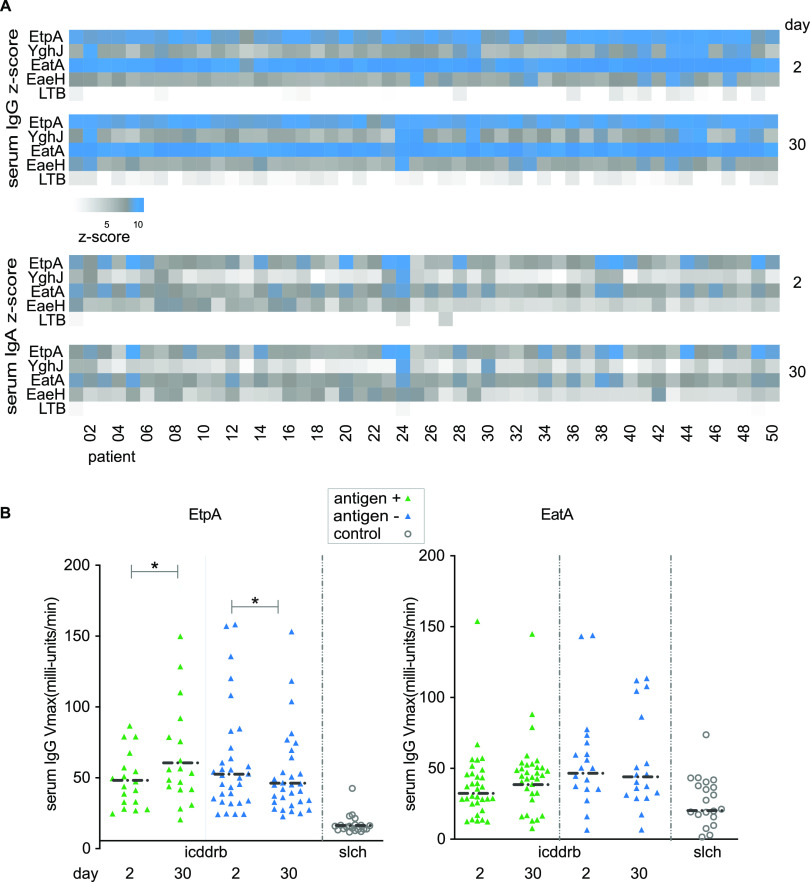
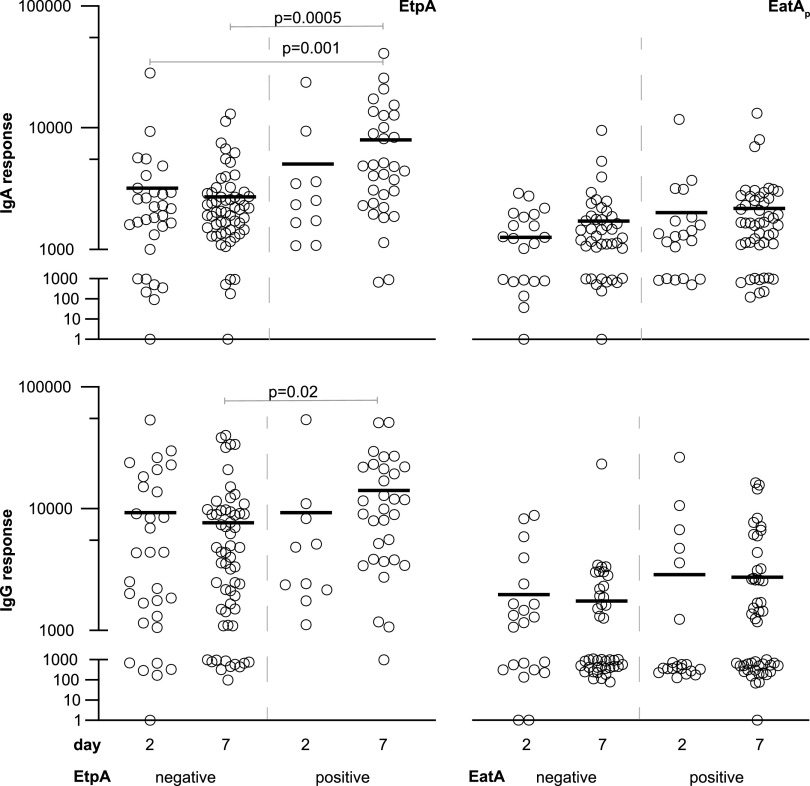
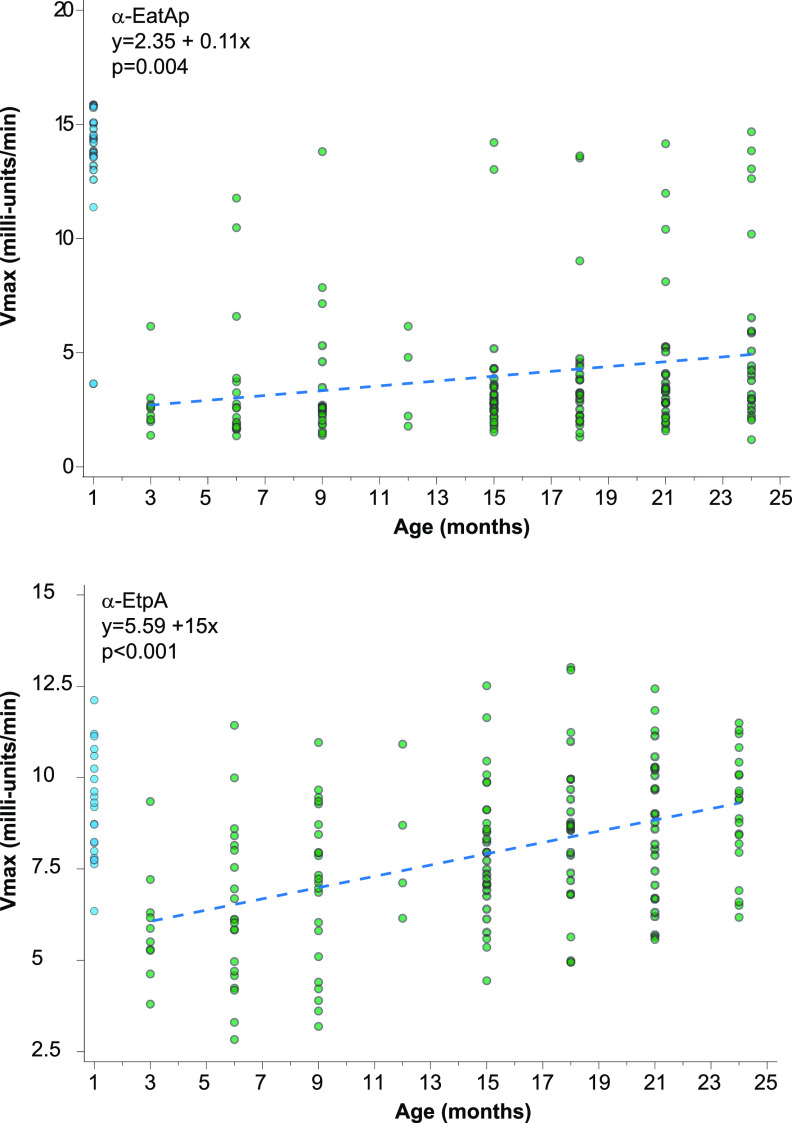
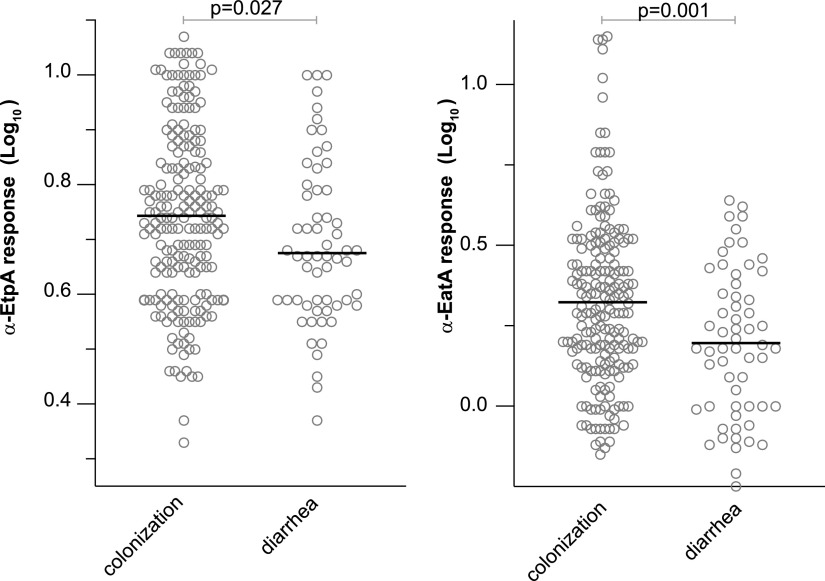
Enterotoxigenic Escherichia coli (ETEC) contributes significantly to the substantial burden of infectious diarrhea among children living in low- and middle-income countries. In the absence of a vaccine for ETEC, children succumb to acute dehydration as well as nondiarrheal sequelae related to these infections, including malnutrition. The considerable diversity of ETEC genomes has complicated canonical vaccine development approaches defined by a subset of ETEC pathovar-specific antigens known as colonization factors (CFs). To identify additional conserved immunogens unique to this pathovar, we employed an "open-aperture" approach to capture all potential conserved ETEC surface antigens, in which we mined the genomic sequences of 89 ETEC isolates, bioinformatically selected potential surface-exposed pathovar-specific antigens conserved in more than 40% of the genomes (n = 118), and assembled the representative proteins onto microarrays, complemented with known or putative colonization factor subunit molecules (n = 52) and toxin subunits. These arrays were then used to interrogate samples from individuals with acute symptomatic ETEC infections. Surprisingly, in this approach, we found that immune responses were largely constrained to a small number of antigens, including individual colonization factor antigens and EtpA, an extracellular adhesin. In a Bangladeshi cohort of naturally infected children <2 years of age, both EtpA and a second antigen, EatA, elicited significant serologic responses that were associated with protection from symptomatic illness. In addition, children infected with ETEC isolates bearing either etpA or eatA genes were significantly more likely to develop symptomatic disease. These studies support a role for antigens not presently targeted by vaccines (noncanonical) in virulence and the development of adaptive immune responses during ETEC infections. These findings may inform vaccine design efforts to complement existing approaches.
Keywords: diarrhea; enteric pathogens; pathogenesis; surface antigens; vaccines.
Copyright © 2021 American Society for Microbiology.
Figures
References
-
- GBD 2016 Diarrhoeal Disease Collaborators. 2018. Estimates of the global, regional, and national morbidity, mortality, and aetiologies of diarrhoea in 195 countries: a systematic analysis for the Global Burden of Disease Study 2016. Lancet Infect Dis 18:1211–1228. 10.1016/S1473-3099(18)30362-1. - DOI - PMC - PubMed
-
- Anderson JD, IV, Bagamian KH, Muhib F, Amaya MP, Laytner LA, Wierzba T, Rheingans R. 2019. Burden of enterotoxigenic Escherichia coli and Shigella non-fatal diarrhoeal infections in 79 low-income and lower middle-income countries: a modelling analysis. Lancet Glob Health 7:e321–e330. 10.1016/S2214-109X(18)30483-2. - DOI - PMC - PubMed
Publication types
MeSH terms
Substances
Grants and funding
LinkOut - more resources
Full Text Sources
Other Literature Sources
Medical
