Review
. 2021 Feb 8;7(1):2.
doi: 10.1038/s41526-020-00130-8.

Gravity sensing in plant and animal cells

Affiliations
Review

Gravity sensing in plant and animal cells

Ken Takahashi et al. NPJ Microgravity. .

Abstract

Gravity determines shape of body tissue and affects the functions of life, both in plants and animals. The cellular response to gravity is an active process of mechanotransduction. Although plants and animals share some common mechanisms of gravity sensing in spite of their distant phylogenetic origin, each species has its own mechanism to sense and respond to gravity. In this review, we discuss current understanding regarding the mechanisms of cellular gravity sensing in plants and animals. Understanding gravisensing also contributes to life on Earth, e.g., understanding osteoporosis and muscle atrophy. Furthermore, in the current age of Mars exploration, understanding cellular responses to gravity will form the foundation of living in space.


Conflict of interest statement

The authors declare that the research was conducted in the absence of any commercial or financial relationships that could be construed as a potential conflict of interest.

Figures
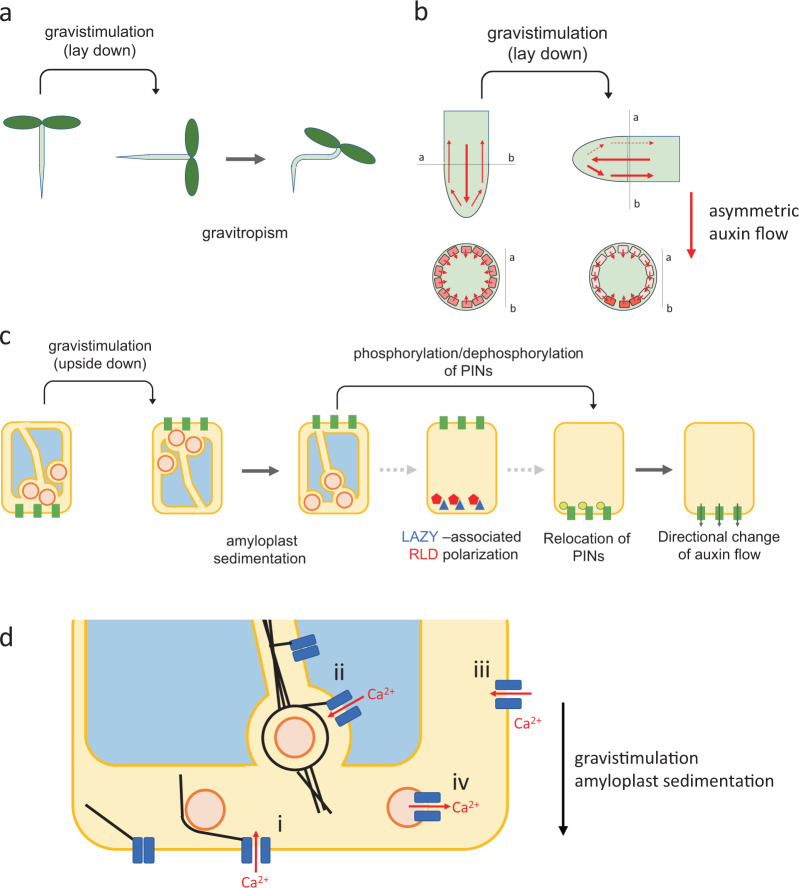
Fig. 1
Fig. 1. Mechanism for directional growth in response to gravity in plants.
a Model of gravitropism. b Asymmetric auxin flow in horizontally reoriented plants, c cellular responses in gravisensing (endodermal) cells. At first, gravity causes sedimentation of amyloplasts. RLD proteins associated with LAZY proteins get polarized to the new bottom side. The LAZY proteins regulate the localization of PIN proteins, which are efflux carriers of plant hormone auxin. Finally, the change in direction of auxin flow causes asymmetric growth of plants. d Activation of mechanosensitive ion channels in plasma- and endomembrane upon amyloplast sedimentation (i, ii), deformation, compression and shear stress (iii), displacement of amyloplast (iv).
Fig. 2
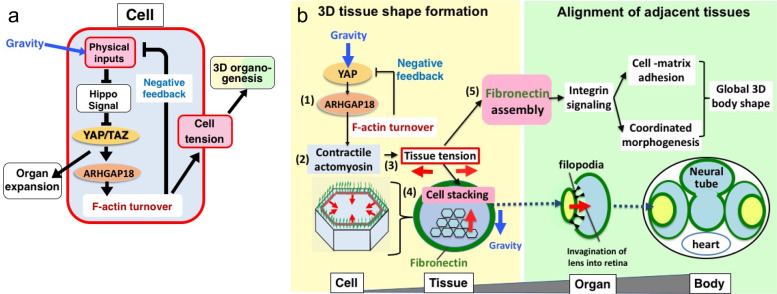
Fig. 2. YAP-mediated 3D organ/tissue formation withstanding gravity.
a Mechanical negative feedback maintaining YAP activity in a cell. b YAP-mediated 3D organ/tissue formation withstanding gravity. In (a), YAP/TAZ acts as a mechanotransducer and mechanoeffector. As a mechanotransducer, it provides physical inputs, including gravity activation of YAP/TAZ that leads to an expansion of organ size. As a mechanoeffector, it activates YAP, which, in turn, controls F-actin turnover, leading to the suppression of YAP as part of a negative feedback mechanism. F-actin turnover controls the cell/tissue tension that mediates 3D organogenesis. b YAP is essential for the formation of complex 3D organs by coordinating 3D tissue shape (left) and tissue alignment (right). In response to external forces, including gravity, YAP activates (1) ARHGAP18 expression, which mediates (2) contractile actomyosin formation controlling (3) tissue tension. Tissue tension is required for both (4) cell stacking to form a 3D tissue shape and (5) fibronectin assembly required for adjacent tissue alignment, e.g., the alignment of the lens and eye-cup.
Fig. 3
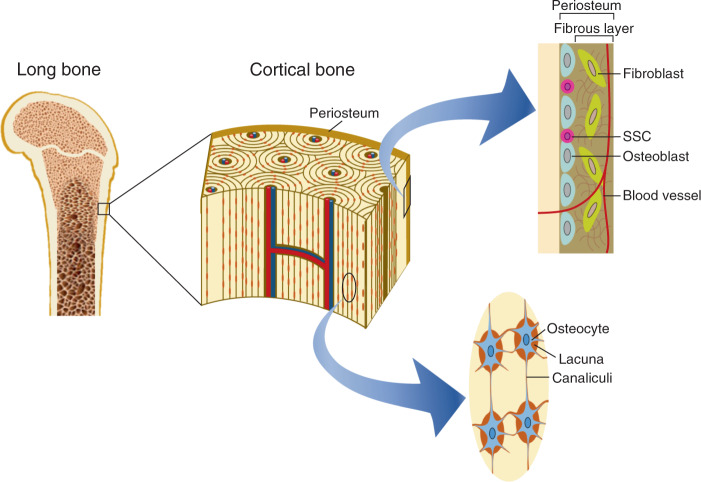
Fig. 3. The structure of the long bone, cortical bone, and periosteum.
Osteocytes are embedded in the lacuna of the bone matrix and are connected with each other through dendrites surrounded by canaliculi. At the periphery of the bone, SSCs, and fibroblasts form the periosteum together with osteoblasts. Osteocytes and the periosteum are mechanical sensors in the bone tissue.
Fig. 4
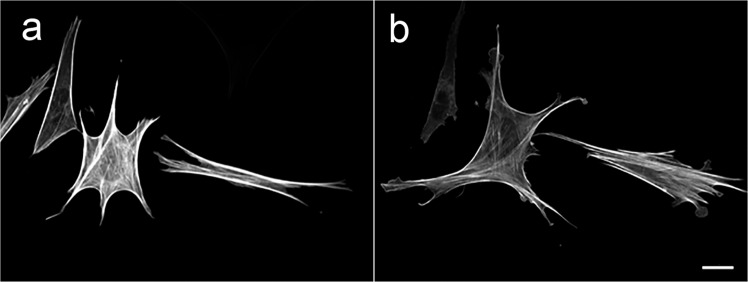
Fig. 4. Stress fiber remodeling in MSCs exposed to simulated microgravity as analyzed by confocal fluorescence microscopy.
MSCs expressing Lifeact-TagGFP2 contained thick stress fibers under 1 G conditions (a), whereas an exposure to simulated microgravity for 6 h led to the appearance of thinner stress fibers (b). The images in (a) and (b) showing the same field of view, were recorded, processed and presented in an identical condition (Kobayashi, unpublished). Scale bar: 20 μm.

References

    1. Ruden DM, et al. Effects of gravity, microgravity or microgravity simulation on early mammalian development. Stem Cells Dev. 2018;27:1230–1236. doi: 10.1089/scd.2018.0024. - DOI - PMC - PubMed
    1. Petrasek J, Friml J. Auxin transport routes in plant development. Development. 2009;136:2675–2688. doi: 10.1242/dev.030353. - DOI - PubMed
    1. Vico L, et al. Effects of long-term microgravity exposure on cancellous and cortical weight-bearing bones of cosmonauts. Lancet. 2000;355:1607–1611. doi: 10.1016/S0140-6736(00)02217-0. - DOI - PubMed
    1. Vandenburgh H, Chromiak J, Shansky J, Del Tatto M, Lemaire J. Space travel directly induces skeletal muscle atrophy. FASEB J. 1999;13:1031–1038. doi: 10.1096/fasebj.13.9.1031. - DOI - PubMed
    1. Baisden DL, et al. Human health and performance for long-duration spaceflight. Aviat. Space Environ. Med. 2008;79:629–635. doi: 10.3357/ASEM.2314.2008. - DOI - PubMed

LinkOut - more resources