


Effects of sleep deprivation on endothelial function in adult humans: a systematic review
- PMID: 33558966
- PMCID: PMC8050211
- DOI: 10.1007/s11357-020-00312-y
Effects of sleep deprivation on endothelial function in adult humans: a systematic review
Abstract
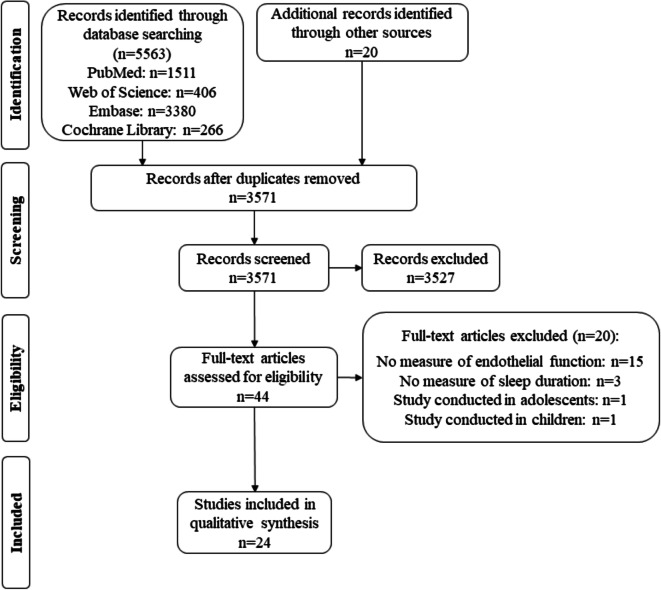
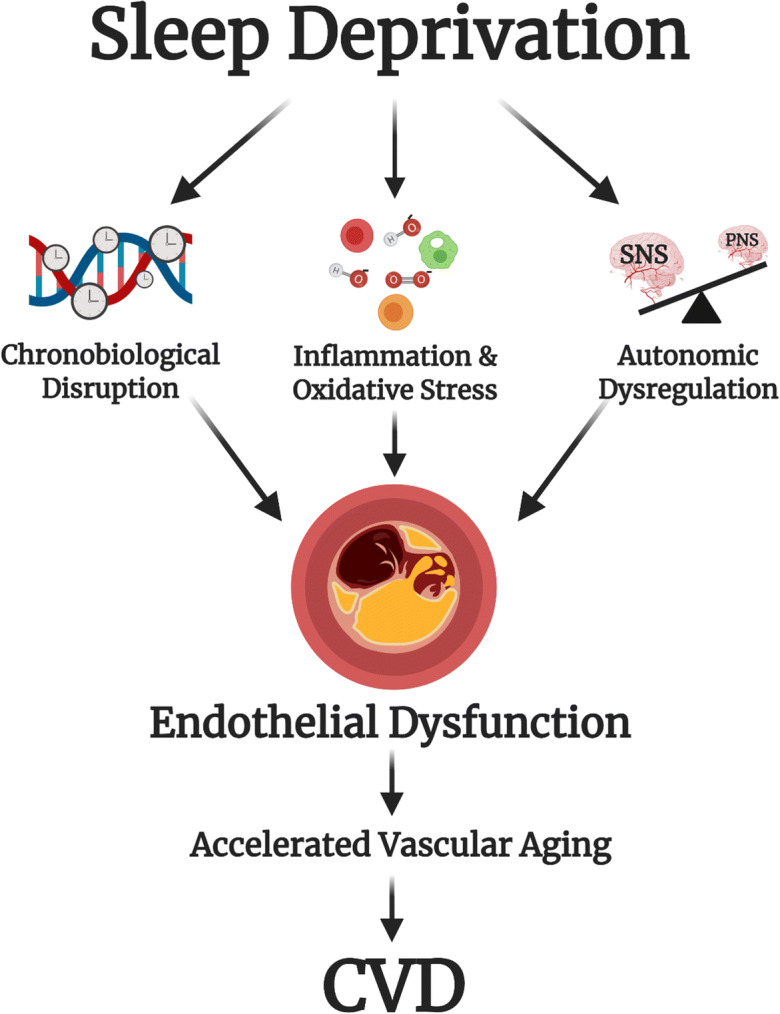
Sleep deprivation is highly prevalent and is associated with increased cardiovascular disease (CVD) morbidity and mortality. Age-related alterations in sleep and chronobiology may exaggerate CVD susceptibility in older individuals. The mechanisms responsible for the association between sleep deprivation and CVD are not fully understood, but endothelial dysfunction may play a central role. Our objective was to conduct a systematic literature review to evaluate the evidence on the effects of sleep deprivation on endothelial function (EF). This review adhered to the PRISMA guidelines and was pre-registered with PROSPERO (#CRD42020192485, 07/24/2020). We searched PubMed, Web of Science, Embase, and Cochrane Library for articles published through May 1, 2020. Eligibility criteria included publication in English and use of well-established EF methodologies in adult humans. Two investigators independently performed the literature search, study selection, data extraction, risk-of-bias assessment, and qualitative data synthesis. Out of 3571 articles identified, 24 articles were included in the systematic review. Main findings include the following: (1) shorter sleep duration is associated with lower macrovascular EF; (2) not sleeping 7-9 h/night is linked with impaired microvascular EF; (3) sleep restriction impairs micro- and macrovascular EF; (4) acute total sleep deprivation impairs micro- and macrovascular EF but data on macrovascular EF are less consistent; and (5) shift work impairs macrovascular EF. In conclusion, sleep deprivation impairs EF, which may explain the link between insufficient sleep and CVD. Future investigations should fully elucidate the underlying mechanisms and develop strategies to combat the adverse endothelial effects of sleep deprivation across the lifespan.
Keywords: Cardiovascular aging; Chronobiology; Endothelial function; Sleep deprivation.
Conflict of interest statement
The authors declare that they have no conflicts of interest.
Figures

References
-
- Liu Y, Wheaton AG, Chapman DP, Cunningham TJ, Lu H, Croft JB. Prevalence of healthy sleep duration among adults--United States, 2014. MMWR Morb Mortal Wkly Rep. 2016;65(6):137–41. 10.15585/mmwr.mm6506a1. - PubMed
-
- St-Onge MP, Grandner MA, Brown D, Conroy MB, Jean-Louis G, Coons M, Bhatt DL, American Heart Association Obesity, Behavior Change, Diabetes, and Nutrition Committees of the Council on Lifestyle and Cardiometabolic Health; Council on Cardiovascular Disease in the Young; Council on Clinical Cardiology; and Stroke Council Sleep duration and quality: impact on lifestyle behaviors and cardiometabolic health: a scientific statement from the American Heart Association. Circulation. 2016;134(18):e367–ee86. doi: 10.1161/CIR.0000000000000444. - DOI - PMC - PubMed
-
- Hirshkowitz M, Whiton K, Albert SM, Alessi C, Bruni O, DonCarlos L, Hazen N, Herman J, Katz ES, Kheirandish-Gozal L, Neubauer DN, O’Donnell AE, Ohayon M, Peever J, Rawding R, Sachdeva RC, Setters B, Vitiello MV, Ware JC, Adams Hillard PJ. National Sleep Foundation’s sleep time duration recommendations: methodology and results summary. Sleep Health. 2015;1(1):40–43. doi: 10.1016/j.sleh.2014.12.010. - DOI - PubMed
-
- NSF. 2010 Bedroom Poll: Summary of Findings. 2012:1–79.
Publication types
MeSH terms
Grants and funding
LinkOut - more resources
Full Text Sources
Other Literature Sources
