Review
. 2021 Apr;303(4):871-876.
doi: 10.1007/s00404-021-05972-5. Epub 2021 Feb 8.

Point-of-care ultrasound in obstetrics and gynecology

Affiliations
Review

Point-of-care ultrasound in obstetrics and gynecology

Florian Recker et al. Arch Gynecol Obstet. 2021 Apr.

Abstract

Background: The rapid technical development and portability of ultrasound systems over recent years has had a profound impact on the area of point-of-care-ultrasound (POCUS), both in general medicine and in obstetrics and gynecology. The use of POCUS enables the clinician to perform the ultrasound scan either at the medical office or the patient's bedside and used as an extension of the physical examination. Real-time images can immediately be correlated with the patient's symptoms, and any changes in a (critical) patient's condition can be more rapidly detected.

Pocus in obgyn: POCUS is also suitable for time-critical scenarios, and depending on the situation and its dynamics, the course and results of any therapy may be observed in real time. POCUS should be considered to be a routine extension of practice for most OB/GYN clinicians as it can give immediate answers to what could be life-threatening situations for the mother and/or baby. With its proven usefulness, the applications and use of POCUS should be incorporated in teaching programs for medical students, OBGYN residents and emergency physicians.

Keywords: Gynecology; Imaging; Obstetrics; Point-of-care ultrasound (POCUS).


Conflict of interest statement

The authors declare no conflicts of interest.

Figures
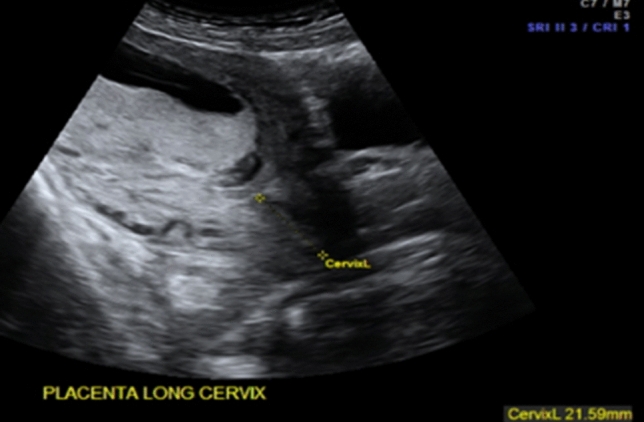
Fig. 1
Fig. 1
Determination of the cervical length in the second trimester (TA view)
Fig. 2
Fig. 2
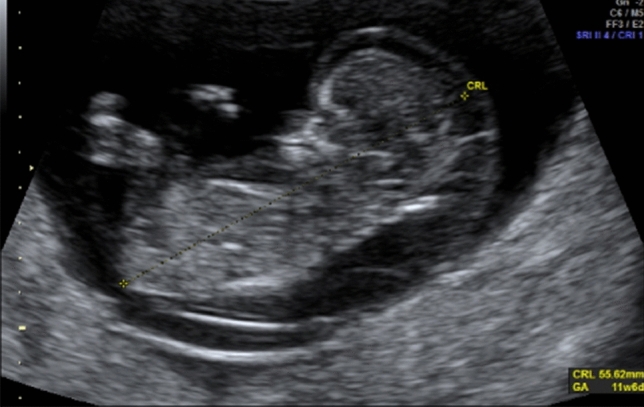
Fetus with cystic hygroma and measurement of the crown–rump length in the first trimester (TA view)
Fig. 3
Fig. 3
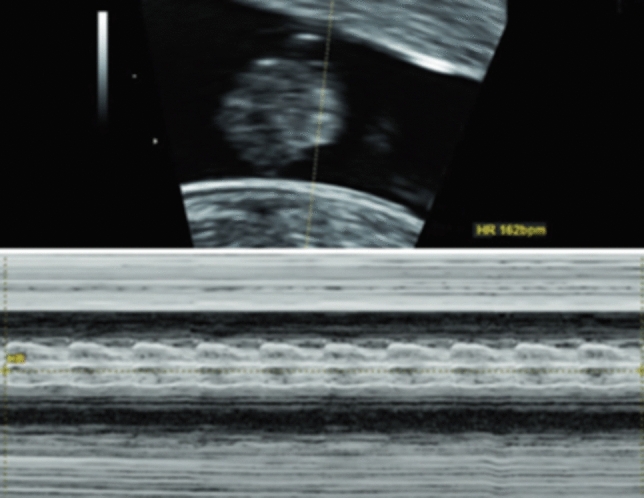
Presentation of the fetal viability in the first trimester
Fig. 4
Fig. 4
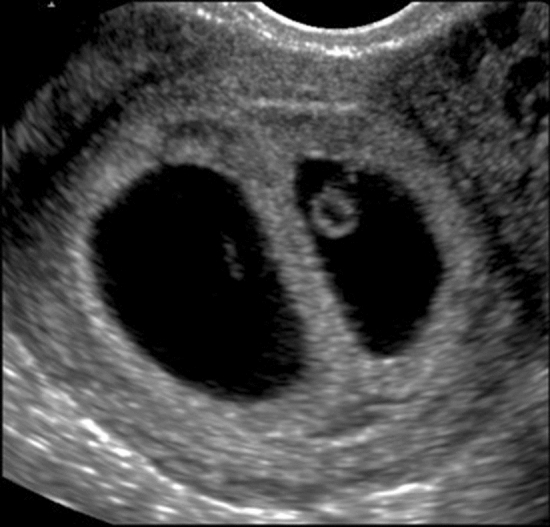
Dichorionic–diamniotic twins showing a lambda sign in the first trimester
Fig. 5
Fig. 5
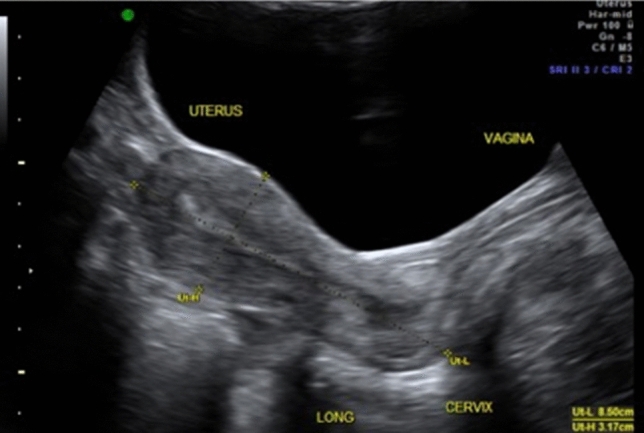
Identification of the uterine position (sagittal view from TA)
Fig. 6
Fig. 6
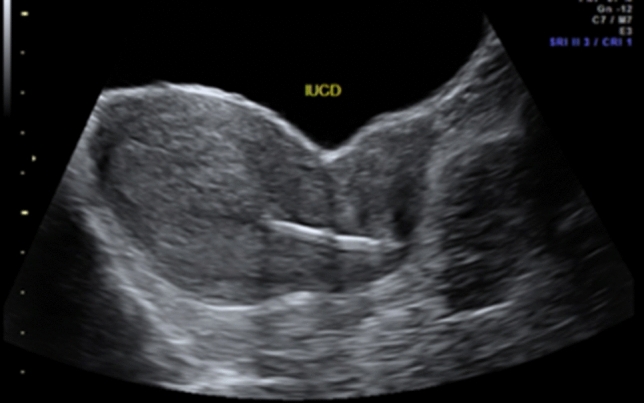
Confirmation the location of intrauterine contraceptive devices in situ (TA)
Fig. 7
Fig. 7
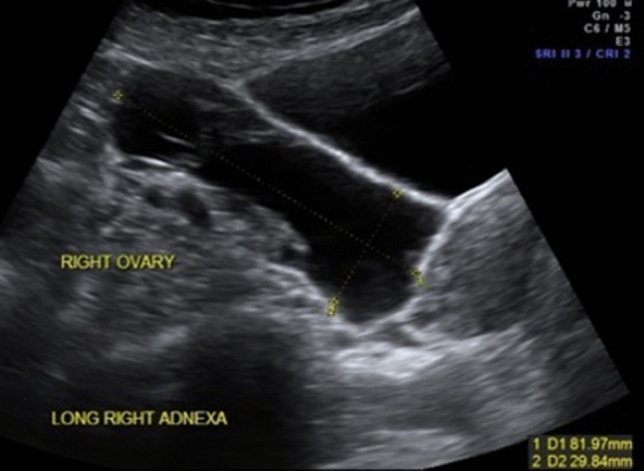
Right hydrosalpinx in a patient suffering from pain

References

    1. Nielsen M, Cantisani V, Sidhu P, Badea R, Batko T, Carlsen J, et al. the use of handheld ultrasound devices – an EFSUMB position paper. Ultraschall Med Eur J Ultrasound. 2019;40(01):30–39. doi: 10.1055/a-0783-2303. - DOI - PubMed
    1. Allan A, Bedforth N, Nicholls B, Denny N. Comparing ultrasound and nerve stimulation: time to ask the question?: correspondence. Anaesthesia. 2011;66(3):222–223. doi: 10.1111/j.1365-2044.2011.06630.x. - DOI - PubMed
    1. Fröhlich E, Beller K, Muller R, Herrmann M, Debove I, Klinger C, et al. Point of care ultrasound in geriatric patients: prospective evaluation of a portable handheld ultrasound device. Ultraschall Med Eur J Ultrasound. 2020;41(03):308–316. doi: 10.1055/a-0889-8070. - DOI - PubMed
    1. Froehlich E, Pauluschke-Froehlich J, Debove I, Vey W, Klinger C, Dietrich C. Geriatrischer ultraschall. Z Für Gastroenterol. 2017;55(03):277–290. doi: 10.1055/s-0042-121266. - DOI - PubMed
    1. Sporea I. Ultrasound for everyone – is it the right time? Med Ultrason. 2014;16(1):3–4. doi: 10.11152/mu.2014.2066.161.is1. - DOI - PubMed

LinkOut - more resources