The GLAD Lesion: are the definition, diagnosis and treatment up to date? A Systematic Review
- PMID: 33559615
- PMCID: PMC7944697
- DOI: 10.23750/abm.v91i14-S.10987
The GLAD Lesion: are the definition, diagnosis and treatment up to date? A Systematic Review
Abstract
Introduction: Although GLAD lesions are quite common, only sporadic case reports describe surgical techniques and clinical outcomes. Even if cartilage defects can result from various pathogenic mechanisms, the resulting defect has some similarities with GLAD, and its management can be a starting point to treat both types of lesion. Aim of the present study is to find a commonly accepted definition for GLAD lesions in order to understand its pathogenesis, diagnosis and possible treatments.
Methods: A search of PubMed (MEDLINE) database has been performed in June 2020 to identify relevant articles including a combination of the following search terms: "GlenoLabral Articular Disruption" OR "GLAD" AND "shoulder" AND "cartilage, articular".
Results: Abstract evaluation included 31 articles in the full-text review. Various studies showed that the performance of MR arthrography in the detection of glenohumeral cartilage lesions, including GLAD lesions, was moderate. Different therapeutic solutions have been described. Arthroscopic debridement of the lesion and reattachment of the labrum have been often used. In case of large articular defects, the labrum could be advanced in the cartilage defect to cover it. In case of cartilage flap with reparable margins, this could be reattached with different suture constructs. Neglected GLAD lesions following a chronic trauma or shoulder instability have not been described in literature.
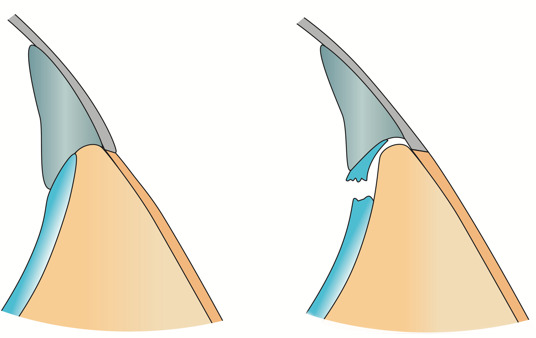
Conclusions: The definition of GLAD injury has changed over the time. Many authors associate this lesion with shoulder instability, with trauma in abduction and extra rotation, while Neviaser's original definition described stable shoulders following a trauma in adduction.
Figures
References
-
- Neviaser TJ. The GLAD lesion: Another cause of anterior shoulder pain. Arthroscopy: The Journal of Arthroscopic & Related Surgery. 1993;9(1):22–23. doi: 10.1016/S0749-8063(05)80339-1. - PubMed
-
- Amrami KK, Sperling JW, Bartholmai BJ, Sundaram M. Radiologic case study. Glenolabral articular disruption (GLAD) lesion. Orthopedics. 2002;25(1):29–95-96. - PubMed
-
- Antonio GE, Griffith JF, Yu AB, Yung PSH, Chan KM, Ahuja AT. First-time shoulder dislocation: High prevalence of labral injury and age-related differences revealed by MR arthrography. J Magn Reson Imaging. 2007;26(4):983–991. doi: 10.1002/jmri.21092. - PubMed
-
- Page R, Bhatia DN. Arthroscopic repair of a chondrolabral lesion associated with anterior glenohumeral dislocation. Knee Surg Sports Traumatol Arthrosc. 2010;18(12):1748–1751. doi: 10.1007/s00167-010-1095-3. - PubMed
-
- Zhu W, Lu W, Zhang L, et al. Arthroscopic findings in the recurrent anterior instability of the shoulder. Eur J Orthop Surg Traumatol. 2014;24(5):699–705. doi: 10.1007/s00590-013-1259-1. - PubMed
Publication types
MeSH terms
LinkOut - more resources
Full Text Sources
Medical