


The role of radiotherapy in the age of immunotherapy
- PMID: 33561212
- PMCID: PMC8012351
- DOI: 10.1093/jjco/hyaa268
The role of radiotherapy in the age of immunotherapy
Abstract
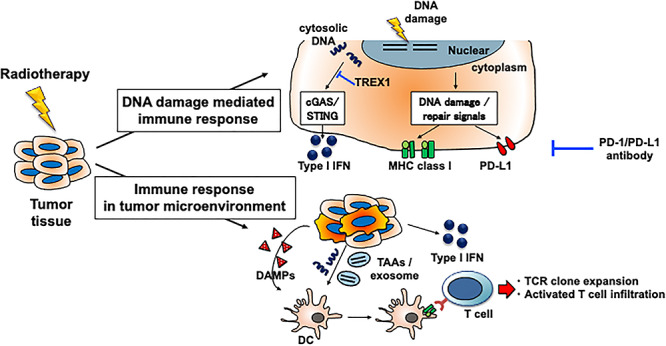
With the development of immune checkpoint inhibitors, the efficacy of immunotherapy as a cancer treatment that is effective against multiple tumor types has been established, and this modality came to be considered as the fourth pillar of cancer therapy. The clinical success of immunotherapy greatly changed the field of oncology by highlighting the importance of the immune system in cancer control and elimination. It has now become clear that research into, and the clinical application of, the immune response are important for effective cancer treatment. Moreover, it has become apparent that conventional cancer treatments, such as radiotherapy and chemotherapy, can modulate the cross-talk between the tumor and the immune system, and their efficacy depends, in part, on the ability to elicit antitumor immune response. The ability of radiotherapy to induce an immune response has become relevant in the immunotherapy age. Radiotherapy has been redefined as a partner for cancer immunotherapy, based on evidence indicating the potential synergistic effect of the combination of these therapeutic modalities. This review outlines the major findings reported to date on the immune response induced by radiotherapy and discusses the role of radiotherapy in combination with immunotherapy. Furthermore, we introduce research aimed at the clinical application of combination therapy and discuss its potential in clinical practice and future issues.
Keywords: DNA damage response; immune checkpoint inhibitors; immunogenic cell death; immunotherapy; radiotherapy.
© The Author(s) 2021. Published by Oxford University Press.
Figures
References
-
- Dunn GP, Bruce AT, Ikeda H, Old LJ, Schreiber RD. Cancer immunoediting: from immunosurveillance to tumor escape. Nat Immunol. 2002;3:991–8. - PubMed
-
- O'Donnell JS, Teng MWL, Smyth MJ. Cancer immunoediting and resistance to T cell-based immunotherapy. Nat Rev Clin Oncol. 2019;16:151–67. - PubMed
-
- MOLE RH. Whole body irradiation; radiobiology or medicine? Br J Radiol. 1953;26:234–41. - PubMed
Publication types
MeSH terms
LinkOut - more resources
Full Text Sources
Other Literature Sources
Medical
