Review
. 2021 Feb 5;12(2):231.
doi: 10.3390/genes12020231.

Epigenetics: New Insights into Mammary Gland Biology

Affiliations
Review

Epigenetics: New Insights into Mammary Gland Biology

Elitsa Ivanova et al. Genes (Basel). .

Abstract

The mammary gland undergoes important anatomical and physiological changes from embryogenesis through puberty, pregnancy, lactation and involution. These steps are under the control of a complex network of molecular factors, in which epigenetic mechanisms play a role that is increasingly well described. Recently, studies investigating epigenetic modifications and their impacts on gene expression in the mammary gland have been performed at different physiological stages and in different mammary cell types. This has led to the establishment of a role for epigenetic marks in milk component biosynthesis. This review aims to summarize the available knowledge regarding the involvement of the four main molecular mechanisms in epigenetics: DNA methylation, histone modifications, polycomb protein activity and non-coding RNA functions.

Keywords: DNA methylation; epigenetic regulations; lactation; mammary gland; non-coding RNA.


Conflict of interest statement

The authors declare no conflict of interest.

Figures
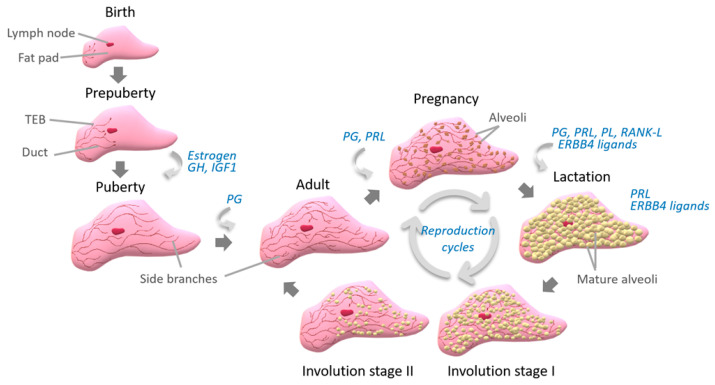
Figure 1
Figure 1
Principal stages of the mammary gland development throughout the lifetime. Major hormones that control development are outlined in italics and blue. TEB: terminal end bud. GH: growth hormone. IGF1: insulin-like growth factor-1. PG: Progesterone. PRL: Prolactin. PL: Placental lactogen. ERBB4: Erb-B2 Receptor Tyrosine Kinase 4. RANK-L: receptor activator of nuclear factor kappa-B ligand.
Figure 2
Figure 2
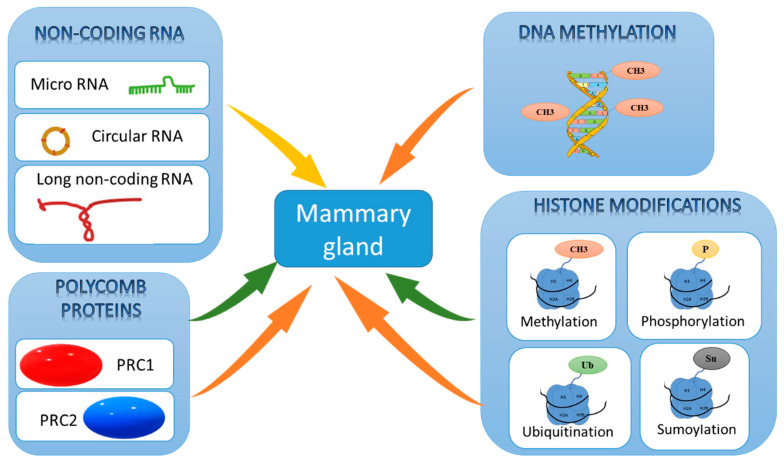
Main epigenetic modifications impacting mammary gland development. Post translational regulation (yellow arrow), alteration of chromatin structure (green arrow), and gene activation or inactivation (orange arrow).
Figure 3
Figure 3
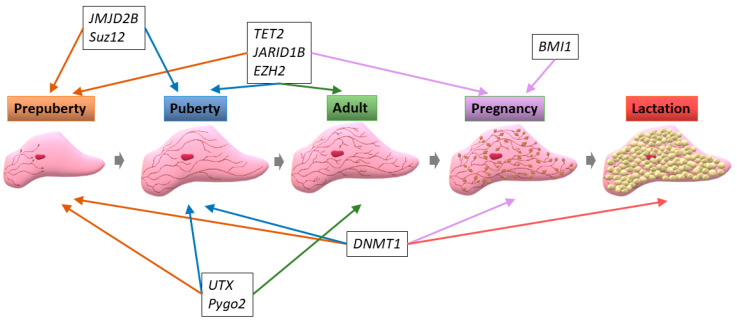
Epigenetic modulating proteins with a role in mammary gland development: Mammary gland development occurs throughout the lifetime and can be divided into several distinct stages some of which are represented here. Multiple proteins, involved in epigenetic regulation and mentioned in the text boxes above, play a role in this development largely through influencing mammary stem cell quiescence and activation, as well as luminal differentiation and lineage commitment. Colour-coded arrows show which stages these proteins modulate.
Figure 4
Figure 4
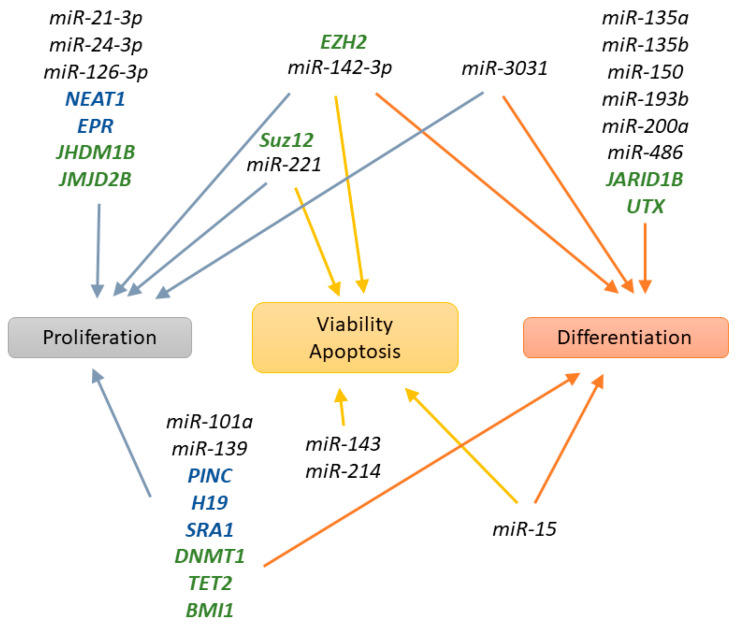
Cell processes modulated by epigenetic regulators: The epigenetic modulating proteins (in green), microRNAs (in black), and long non-coding RNAs (in blue) discussed in this review can be categorized based on which cell process they play a role in. Colour-coded arrows show which processes the mentioned epigenetic regulators are involved in.
Figure 5
Figure 5
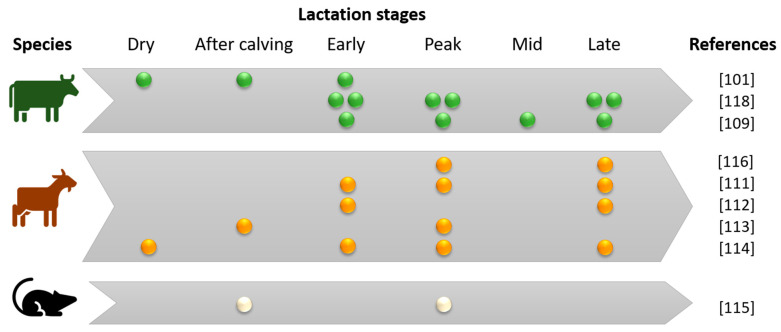
Mammary miRNomes and their variations characterized during lactation stages in cow (green markers), goat (orange markers), and rat species (white markers).
Figure 6
Figure 6
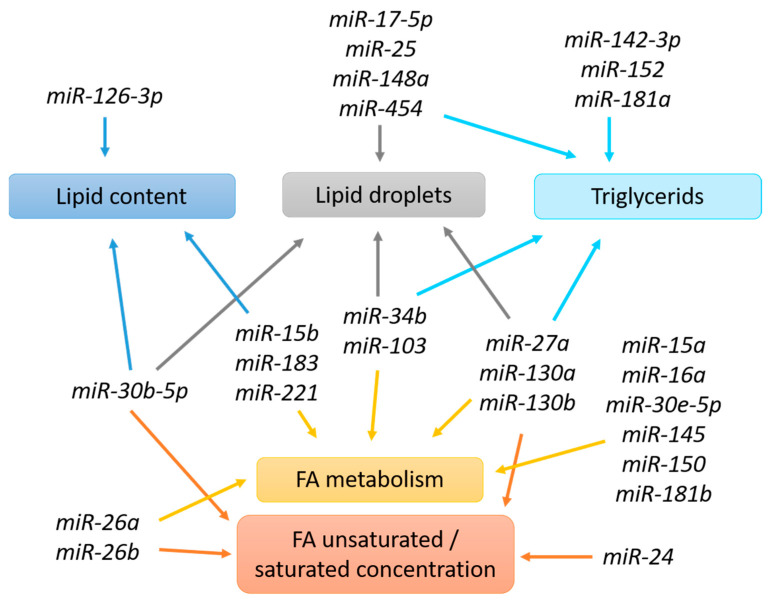
miRNAs involved in the regulation of lipid biosynthesis in mammary epithelial cells. Colour-coded arrows show which processes the mentioned miRNAs are involved in.

References

    1. Hennighausen L., Robinson G.W. Information networks in the mammary gland. Nat. Rev. Mol. Cell Biol. 2005;6:715–725. doi: 10.1038/nrm1714. - DOI - PubMed
    1. Rios A.C., Fu N.Y., Lindeman G.J., Visvader J.E. In situ identification of bipotent stem cells in the mammary gland. Nat. Cell Biol. 2014;506:322–327. doi: 10.1038/nature12948. - DOI - PubMed
    1. Holliday R. The inheritance of epigenetic defects. Science. 1987;238:163–170. doi: 10.1126/science.3310230. - DOI - PubMed
    1. Greenberg M.V.C., Bourc’His D. The diverse roles of DNA methylation in mammalian development and disease. Nat. Rev. Mol. Cell Biol. 2019;20:590–607. doi: 10.1038/s41580-019-0159-6. - DOI - PubMed
    1. Huang H., Lin S., Garcia B.A., Zhao Y. Quantitative Proteomic Analysis of Histone Modifications. Chem. Rev. 2015;115:2376–2418. doi: 10.1021/cr500491u. - DOI - PMC - PubMed

Publication types

LinkOut - more resources