. 2021 Feb 9;11(1):3428.
doi: 10.1038/s41598-021-82963-1.

Hemostatic and antibacterial PVA/Kaolin composite sponges loaded with penicillin-streptomycin for wound dressing applications

Affiliations

Hemostatic and antibacterial PVA/Kaolin composite sponges loaded with penicillin-streptomycin for wound dressing applications

Tamer M Tamer et al. Sci Rep. .

Abstract

Hemorrhage is the major hindrance over the wound healing, which triggers microbial infections and might provoke traumatic death. Herein, new hemostatic and antibacterial PVA/Kaolin composite sponges were crosslinked using a freeze-thawing approach and boosted by penicillin-streptomycin (Pen-Strep). Physicochemical characteristics of developed membranes were analyzed adopting Fourier transformed infrared spectroscopy (FT-IR), scanning electron microscopy (SEM), a thermal gravimetric analyzer (TGA), and differential scanning calorimetry (DSC). Furthermore, the impacts of kaolin concentrations on porosity, swelling behavior, gel fraction, and degradation of the membranes were investigated. SEM analyses revealed a spongy-like structure of hydrogels associated with high dispersion of kaolin inside PVA matrix. The thermal characteristics of PVA/Kaolin were significantly ameliorated compared to the prime PVA. Moreover, the results exhibited significant variations of swelling performance, surface roughness and pore capacity due to the alterations of kaolin contents. Besides, the adhesive strength ability was manifestly enhanced for PVA-K0.1 sponge. Biomedical evaluations including antibacterial activity, blood clotting index and thrombogenicity of the membranes were studied. The contact of PVA/Kaolin to blood revealed notable augmentation in blood clotting. Furthermore, the incorporation of kaolin into PVA presented mild diminution in antibacterial activities. Moreover, PVA/Kaolin composites illustrated no cellular toxicity towards fibroblast cells. These remarkable features substantiate that the PVA-K0.1 sponge could be applied as a multifunctional wound dressing.


Conflict of interest statement

The authors declare no competing interests.

Figures
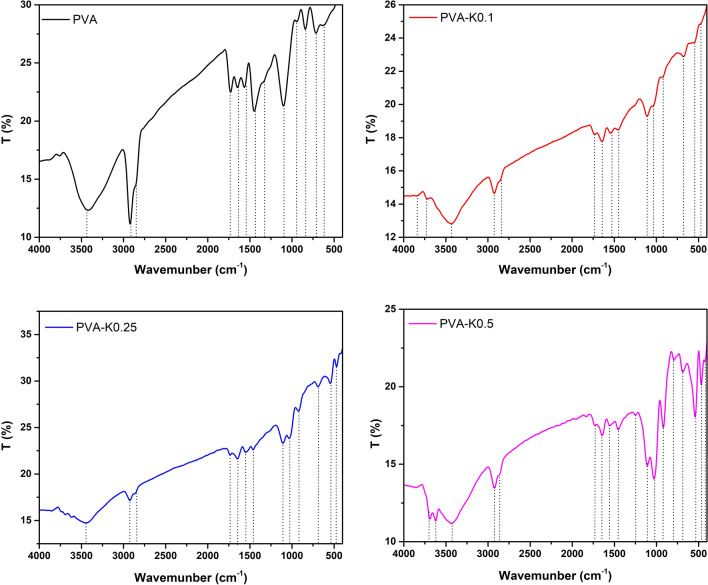
Figure 1
Figure 1
FT-IR spectra of PVA hydrogel membrane and PVA/Kaolin composite hydrogel membranes.
Figure 2
Figure 2
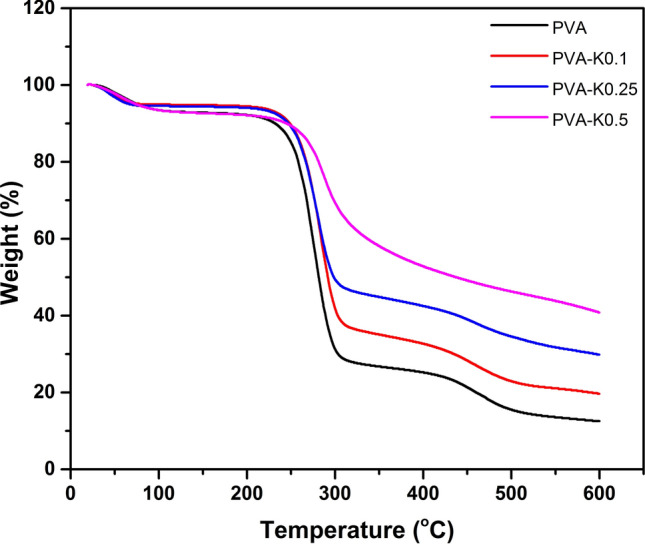
TGA curves of PVA hydrogel membrane and PVA/Kaolin composite hydrogel membranes.
Figure 3
Figure 3
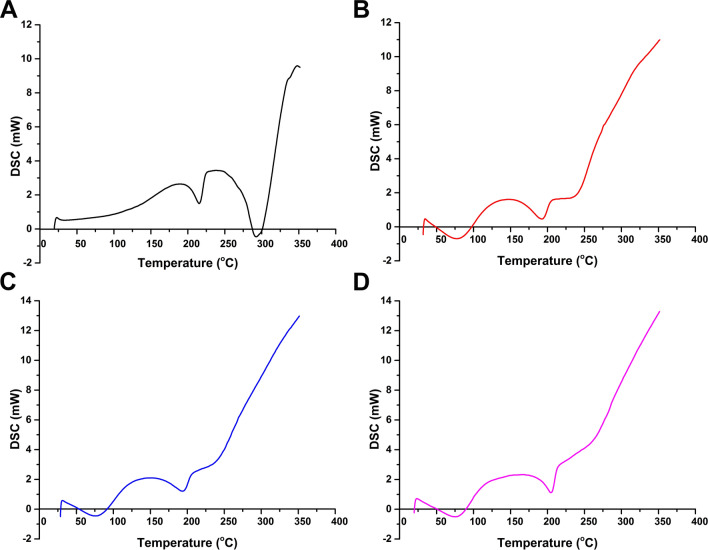
DSC analyses of (A) PVA hydrogel membrane, (B) PVA-K0.1, (C) PVA-K0.25, and (D) PVA-K0.5 composite hydrogel membranes.
Figure 4
Figure 4
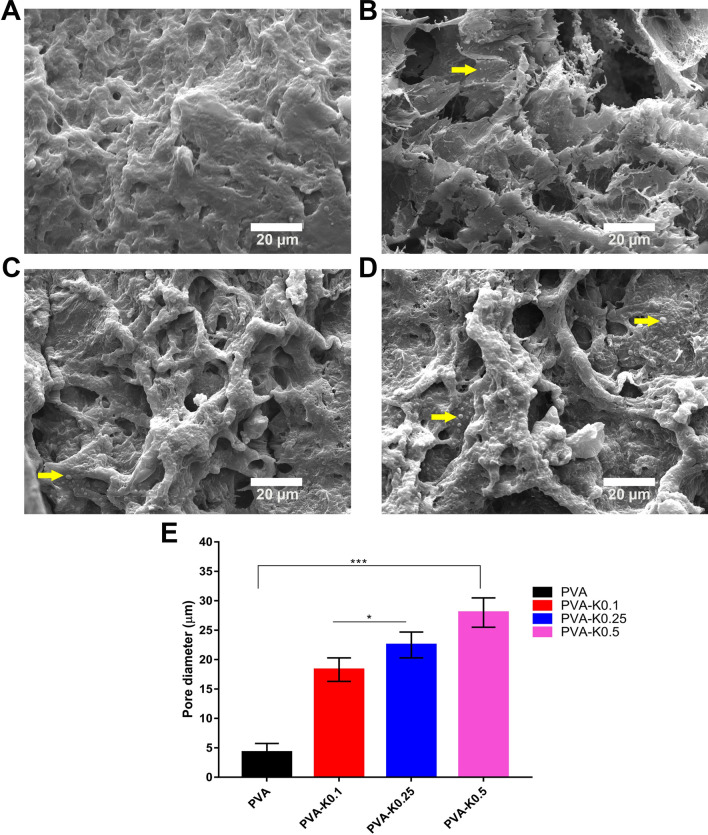
SEM images of surface morphology distinctions of (A) PVA, (B) PVA-K0.1, (C) PVA-K0.25, and (D) PVA-K0.5 hydrogels. The arrows point to kaolin particles inside the network of the hydrogels. (E) Pores size of PVA and PVA/Kaolin hydrogels. Data are presented as means ± SD (***p < 0.001, and *p < 0.05).
Figure 5
Figure 5
SEM images exhibit cross-sectional morphologies of (A) PVA, (B) PVA-K0.1, (C) PVA-K0.25, and (D) PVA-K0.5 hydrogels. The arrows refer to the kaolin particles inside the hydrogels, indicting the variations on the basis of kaolin content.
Figure 6
Figure 6
(A) Swelling ratio, (B) porosity, and (C) in vitro degradation for PVA/Kaolin composite hydrogel membranes in comparison with PVA hydrogel membrane. Data are presented as means ± SD (***p < 0.001, **p < 0.01, and *p < 0.05).
Figure 7
Figure 7
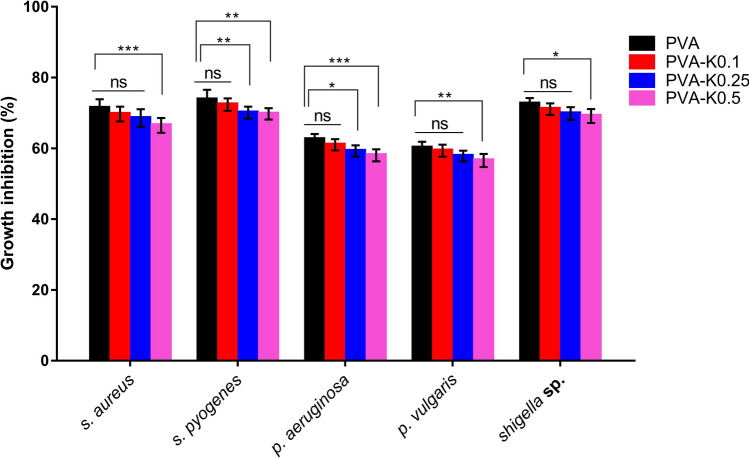
Antibacterial assays of PVA hydrogel membrane and PVA/Kaolin composite hydrogel membranes loaded with Pen-Strep against S. aureus, S. pyogenes, P. aeruginosa, P. vulgaris, and Shigella sp. Data are presented as means ± SD (***p < 0.001, **p < 0.01, and *p < 0.05).
Figure 8
Figure 8
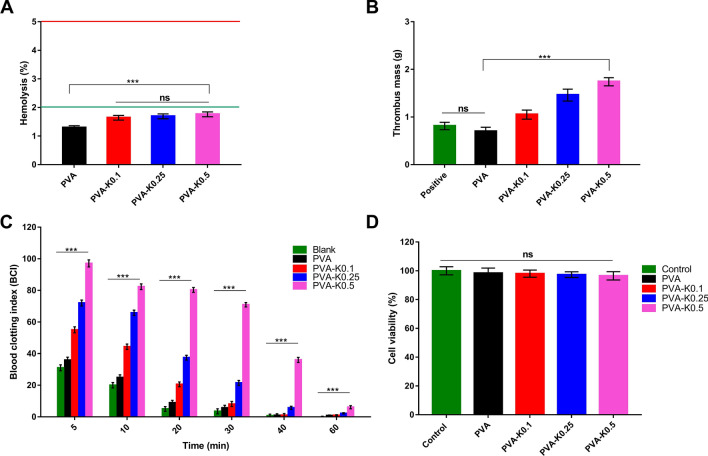
(A) Hemocompatibity, (B) thrombogenicity, (C) blood clotting index, and (D) cytotoxicity for PVA hydrogel membrane and PVA/Kaolin composite hydrogel membranes. Data are expressed as means ± SD [***p < 0.001, while (ns) indicates non-significant difference].

References

    1. Chan LW, et al. A synthetic fibrin cross-linking polymer for modulating clot properties and inducing hemostasis. Sci. Transl. Med. 2015;7:277. doi: 10.1126/scitranslmed.3010383. - DOI - PMC - PubMed
    1. Hermans MH. Wounds and ulcers: Back to the old nomenclature. Wounds Compendium Clin. Res. Pract. 2010;22:289–293. - PubMed
    1. Yang B, et al. Systematic review and meta-analysis of perioperative intravenous tranexamic acid use in spinal surgery. PLoS One. 2013;8:e55436. doi: 10.1371/journal.pone.0055436. - DOI - PMC - PubMed
    1. Duncan CM, et al. Venous thromboembolism and mortality associated with tranexamic acid use during total hip and knee arthroplasty. J. Arthroplasty. 2015;30:272–276. doi: 10.1016/j.arth.2014.08.022. - DOI - PubMed
    1. Seyednejad H, Imani M, Jamieson T, Seifalian AM. Topical haemostatic agents. BJS. 2008;95:1197–1225. doi: 10.1002/bjs.6357. - DOI - PubMed