


Morality is in the eye of the beholder: the neurocognitive basis of the "anomalous-is-bad" stereotype
- PMID: 33565114
- PMCID: PMC8247878
- DOI: 10.1111/nyas.14575
Morality is in the eye of the beholder: the neurocognitive basis of the "anomalous-is-bad" stereotype
Abstract
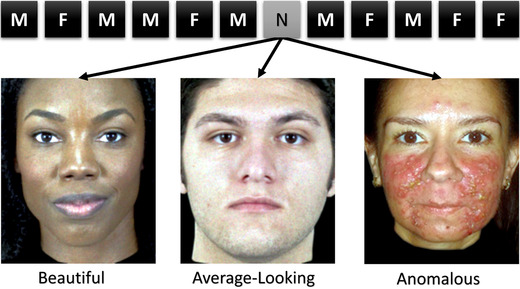
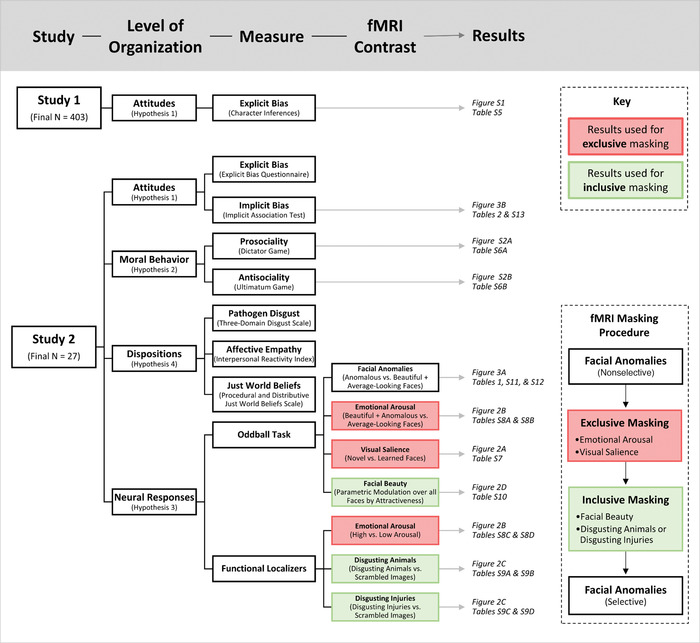
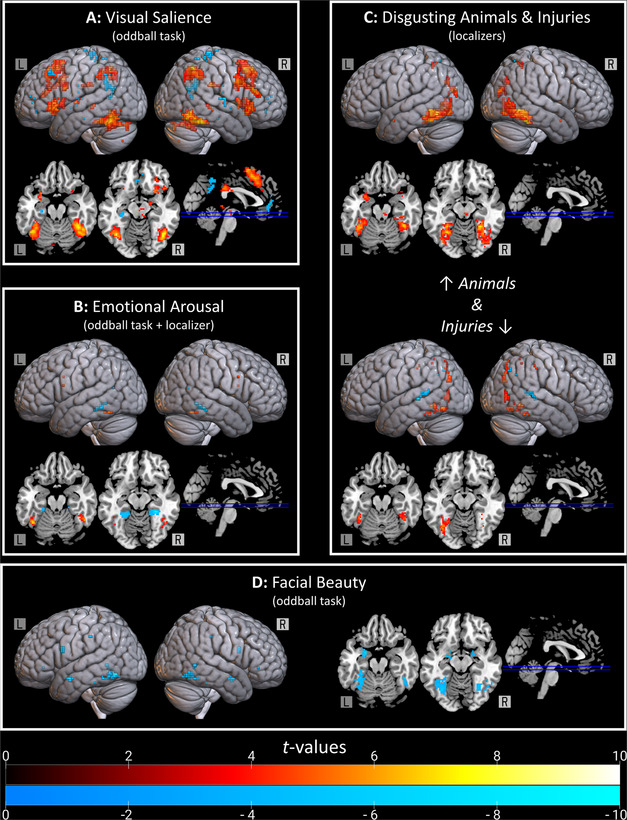
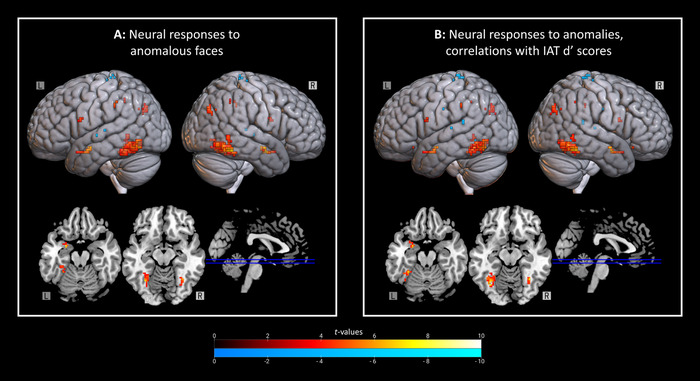
Are people with flawed faces regarded as having flawed moral characters? An "anomalous-is-bad" stereotype is hypothesized to facilitate negative biases against people with facial anomalies (e.g., scars), but whether and how these biases affect behavior and brain functioning remain open questions. We examined responses to anomalous faces in the brain (using a visual oddball paradigm), behavior (in economic games), and attitudes. At the level of the brain, the amygdala demonstrated a specific neural response to anomalous faces-sensitive to disgust and a lack of beauty but independent of responses to salience or arousal. At the level of behavior, people with anomalous faces were subjected to less prosociality from participants highest in socioeconomic status. At the level of attitudes, we replicated previously reported negative character evaluations made about individuals with facial anomalies, and further identified explicit biases directed against them as a group. Across these levels of organization, the specific amygdala response to facial anomalies correlated with stronger just-world beliefs (i.e., people get what they deserve), less dispositional empathic concern, and less prosociality toward people with facial anomalies. Characterizing the "anomalous-is-bad" stereotype at multiple levels of organization can reveal underappreciated psychological burdens shouldered by people who look different.
Keywords: amygdala; disgust; empathy; faces; morality; neuroaesthetics.
© 2021 The Authors. Annals of the New York Academy of Sciences published by Wiley Periodicals LLC on behalf of New York Academy of Sciences.
Conflict of interest statement
The authors declare no competing interests.
Figures
References
-
- Houston, V. & Bull R.. 1994. Do people avoid sitting next to someone who is facially disfigured? Eur. J. Soc. Psychol. 24: 279–284.
-
- Jamrozik, A. , Oraa Ali M., Sarwer D.B., et al. 2019. More than skin deep: judgments of individuals with facial disfigurement. Psychol. Aesthetics Creat. Arts 13: 117–129.
-
- Madera, J.M. & Hebl M.R.. 2012. Discrimination against facially stigmatized applicants in interviews: an eye‐tracking and face‐to‐face investigation. J. Appl. Psychol. 97: 317–330. - PubMed
Publication types
MeSH terms
Grants and funding
LinkOut - more resources
Full Text Sources
Other Literature Sources
Research Materials
