


The effect of COVID-19 on blood donation habits
- PMID: 33565620
- PMCID: PMC8014865
- DOI: 10.1111/trf.16278
The effect of COVID-19 on blood donation habits
Abstract
Background: Blood centers (BCs) rely on schools and businesses. Shelter-in-place orders closed them. This study determined how COVID-19 affected donation habits.
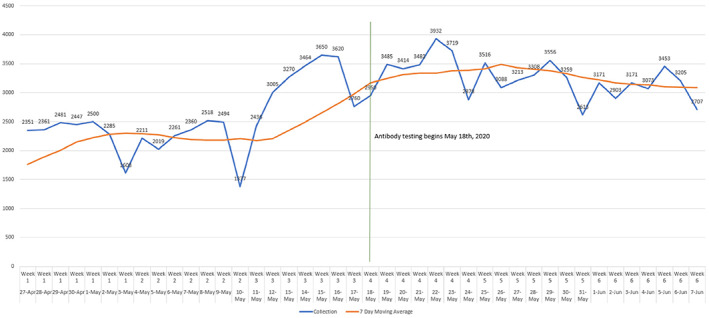
Study design and methods: Two periods were reviewed (May 1 through June 30, 2018 vs 2019 [control] and 2019 vs 2020 [study-COVID period]). These donations were reviewed: first-time, repeat (donation ≤ 2 years), and lapsed (no donation > 2 years); sex; age; ethnicity; and ABO blood groups at high school and college drives. Testing all donors for SARS-CoV-2 antibodies started May 18, 2020.
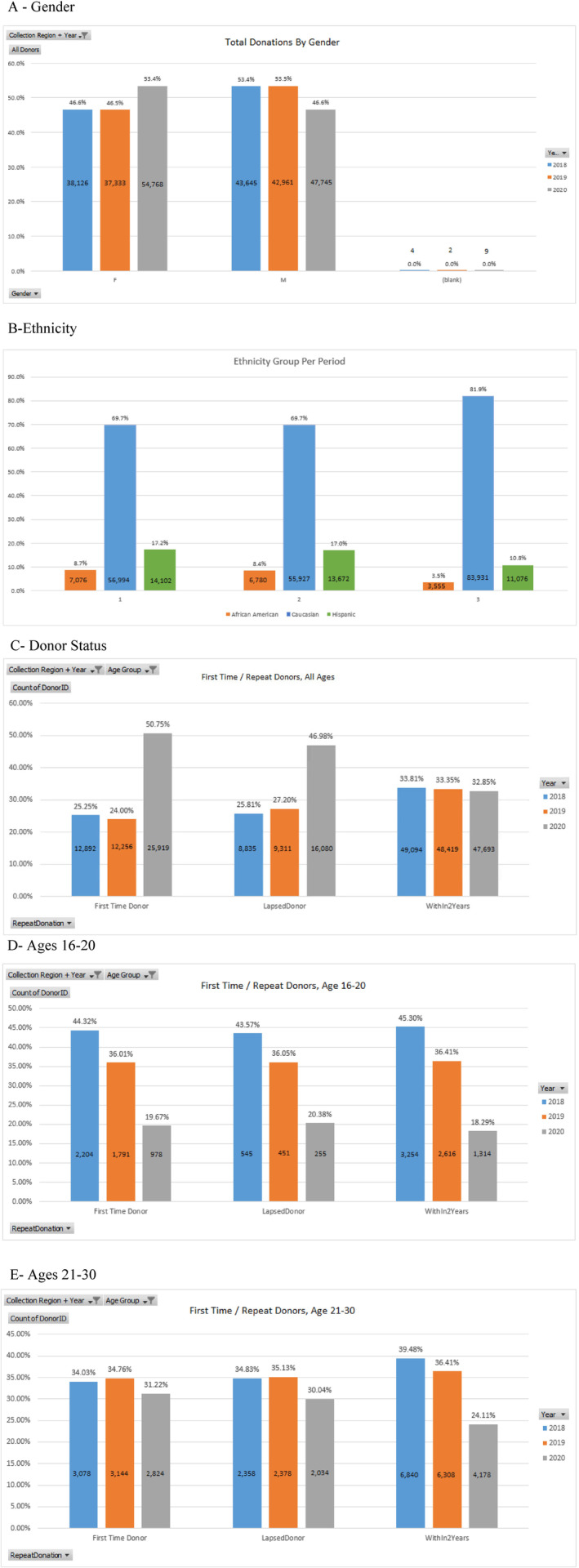
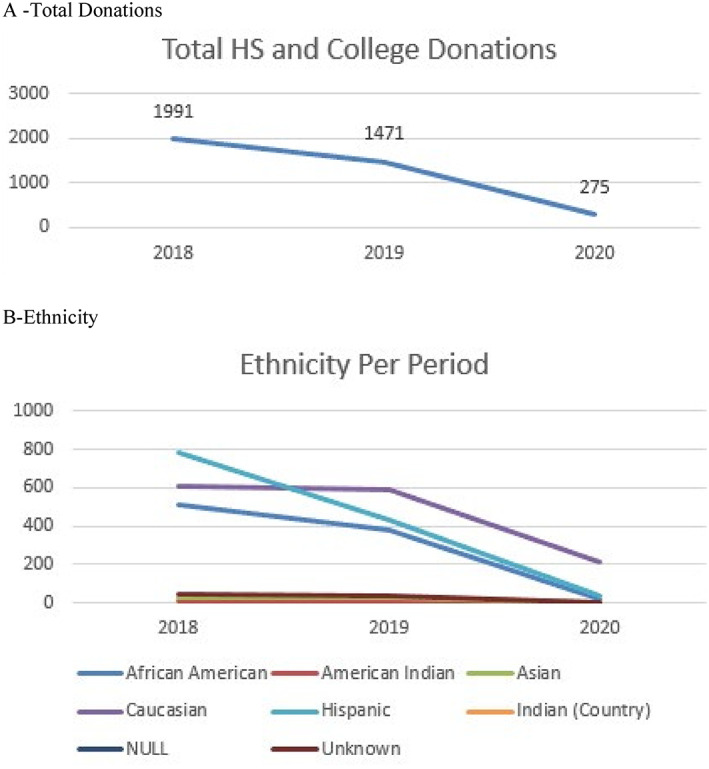
Results: In the study period donations significantly increased (control P = .683, study P ≤ .0001) and comparing sex (control male P = .716, female P = .657; study male P = .004, female P ≤ .0001). In the study period there was a significant decrease in Hispanic (P = .001) and African American (P < .0001) donations also seen among high school and college drives and an increase in Caucasian (P < .0001) donations. There was a significant increase in first-time (P < .0001) and lapsed donors (P < .0001) in the study period vs control (first-time P = .087, lapsed P = .308) and a significant decrease in donors not more than 30 years (study 16-20 P < .0001, 21-30 P < .0001). There was a significant increase in all blood types in the study period (P < .0001) and in donations after implementation of SARS-CoV-2 antibody testing (P = .001).
Conclusions: Significant changes occurred in donation habits in the study vs the control periods. These included increased total donations, comparing sexes, first-time and lapsed donors, all blood types, and Caucasian donations. Significant decreases were seen in Hispanic and African American donations and those not more than 30 years old.
Keywords: blood center operations; blood management; donors.
© 2021 AABB.
Conflict of interest statement
The authors declare no potential conflict of interest.
Figures
References
-
- Investigational COVID‐19 Convalescent Plasma: Guidance for Industry. Center for Biologics Evaluation and Research, U.S. Food and Drug Administration. Updated September 2, 2020. Accessed October 1, 2020. https://www.fda.gov/regulatory‐information/search‐fda‐guidance‐documents....
-
- WHO Director‐General's opening remarks at the media briefing on COVID‐19 ‐ March 11, 2020. World Health Organization. 2020. Accessed October 1, 2020. https://www.who.int/dg/speeches/detail/who‐director‐general‐s‐opening‐re....
Publication types
MeSH terms
LinkOut - more resources
Full Text Sources
Other Literature Sources
Medical
Miscellaneous
