


Efficacy of autologous platelet-rich plasma gel in the treatment of refractory pressure injuries and its effect on wound healing time and patient quality of life
- PMID: 33567047
- PMCID: PMC7847254
- DOI: 10.6061/clinics/2021/e2355
Efficacy of autologous platelet-rich plasma gel in the treatment of refractory pressure injuries and its effect on wound healing time and patient quality of life
Abstract
Objectives: To evaluate the efficacy of autologous platelet-rich plasma (PRP) gel in the treatment of refractory pressure injuries and its effect on wound healing time and quality of life of patients.
Methods: A random number table method was used to group 102 patients with refractory pressure injuries into either a control group (CG) (51 cases) receiving negative pressure wound therapy (NPWT) or a study group (SG) (51 cases) receiving NPWT+PRP gel.
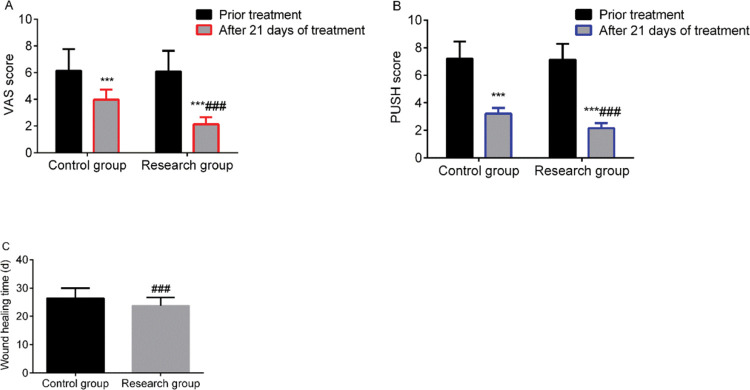
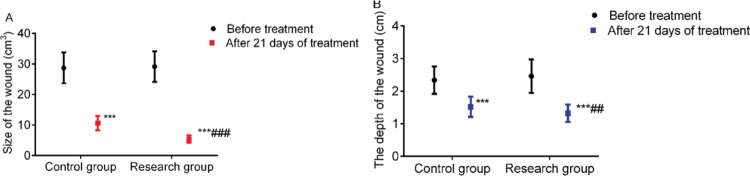
Results: The total efficacy rate in the SG (92.16%) was higher than that in the CG (76.47%) (p<0.05). The SG exhibited lower visual analog scale (VAS) scores and pressure ulcer scale for healing (PUSH) scores, smaller wound sizes and depths, and shorter wound healing times than the CG after 21 days of treatment (p<0.05). After 6 months of treatment, the SG scored higher than the CG on the psychological, physiological, social functions, and daily activity domains on the World Health Organization Quality of Life (WHOQOL-BREF) scale (p<0.05). The incidence of postoperative complications in the SG (13.73%) was not significantly different from that of the CG (7.84%) (p>0.05).
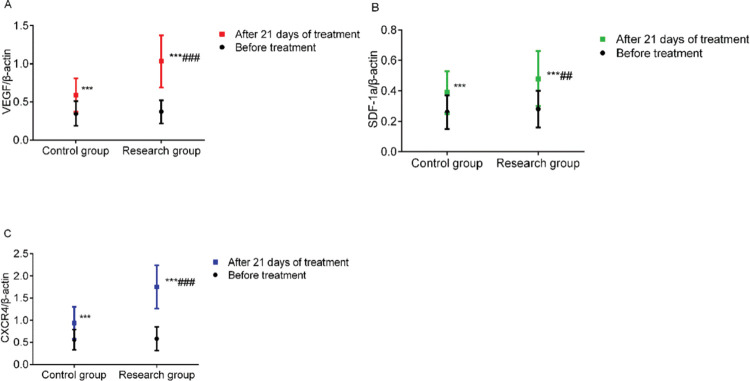
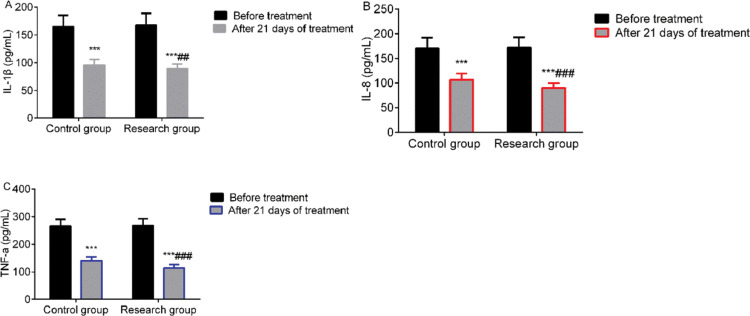
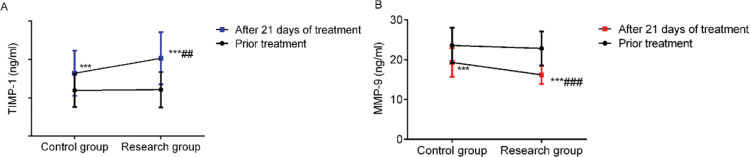
Conclusion: In the treatment of refractory pressure injuries, PRP gel can accelerate wound healing, reduce wound pain, shorten the treatment cycle, regulate tissue inhibitor matrix metalloproteinase-1 (TIMP-1) and matrix metalloproteinase-9 (MMP-9) levels and the expression of specific proteins in granulation tissue, reduce the levels of the inflammatory factors interleukin-1β (IL-1β), IL-8, and tumor necrosis factor-α (TNF-α), and improve the quality of life of patients without increasing complications.
Conflict of interest statement
No potential conflict of interest was reported.
Figures
References
-
- Chen J, Long J, Wu D, Liu HH. The preventive value of moisture exposed burn ointment combined with gel pad for pressure ulcers in prone patients. J Clin Res. 2020;37:147–9. doi: 10.3969/j.issn.1671-7171.2020.01.048. - DOI
-
- Xu HL, Hao JL. Update and interpretation of Prevention and Treatment of Pressure Ulcers: Clinical Practice Guideline (2014 edition) Shanghai Nurs. 2018;18:5–8. doi: 10.3969/j.issn.1009-8399.2018.06.001. - DOI
MeSH terms
LinkOut - more resources
Full Text Sources
Other Literature Sources
Medical
Research Materials
Miscellaneous
