The Value of OpenNotes for Pediatric Patients, Their Families and Impact on the Patient-Physician Relationship
- PMID: 33567464
- PMCID: PMC7875676
- DOI: 10.1055/s-0040-1721781
The Value of OpenNotes for Pediatric Patients, Their Families and Impact on the Patient-Physician Relationship
Abstract
Background: OpenNotes, the sharing of medical notes via a patient portal, has been extensively studied in adults but not in pediatric populations. This has been a contributing factor in the slower adoption of OpenNotes by children's hospitals. The 21st Century Cures Act Final Rule has mandated the sharing of clinical notes electronically to all patients and as health systems prepare to comply, some concerns remain particularly with OpenNotes for pediatric populations.
Objectives: After a gradual implementation of OpenNotes at an academic pediatric center, we sought to better understand how pediatric patients and families perceived OpenNotes. This article presents the detailed steps of this informatics-led rollout and patient survey results with a focus on pediatric-specific concerns.
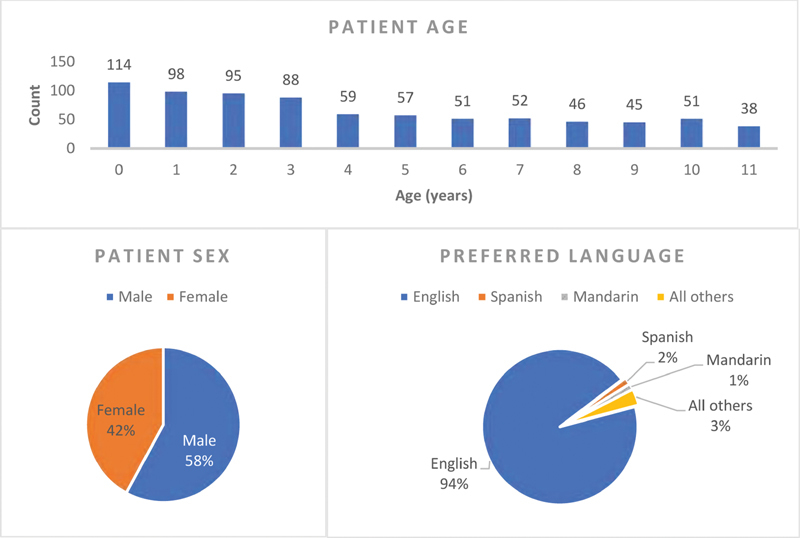
Methods: We adapted a previous OpenNotes survey used for adult populations to a pediatric outpatient setting (with parents of children <12 years old). The survey was sent to patients and families via a notification email sent as a standard practice after a clinic visit, in English or Spanish.
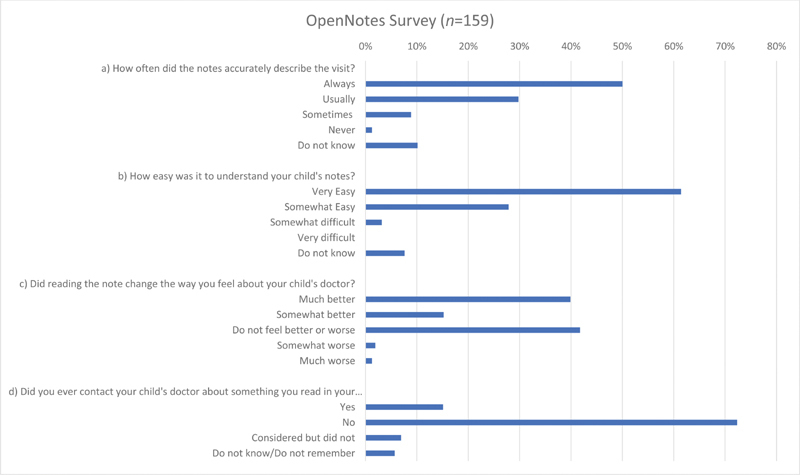
Results: Approximately 7% of patients/families with access to OpenNotes read the note during the study period, and 159 (20%) of those patients responded to the survey. Of the survey respondents, 141 (89%) of patients and families understood their notes; 126 (80%) found the notes always or usually accurate; 24 (15%) contacted their clinicians after reading a note; and 153 (97%) patients/families felt the same or better about their doctor after reading the note.
Conclusion: Although limited by relatively low survey response rate, OpenNotes was well-received by parents of pediatric patients without untoward consequences. The main concerns pediatricians raise about OpenNotes proved to not be issues in the pediatric population. Our results demonstrate clear benefits to adoption of OpenNotes. This provides reassurance that the transition to sharing notes with pediatric patients can be successful and value additive.
Thieme. All rights reserved.
Conflict of interest statement
None declared.
Figures
References
-
- Office of the National Coordinator for Health Information Technology, Department of Health and Human Services 21st Century Cures Act: Interoperability, information blocking, and the ONC health IT certification program Final rule 85 Federal Register 25642–25961 2020. Codified at 45 CFR §170, 45 CFR §171. Available at:https://www.federalregister.gov/documents/2020/05/01/2020-07419/21st-cen...
-
- Bourgeois F C, DesRoches C M, Bell S K. Ethical challenges raised by OpenNotes for pediatric and adolescent patients. Pediatrics. 2018;141(06):e20172745. - PubMed
MeSH terms
LinkOut - more resources
Full Text Sources
Other Literature Sources
Medical