


Review
doi: 10.1161/ATVBAHA.120.314378.
Epub 2021 Feb 11.
Cancer Therapy-Associated Thrombosis
Affiliations
- PMID: 33567864
- PMCID: PMC7990713
- DOI: 10.1161/ATVBAHA.120.314378
Item in Clipboard
Review
Cancer Therapy-Associated Thrombosis
Arterioscler Thromb Vasc Biol.
2021 Apr.
Abstract
[Figure: see text].
Keywords: blood coagulation; drug therapy; neoplasms; thrombosis.
Figures
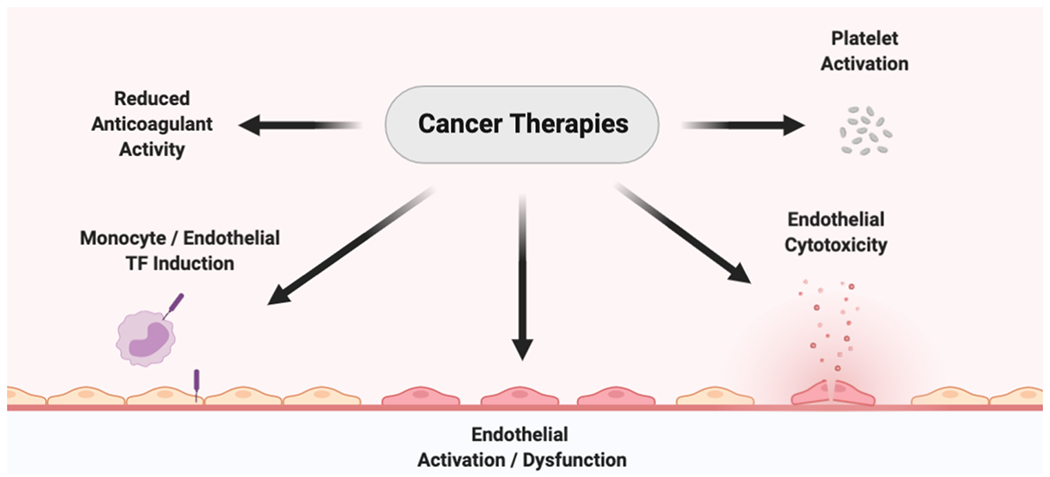
Anti-cancer agents may induce a prothrombotic state through a number of potential mechanisms including reduced levels of endogenous anticoagulants, induction of tissue factor procoagulant activity, activation of the endothelial, endothelial cytotoxicity and activation of platelets. Created with BioRender.com
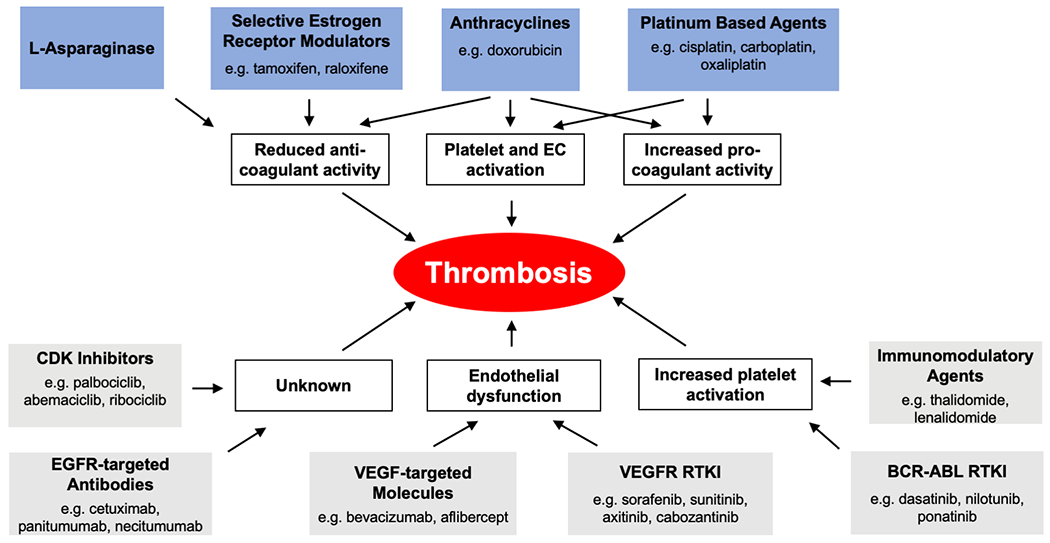
A number of mechanisms have been identified that may contribute to the observed association between both conventional chemotherapies (blue boxes) or targeted therapies (grey boxes) and an increased risk of thrombotic events. CDK, cyclin dependent kinase; EGFR, epidermal growth factor receptor, RTKI, receptor tyrosine kinase inhibitor; VEGF, vascular endothelial growth factor; VEGFR, vascular endothelial growth factor receptor.
References
-
- Bray F, Ferlay J, Soerjomataram I, Siegel RL, Torre LA, Jemal A. Global cancer statistics 2018: Globocan estimates of incidence and mortality worldwide for 36 cancers in 185 countries. CA Cancer J Clin. 2018;68:394–424 - PubMed
-
- Timp JF, Braekkan SK, Versteeg HH, Cannegieter SC. Epidemiology of cancer-associated venous thrombosis. Blood. 2013;122:1712–1723 - PubMed
-
- Blom JW, Doggen CJ, Osanto S, Rosendaal FR. Malignancies, prothrombotic mutations, and the risk of venous thrombosis. JAMA. 2005;293:715–722 - PubMed
-
- Khorana AA, Dalal M, Lin J, Connolly GC. Incidence and predictors of venous thromboembolism (vte) among ambulatory high-risk cancer patients undergoing chemotherapy in the united states. Cancer. 2013;119:648–655 - PubMed
Publication types
MeSH terms
Substances
Grants and funding
LinkOut - more resources
Full Text Sources
Other Literature Sources
Medical
