Review
. 2021 Jan 14:11:617843.
doi: 10.3389/fphar.2020.617843. eCollection 2020.

The Role of Oxidative Stress and Natural Antioxidants in Ovarian Aging

Affiliations
Review

The Role of Oxidative Stress and Natural Antioxidants in Ovarian Aging

Liuqing Yang et al. Front Pharmacol. .

Abstract

The ovarian system comprises vital organs in females and is of great significance for the maintenance of reproductive potential and endocrine stability. Although complex pathogenesis undoubtedly contributes to ovarian aging, increasing attention is being paid to the extensive influence of oxidative stress. However, the role of oxidative stress in ovarian aging is yet to be fully elucidated. Exploring oxidative stress-related processes might be a promising strategy against ovarian aging. In this review, compelling evidence is shown that oxidative stress plays a role in the etiology of ovarian aging and promotes the development of other ovarian aging-related etiologies, including telomere shortening, mitochondrial dysfunction, apoptosis, and inflammation. In addition, some natural antioxidants such as quercetin, resveratrol, and curcumin have a protective role in the ovaries through multiple mechanisms. These findings raise the prospect of oxidative stress modulator-natural antioxidants as therapeutic interventions for delaying ovarian aging.

Keywords: anti-ovarian aging; apoptosis; inflammation; mitochondria; natural antioxidants; oxidative stress; reactive oxygen species; telomeres.


Conflict of interest statement

The authors declare that the research was conducted in the absence of any commercial or financial relationships that could be construed as a potential conflict of interest.

Figures
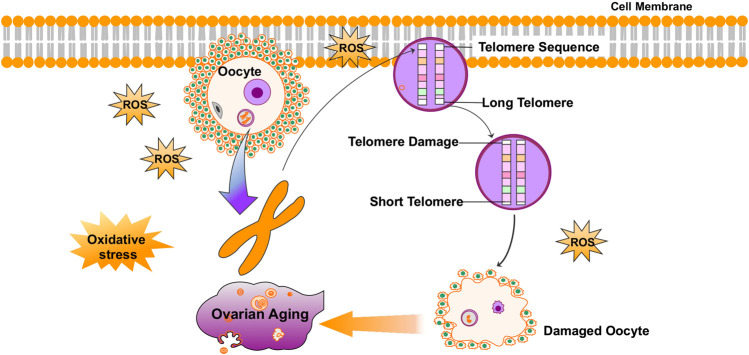
FIGURE 1
FIGURE 1
Oxidative stress mediates telomere damage in the ovaries and causes ovarian aging.
FIGURE 2
FIGURE 2
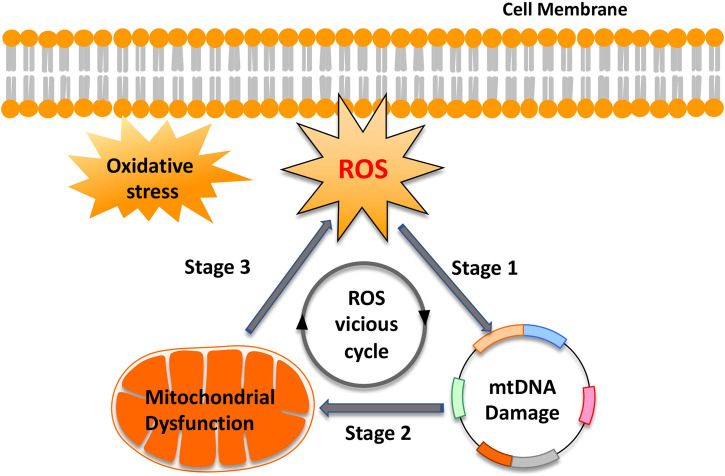
“Reactive oxygen species (ROS) vicious cycle” of ROS production, mtDNA damage, mitochondrial dysfunction, and further ROS production. The cycle implies an exponential growth of ROS production and mtDNA mutagenesis.
FIGURE 3
FIGURE 3
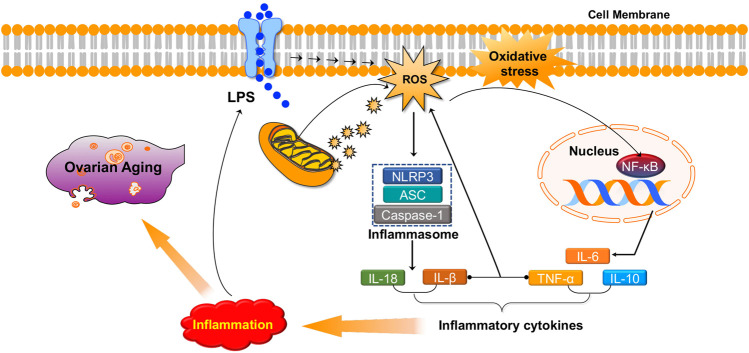
Oxidative stress promotes inflammation in the ovaries and causes ovarian aging.
FIGURE 4
FIGURE 4
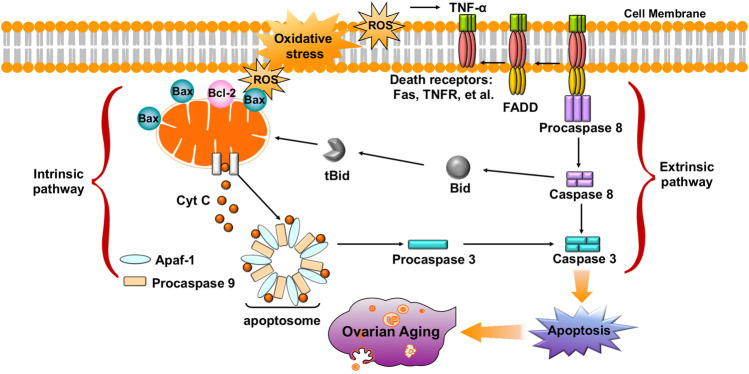
Oxidative stress leads to oocyte and GC apoptosis, and causes ovarian aging via extrinsic (death receptor) pathway and intrinsic (mitochondrial) pathway.
FIGURE 5
FIGURE 5
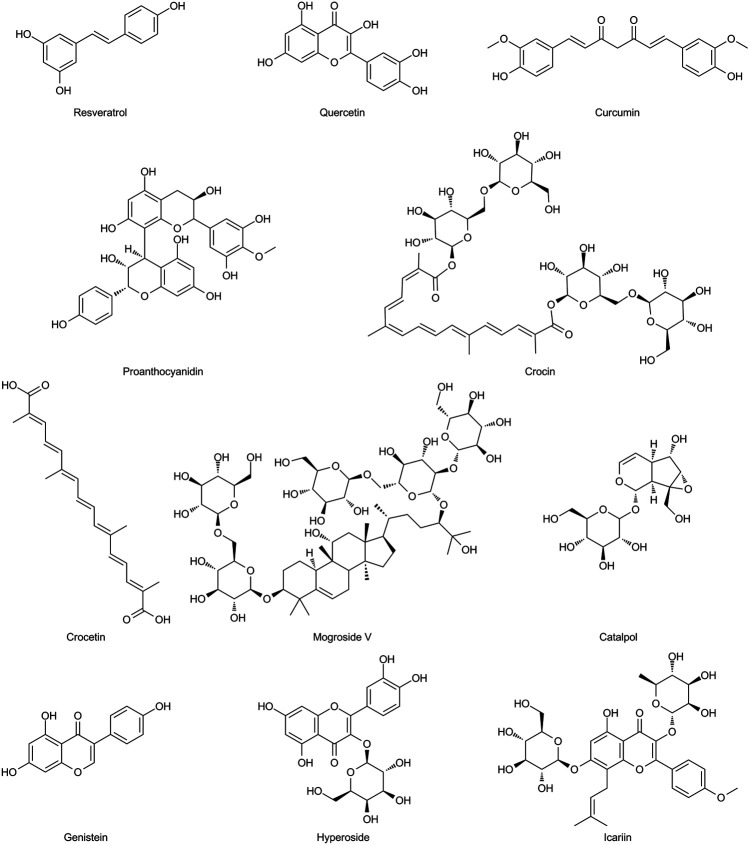
Chemical structures of the natural antioxidants summarized in this review.
FIGURE 6
FIGURE 6
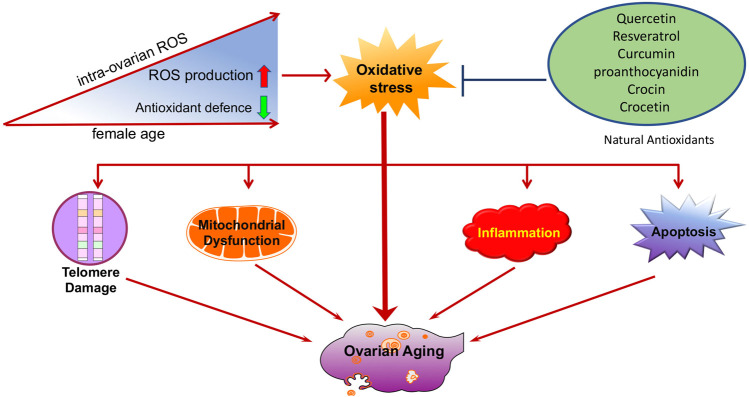
Schematic illustration of oxidative stress during ovarian aging. Oxidative stress promotes the development of other ovarian aging-related etiologies, including telomere shortening, mitochondrial dysfunction, apoptosis, and inflammation. Natural antioxidants supplements, such as resveratrol, quercetin, and curcumin might be beneficial in preventing ovarian aging.
FIGURE 7
FIGURE 7
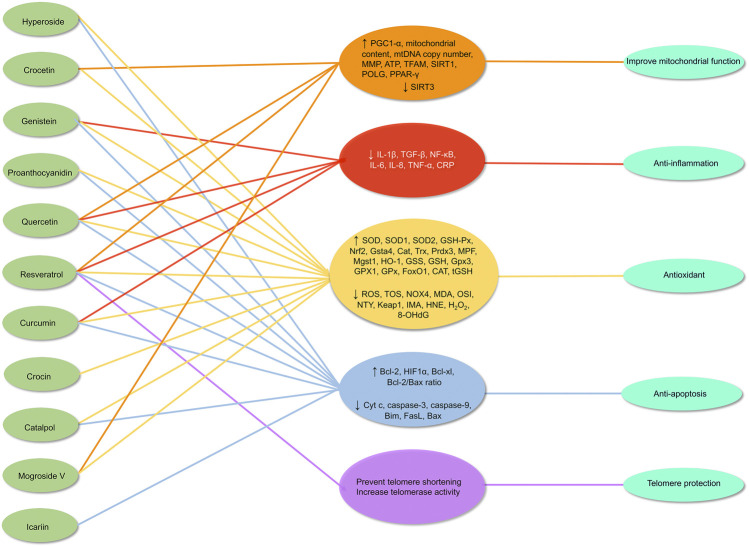
Mechanism of natural antioxidants in protecting against ovarian aging through multiple mechanisms. ↑ = up-regulates, ↓ = down-regulates.

References

    1. Abais J. M., Xia M., Zhang Y., Boini K. M., Li P. L. (2015). Redox regulation of NLRP3 inflammasomes: ROS as trigger or effector?. Antioxid Redox Signal. 22 (13), 1111–1129. 10.1089/ars.2014.5994 - DOI - PMC - PubMed
    1. Agharazii M., St-Louis R., Gautier-Bastien A., Ung R.-V., Mokas S., Larivière R., et al. (2014). Inflammatory cytokines and reactive oxygen species as mediators of chronic kidney disease-related vascular calcification. Am. J. Hypertens. 28 (6), 746–755. 10.1093/ajh/hpu225 - DOI - PubMed
    1. Aktas C., Kanter M., Kocak Z. (2012). Antiapoptotic and proliferative activity of curcumin on ovarian follicles in mice exposed to whole body ionizing radiation. Toxicol. Ind. Health. 28 (9), 852–863. 10.1177/0748233711425080 - DOI - PubMed
    1. Alekseyeva I. N., Makogon N. V., Bryzgina T. M., Voznesenskaya T. Y., Sukhina V. S. (2011). Effects of NF-κB blocker curcumin on oogenesis and immunocompetent organ cells in immune ovarian injury in mice. Bull. Exp. Biol. Med. 151 (4), 432–435. 10.1007/s10517-011-1349-1 - DOI - PubMed
    1. Amanvermez R., Tosun M. (2016). An update on ovarian aging and ovarian reserve tests. Int. J. Fertil. Steril. 9 (4), 411–415. 10.22074/ijfs.2015.4591 - DOI - PMC - PubMed