


Robot-assisted retroperitoneal lymphadenectomy: The state of art
- PMID: 33569270
- PMCID: PMC7859427
- DOI: 10.1016/j.ajur.2020.09.002
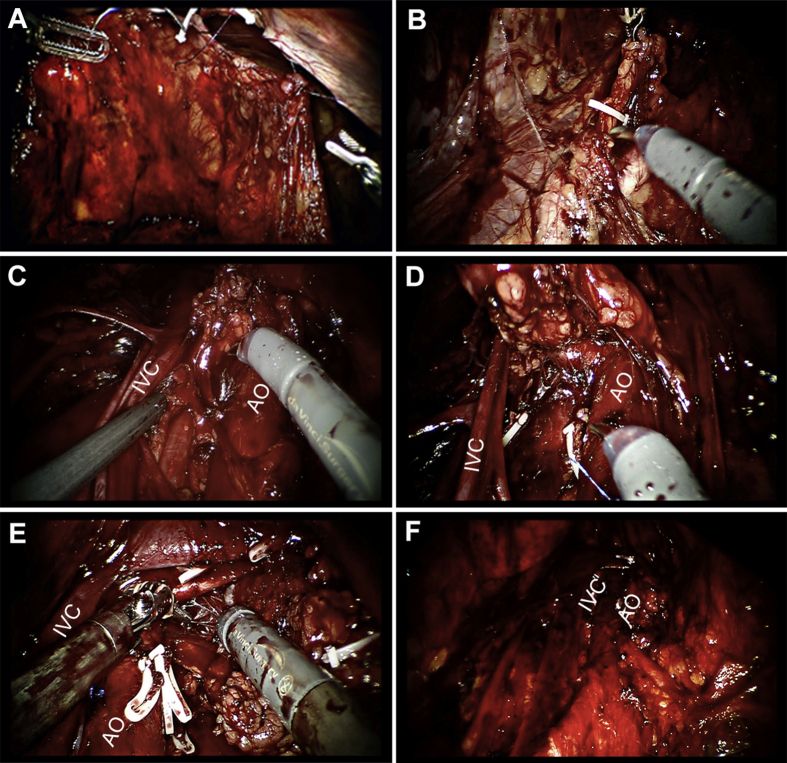
Robot-assisted retroperitoneal lymphadenectomy: The state of art
Abstract
Objective: To perform a narrative review about the role of robot-assisted retroperitoneal lymphadenectomy (R-RPLND) in the management of testicular cancer.
Methods: A PubMed search for all relevant publications regarding the R-RPLND series up until August 2019 was performed. The largest series were identified, and weighted means calculated for outcomes using the number of patients included in each study as the weighting factor.
Results: Fifty-six articles of R-RPLND were identified and eight series with more than 10 patients in each were included. The weighted mean age was 31.12 years; primary and post chemotherapy R-RPLND were performed in 50.59% and 49.41% of patients. The clinical stage was I, II and III in 47.20%, 39.57% and 13.23% of patients. A modified R-RPLND template was used in 78.02% of patients, while 21.98% underwent bilateral full template. The weighted mean node yield, operative time and estimated blood loss were, respectively, 22.15 nodes, 277.35 min and 131.94 mL. The weighted mean length of hospital stay was 2 days and antegrade ejaculation was preserved in 92.12% of patients. Major post-operative complications (Clavien III or IV) occurred in 5.34%. Positive pathological nodes were detected in 24.54%, while the recurrence free survival was 95.77% with a follow-up of 21.81 months.
Conclusion: R-RPLND has proven to be a reproducible and safe approach in experienced centers; short-term oncologic outcomes are similar to the open approach with less morbidity and shorter convalescence related to its minimal invasiveness. However, longer follow-up and new trials comparing head-to-head both techniques are expected.
Keywords: Lymphadenectomy; Robotic surgical procedures; Testicular neoplasms.
© 2021 Editorial Office of Asian Journal of Urology. Production and hosting by Elsevier B.V.
Figures



References
-
- Laguna M.P., Albers P., Algaba F., Bokemeyer C., Boormans J.L., Fischer S. EAU guidelines: testicular cancer. [Accessed 2 September 2019] https://uroweb.org/guideline/testicular-cancer/
-
- Williams S.B., Lau C.S., Josephson D.Y. Initial series of robot-assisted laparoscopic retroperitoneal lymph node dissection for clinical stage I nonseminomatous germ cell testicular cancer. Eur Urol. 2011;60:1299–1302. - PubMed
-
- Rassweiler J.J., Teber D. Advances in laparoscopic surgery in urology. Nat Rev Urol. 2016;13:387–399. - PubMed
Publication types
LinkOut - more resources
Full Text Sources
Other Literature Sources
