


Novel starter cultures Virgibacillus spp. selected from grasshopper sub shrimp paste to inhibit biogenic amines accumulation
- PMID: 33569734
- PMCID: PMC7876174
- DOI: 10.1186/s13568-021-01186-9
Novel starter cultures Virgibacillus spp. selected from grasshopper sub shrimp paste to inhibit biogenic amines accumulation
Abstract
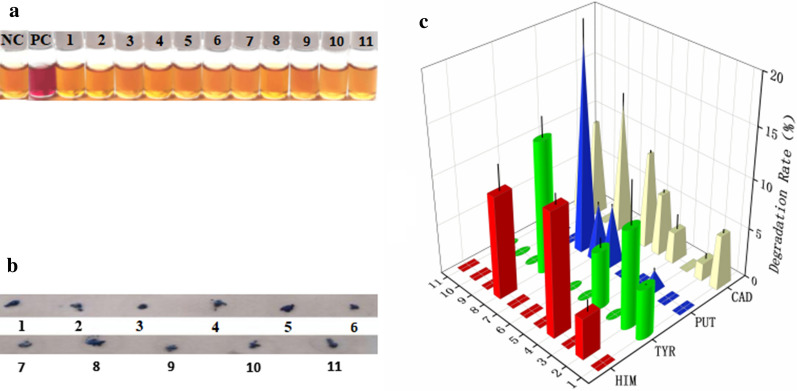
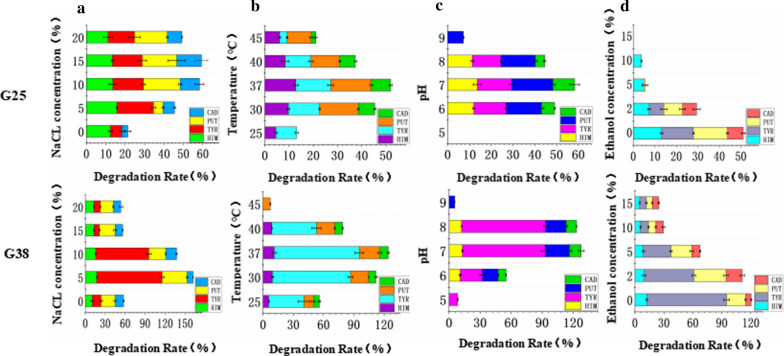
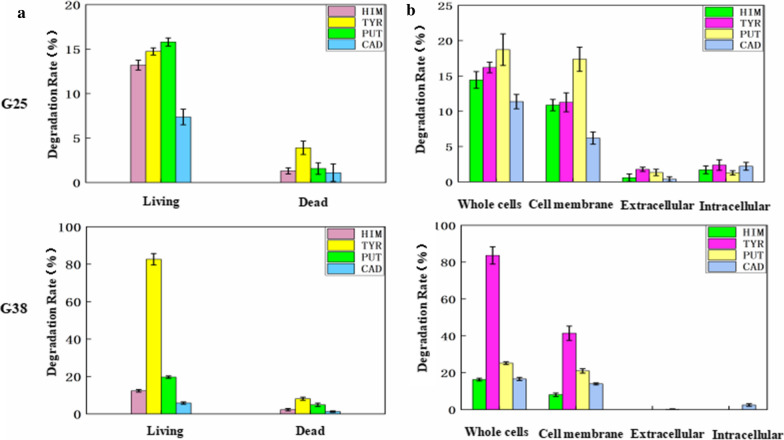
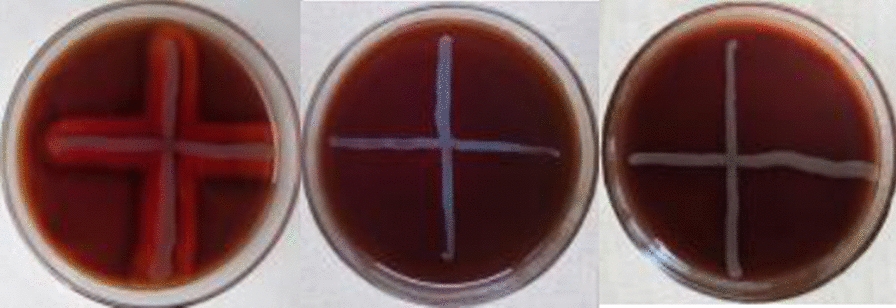
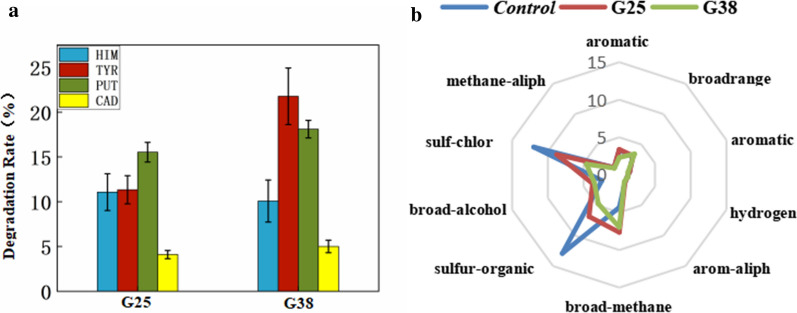
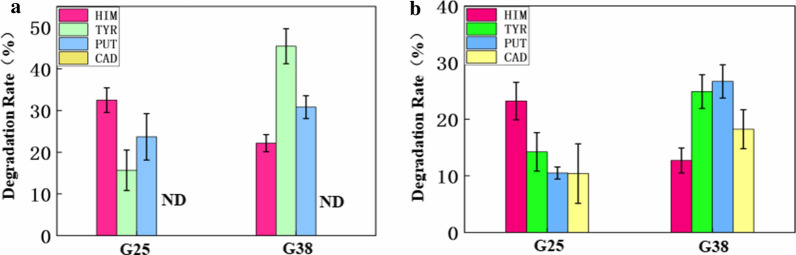
Controlling the content of biogenic amines (BAs) is critical to guarantee the safety of fermented aquatic products. The degradation characteristics and application potential of amine-negative starter cultures (Virgibacillus halodenitrificans CGMCC 1.18601: G25, Virgibacillus pantothenticus CGMCC 1.18602: G38) screened from grasshopper sub shrimp paste (Gssp) were studied. The enzymes of the two strains G25 and G38 that degrade BAs were amine oxidases (AOs) located on their respective cell membranes. The conditions that promoted the AO activity of Virgibacillus spp. were NaCl concentrations 5-10%, temperature 37 °C, pH 7.0 and ethanol concentrations 0-2%. Safety assessments (antibiotic susceptibility, biofilm activity and hemolytic activity) indicated that Virgibacillus spp. do not present a risk to human health, and this isolate can be confidently recommended as safe starter cultures for the food industry. Then, the two strains were cultured separately as starters and applied to the Gssp to analyze their influence on the flavor and quality of the product. As far as the bad flavors in Gssp such as sulfur-organic and sulf-chlor were concerned, the response values in the starter groups by G25 and G38 were significantly reduced by 39% and 65%, respectively. For the ability of strains to degrade BAs in Gssp, G25 degraded 11.1% of histamine, 11.3% of tyramine, 15.5% of putrescine and 4.1% of cadaverine; G38 significantly degraded 10.1% of histamine, 21.8% of tyramine, 18.1% of putrescine and 5.0% of cadaverine. These results indicated that the selected species could be used as starter cultures for the control of BA accumulation and degradation in Gssp.
Keywords: Amine oxidases; Degradation of biogenic amines; Grasshopper sub shrimp paste; Safety assessment; Starter cultures.
Conflict of interest statement
The authors declare that they have no conflict of interest.
Figures
References
-
- Cheng S, Xu Y, Lan X. Isolation, characterization, and application of biogenic amines degrading strains from fermented food. J Food Saf. 2020 doi: 10.1111/jfs.12716. - DOI
-
- EFSA, 2012. EFSA Panel on Additives and Products or Substances used in Animal Feed (FEEDAP); Guidance on the assessment of bacterial susceptibility to antimicrobials of human and veterinary importance (Question no EFSA-Q-2011–01108, adopted: 23 May 2012 by European Food Safety Authority). EFSA J. 10, 2740. (10 pp.) doi: 10.2903/j.efsa.2012.2740
Grants and funding
LinkOut - more resources
Full Text Sources
Other Literature Sources
Research Materials
Miscellaneous
