


Lifestyle and mental health disruptions during COVID-19
- PMID: 33571107
- PMCID: PMC7936339
- DOI: 10.1073/pnas.2016632118
Lifestyle and mental health disruptions during COVID-19
Abstract
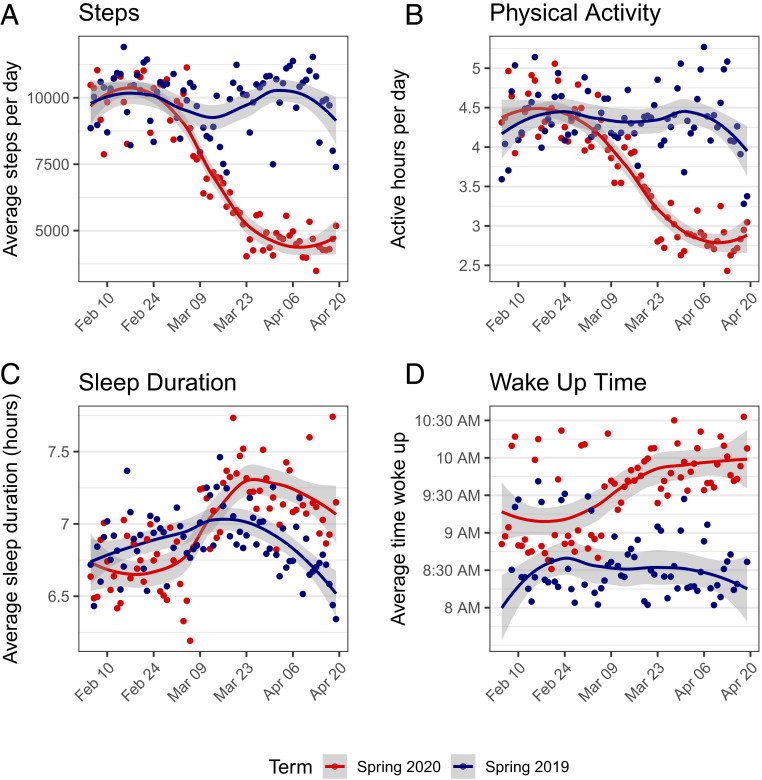
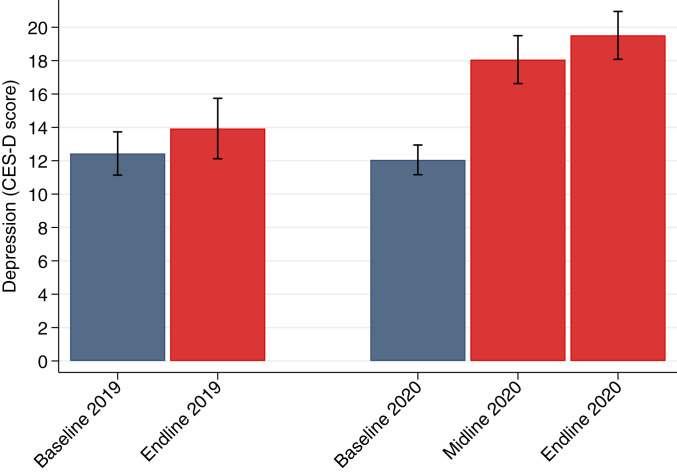
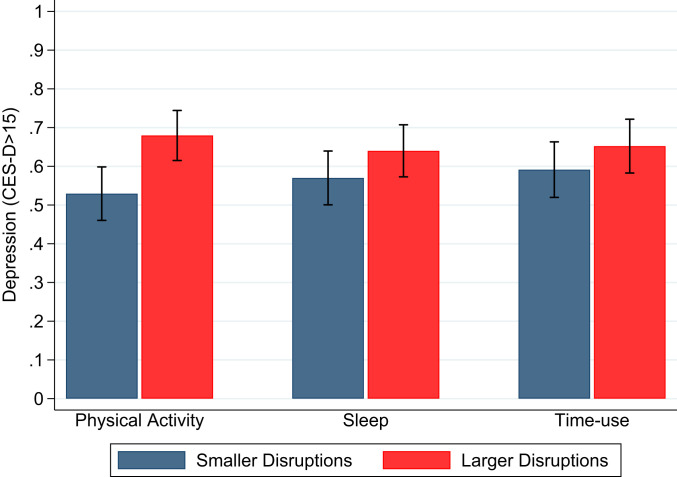
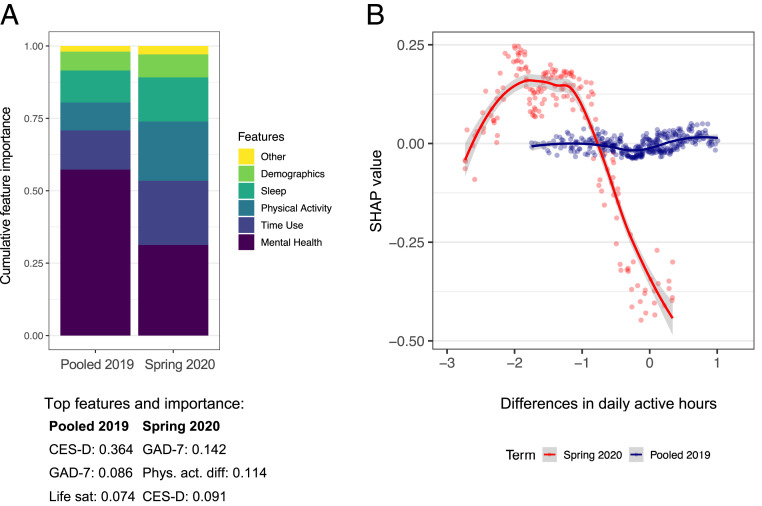
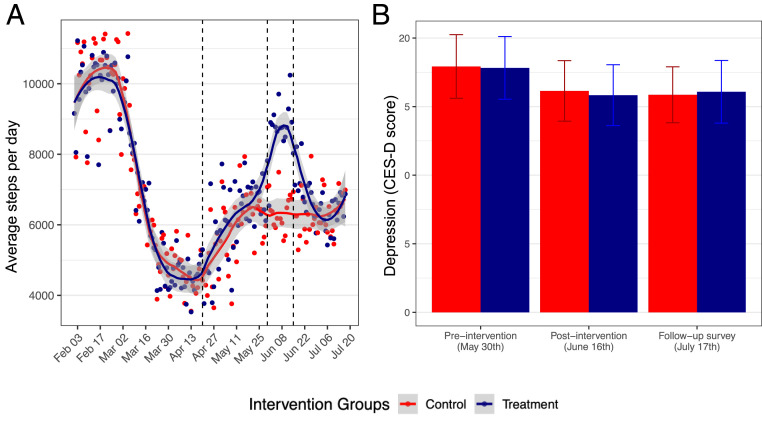
Using a longitudinal dataset linking biometric and survey data from several cohorts of young adults before and during the COVID-19 pandemic ([Formula: see text]), we document large disruptions to physical activity, sleep, time use, and mental health. At the onset of the pandemic, average steps decline from 10,000 to 4,600 steps per day, sleep increases by 25 to 30 min per night, time spent socializing declines by over half to less than 30 min, and screen time more than doubles to over 5 h per day. Over the course of the pandemic from March to July 2020 the proportion of participants at risk for clinical depression ranges from 46% to 61%, up to a 90% increase in depression rates compared to the same population just prior to the pandemic. Our analyses suggest that disruption to physical activity is a leading risk factor for depression during the pandemic. However, restoration of those habits through a short-term intervention does not meaningfully improve mental well-being.
Keywords: COVID-19; lifestyle disruptions; mental health; physical activity.
Conflict of interest statement
The authors declare no competing interest.
Figures

References
-
- Twenge J. M., Cooper A. B., Joiner T. E., Duffy M. E., Binau S. G., Age, period, and cohort trends in mood disorder indicators and suicide-related outcomes in a nationally representative dataset, 2005–2017. J. Abnorm. Psychol. 128, 185 (2019). - PubMed
-
- National Center for Health Statistics , “Early release of selected mental health estimates” (National Center for Health Statistics, 2019).
-
- American College Health Association , “National college health assessment” (American College Health Association, 2018).
Publication types
MeSH terms
LinkOut - more resources
Full Text Sources
Other Literature Sources
Medical
